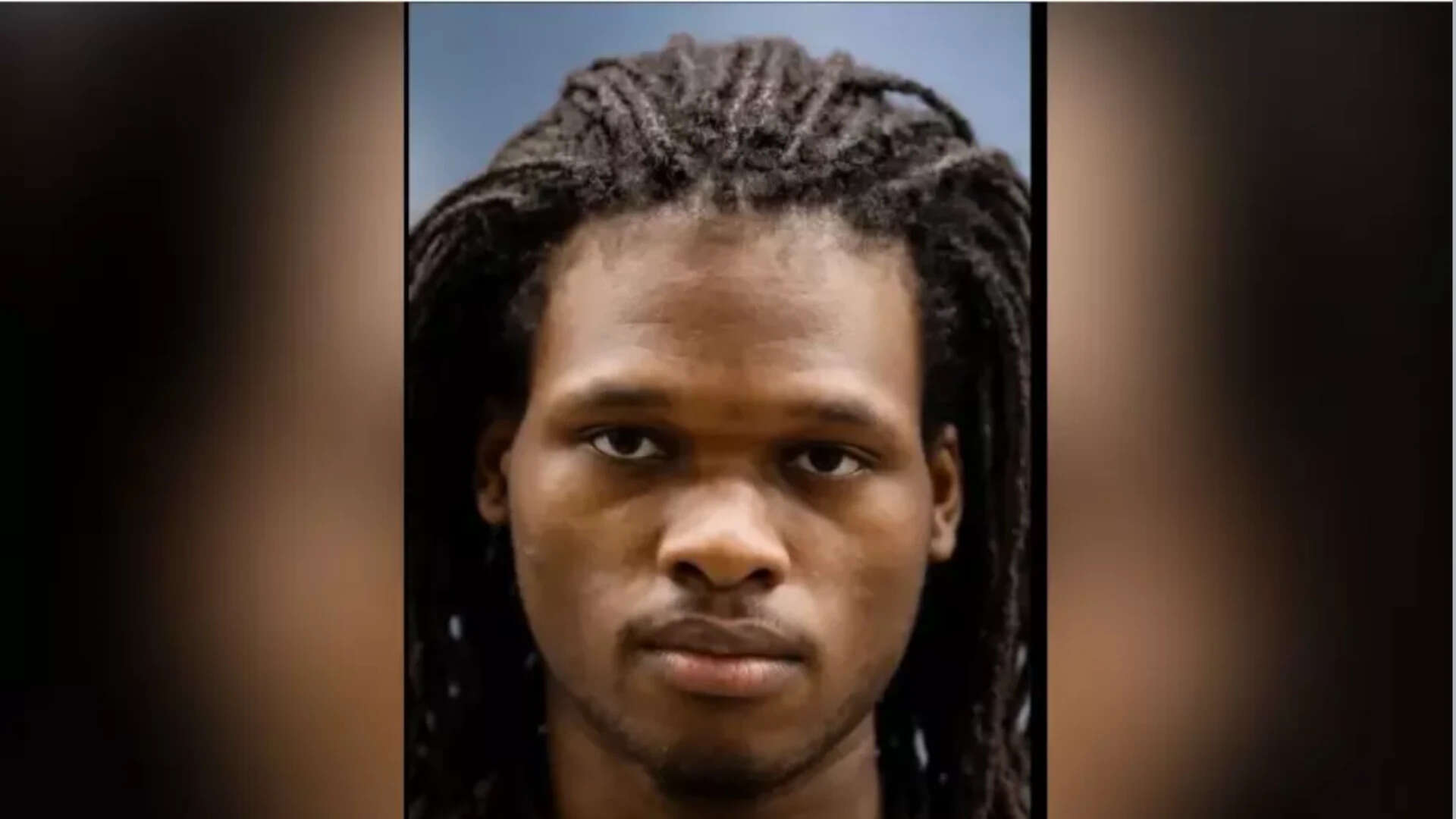
The screen glows in the dark living room, casting a blue hue over a mother’s face. It is late. It is always late when the worst news arrives.
For months, the world watched a troubled young man drift closer to the edge, his name eventually etched into the grim ledger of national headlines after a chaotic sequence of events culminated in a gunfire exchange at the White House. To the public, he was a monster, a fanatic, a headline. But to the woman sitting in the dim light of her home, scrolling through a social media feed that suddenly exploded with graphic violence, he was just her boy.
She did not receive a formal knock on the door from men in dark suits. She did not get a gentle, preparatory phone call. Instead, she witnessed her son’s final, violent moments played out on a digital loop, sandwiched between algorithmic advertisements and casual status updates.
This is the modern theater of tragedy. We have outsourced our grief to the timeline.
The Boy Before the Headline
He was never the monster the television pundits painted him to be.
Before the radicalization, before the fractured mental state, and before the desperate march toward the high-security gates of the capital, there was a quiet kid who liked video games and quiet afternoons. His mother remembers a boy who would sit on the porch, watching the rain, lost in thoughts he rarely shared. He was fragile. The world felt too loud for him, too sharp around the edges.
As the years pressed on, the silence between them grew. It is a terrifying thing for a parent to watch a child slowly retreat into the subterranean depths of the internet, a digital underworld where loneliness is weaponized. He wasn't looking for a cause initially. He was looking for a reflection. He wanted to belong to something that made him feel less invisible.
Consider the anatomy of modern isolation. A young man sits in a bedroom, the curtains drawn, the ambient hum of a computer tower filling the silence. Every click alters the algorithm. Every video watched steers the rudder of his reality just a fraction of a degree toward the storm. To the outside world, he is just a quiet twenty-something living at home. Inside his mind, a war is being waged for his very sanity.
His mother tried to reach him. She knocked on the door. She offered meals. She asked the standard, desperate questions of a parent watching their child slip away into an unseen current.
"I'm fine," he would say.
But fine is the word we use to camouflage the collapse.
The Digital Execution
Then came the day the world changed, though for hours, she had no idea she was living through it.
News alerts began to ping across the country. Reports of an armed individual near the White House. A confrontation. Shots fired. A suspect neutralized. The words were sterile, engineered to inform without inciting panic. They belonged to the detached vocabulary of law enforcement and cable news.
She opened her phone, a subconscious reflex shared by billions of us every single day. She scrolled.
Then, the video appeared. It was unedited. Raw. Shaky smartphone footage captured by a bystander, uploaded instantly to the global square. It showed a figure running, the unmistakable crack of gunfire, and the sudden, heavy fall of a human body onto concrete.
The camera zoomed in.
The realization did not hit her like a lightning bolt; it crept in like a cold poison. The jacket. The posture. The way he moved his shoulders when he was afraid.
The world was cheering the elimination of a threat. A mother was watching her son die in high definition, refreshed every few seconds by an automated system hungry for engagement.
We live in an era where the boundary between public consumption and private agony has been completely erased. The most traumatic moment of a family's life becomes a piece of content, dissected by strangers in comment sections, liked, shared, and forgotten by the next morning.
The Fiction of the Lone Wolf
We love the narrative of the sudden monster. It makes us feel safe. If an act of violence is perpetrated by a sudden, unpredictable anomaly, then the system itself is still functional. We can dismiss the perpetrator as an aberration, a broken cog in an otherwise smooth machine.
But the truth is far more uncomfortable.
He did not wake up one morning and decide to storm the gates of power. The descent was a slow, agonizing crawl, marked by signs that are only visible in the devastating clarity of hindsight. There were the periods of intense withdrawal. There were the strange, ideological phrases that began to pepper his vocabulary. There was the profound, aching lack of purpose that defines an entire generation of disaffected youths.
He was searching for a script to give his pain meaning. The internet provided one.
The real tragedy lies in our collective inability to intervene before the digital script becomes a physical reality. We have built a society that is hyper-connected yet deeply isolated. We can track a person's digital footprint across the globe, yet we cannot see the person drowning right across the hall.
His mother sits with the wreckage of those unanswered questions. Did she miss a specific warning? Could a different conversation have broken the spell? The guilt of a surviving parent is a heavy, misshapen thing, impossible to carry but impossible to set down.
The Afterlife of an Online Ghost
The news cycle has already moved on. The barricades at the White House have been reset, the tourists have returned with their cameras, and the politicians have shifted their focus to the next brewing crisis.
But on a quiet street, in a house filled with the ghosts of a better past, a mother is left to piece together the fragments of a life that was stolen twice. First, by the radical forces that twisted her son's mind. Second, by the digital meat grinder that turned his death into a viral sensation.
She remembers him not as the figure on the pavement, surrounded by law enforcement, but as the little boy who used to hide behind her legs when strangers approached. She holds onto that memory with a fierce, desperate grip, a bulwark against the millions of digital voices that claim to know exactly who he was.
The phone sits on the coffee table, dark for now. But the video is still out there, floating through the ether, a permanent digital monument to a moment of pure horror, waiting for the next user to scroll past and hit play.