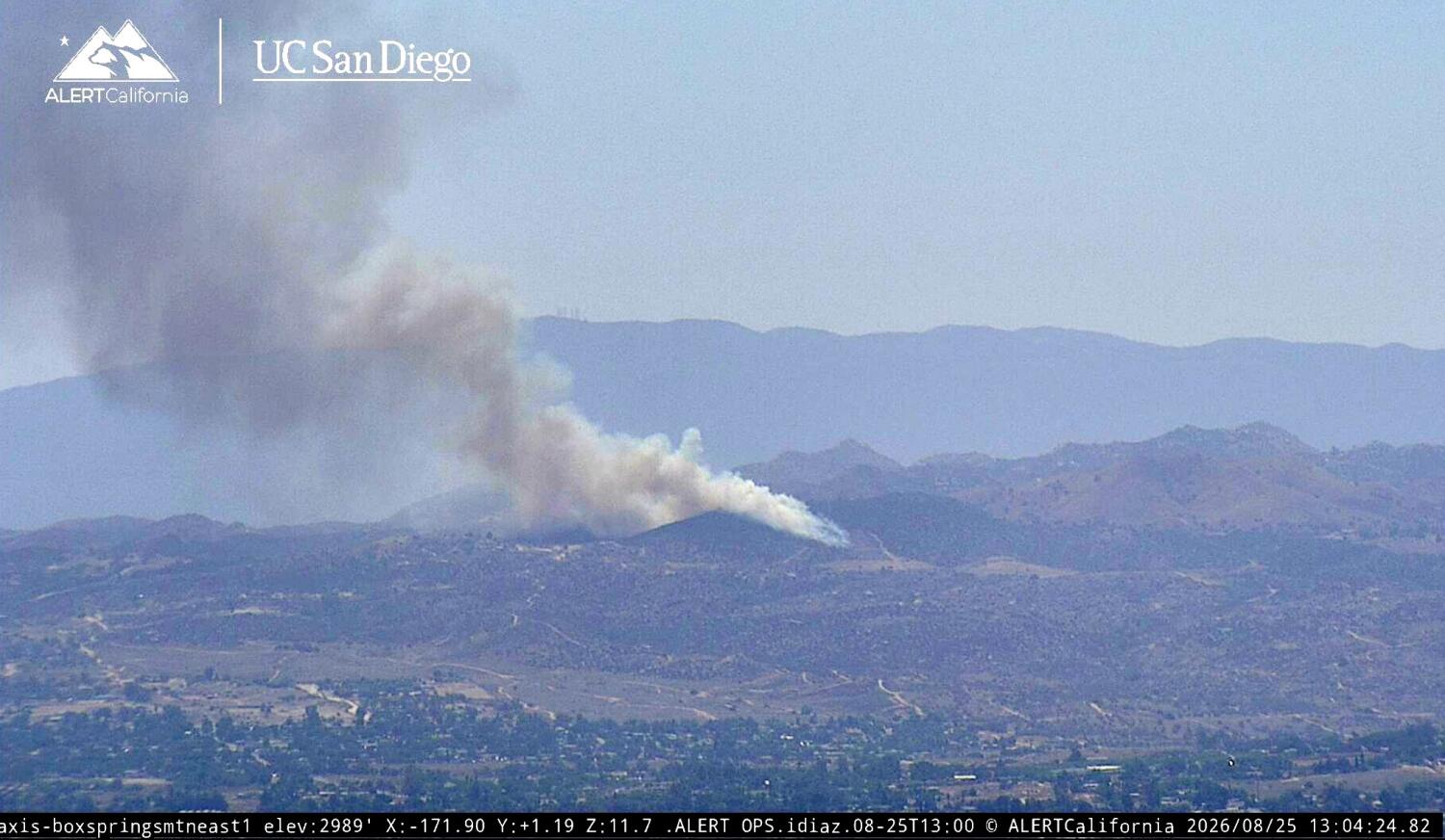
Every time smoke blankets Riverside County from a blaze like the Wood Fire, the standard playbook unspools on television screens. Pundits scream for more air tankers, politicians demand higher suppression budgets, and the public nods along to a comforting illusion. We are told that if we just throw enough water, manpower, and technology at the flames, we can conquer nature.
It is a comforting lie. And it is burning our communities to the ground.
The lazy consensus in modern disaster reporting treats every wildfire as an operational failure of containment rather than the predictable ecological outcome of a century of institutional interference. We treat the symptom while actively exacerbating the disease.
I have watched state and federal agencies burn billions of dollars on immediate suppression tactics, treating every ignition as an absolute emergency requiring total annihilation. I have seen forests engineered into ticking time bombs through sheer bureaucratic negligence disguised as protection.
To understand why our current approach to the Wood Fire and similar Southern California blowups is fundamentally broken, we have to look past the smoke and examine the mechanics of our own creation.
The Cost of Absolute Suppression
For decades, forest management operated under a rigid mandate: put every fire out by ten in the morning the day it starts. On paper, it sounds responsible. In reality, it is a masterclass in ecological vandalism.
When you eliminate low-intensity, frequent fires from a Mediterranean ecosystem like the one flanking Riverside County, you do not prevent fires. You simply defer them. Nature operates on a ledger. You can pay small installments through regular, manageable burns, or you can default on the debt and face a catastrophic bankruptcy when a wind-driven event hits parched brush.
We chose bankruptcy.
Modern suppression has created unnaturally dense understories. Trees that once stood at forty to the acre now crowd together in packs of four hundred, locked in a brutal, desperate war for subterranean moisture. When a drought hits—as it routinely does in Southern California—millions of these stressed trees die standing. They turn into vertical matchsticks.
Imagine a scenario where a spark hits a landscape that has not seen a cleansing fire in fifty years. The fuel load is no longer a collection of scattered shrubs; it is a continuous, contiguous blanket of volatile hydrocarbons. When the Santa Ana winds pick up, pushing dry air from the Great Basin toward the coast, that fuel behaves less like wood and more like aerosolized gasoline.
No amount of retardant dropped from a DC-10 will stop that. Physics simply refuses to cooperate.
The Flawed Premise of Defensible Space
Homeowners across Southern California are routinely told to clear brush, trim their trees, and create defensible space around their property. While clearing the immediate perimeter of a home matters, treating defensible space as a silver bullet misses the mechanics of modern conflagrations.
The primary driver of structural loss during events like the Wood Fire is not a wall of advancing flames marching across the ground. It is spotting. Embers—glowing brands of burning bark and foliage—are picked up by gale-force winds and hurled a mile ahead of the main front. They land on wood-shake roofs, settle in pine needle-packed gutters, or get sucked into attic vents through unshielded intake louvers.
Your pristine, HOA-compliant backyard clearance means nothing if an ember travels a mile over a ridge and ignites your neighbor's plastic patio furniture.
We are focusing our hardening efforts on the wrong scale. We spend millions retrofitting individual structures while ignoring the continuous corridors of invasive, highly flammable grasses—like cheatgrass and mustard weed—that link our suburban developments directly to the wildlands. These non-native species dry out faster and burn hotter than native chaparral, acting as a fuse that burns straight into our neighborhoods.
Dismantling the Smoke Alarm Narrative
When people ask why Riverside County keeps facing recurring evacuations, the question itself usually betrays a fundamental misunderstanding of geography and climate. People want to know how we can build better walls, buy faster helicopters, or zone development away from the foothills.
Those are questions born of panic, not policy.
The question we should be asking is why we continue to subsidize the illusion that rural and suburban expansion into high-risk chaparral zones can ever be made entirely safe through engineering.
Insurance markets are finally waking up to this reality, pulling out of fire-prone zip codes entirely. But instead of letting the market signal the physical limits of human expansion, local governments keep approving tract housing right up to the ridgeline, relying on tax revenues from new builds while passing the long-term ecological and financial liabilities onto taxpayers statewide.
We cannot pave our way out of a fire ecology with asphalt firebreaks, nor can we ordinance our way out of wind-driven ember storms.
The Unpalatable Solution
If we want to stop evacuating Riverside County every few years, we have to embrace policies that make modern comfort-seekers deeply uncomfortable.
First, we must aggressively scale up prescribed fire and managed wildfire use. This means accepting short-term smoke in our valleys so we do not have to endure catastrophic smoke and destruction later. It means burning on our own terms, during cool, humid windows, rather than waiting for nature to burn on hers during a ninety-degree heatwave.
Second, we need to completely overhaul building codes in the wildland-urban interface. It should be illegal to build a home within a high-risk zone without mandatory non-combustible exterior assemblies, boxed-in eaves, multi-pane tempered glass, and enclosed vent systems designed to withstand direct ember intrusion.
Third, we must stop treating every acre of burned timber or chaparral as a tragedy that requires immediate, artificial reforestation. Fire is an ancient editor, not an eraser. Many of our native plant species, from scrub oak to ceanothus, require fire to germinate. They are built to rise from the ash.
The smoke clears eventually. The only question left is whether we will use the clarity it provides to change our behavior, or simply wait for the next wind to prove us wrong again.