Heat.
It arrives not as a sudden blow, but as a slow, suffocating weight that presses against the temples, thickens the tongue, and turns every breath of recycled air into something that stings the lungs. When a federal judge sentences a Guatemalan man to thirty years in prison for his role in a human smuggling tragedy that claimed fifty-three lives on the outskirts of San Antonio, Texas, the news cycle compresses months of grief and months of investigation into a single headline. Thirty years. A number that looks tidy on a court docket. A number that cannot hold the weight of fifty-three coffins, fifty-three empty chairs at family tables, or the quiet, agonizing arithmetic of desperation that put human beings inside a sweltering tractor-trailer in the first place. For a different look, check out: this related article.
I have stood along South Texas highways long after the yellow crime-scene tape comes down and the news vans pull away. You notice small things when the cameras leave. A faded plastic rosary caught in dry mesquite brush. A water bottle crushed flat near the shoulder of the road. The relentless hum of eighteen-wheelers roaring past at seventy miles an hour, kicking up dust over asphalt that still feels like a skillet by ten in the morning. That sensory memory is hard to shake. Once you have felt that dry, punishing Texas sun on your neck for twenty minutes, trying to imagine hours trapped inside a sealed metal box without working air conditioning stops being an abstract news item. It becomes physical. It sits in your chest.
To understand how a smuggling ring operates—and why a thirty-year sentence lands with such heavy moral force—we have to look past the courtroom gavel and trace the chain of decisions that leads to a dead end on a back road. Similar reporting regarding this has been published by NPR.
The Architecture of Desperation
Smuggling networks do not run on chaos alone. They run on fear, debt, and information asymmetry.
Consider a hypothetical young man in the western highlands of Guatemala—let us call him Mateo, purely as a composite illustration of the pressures families face rather than a real person from the case. In Mateo's village, a bad harvest or a sudden medical bill can erase years of scraping by. Rumors travel fast by word of mouth and phone: a cousin made it north, found steady work in construction or landscaping, and sends money home every two weeks. To someone staring at dwindling options, the journey looks like a gamble worth taking, even when people whisper about checkpoints, coyotes, and locked trailers.
This is a hypothetical scenario meant to show the human math behind migration choices, not a literal retelling of any single victim's biography. Yet that math is real across Central America and beyond. Smugglers sell hope while collecting thousands of dollars in fees, often leaving migrants indebted to cartel-linked or independent operators along the route. Once a person enters that pipeline, leverage shifts almost entirely to the traffickers. You are told when to walk, when to hide, when to climb into the back of a truck, and when to stay quiet so border patrol or local police do not hear breathing from inside.
Think of a smuggling operation like a relay race where the baton is human vulnerability and the runners rarely know the full course. One recruiter collects money in a town hundreds of miles south. Another coordinates safe houses. Another arranges drivers, vehicles, and lookouts north of the border. Because each link is compartmentalized, operatives often claim ignorance of the wider horror—until federal prosecutors piece together phone records, route histories, text messages, and survivor accounts.
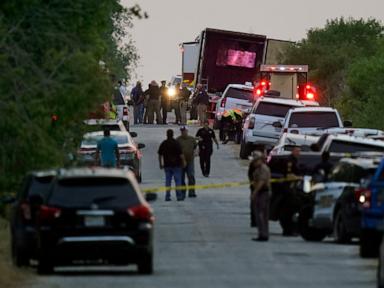
When fifty-three people died in that San Antonio tractor-trailer in June 2022, it stood as one of the deadliest human smuggling tragedies in United States history. Heatstroke and hyperthermia do not care about borders, politics, or smuggling fees. Inside an unventilated or malfunctioning trailer baked by summer temperatures, human bodies lose their ability to cool themselves. Sweat pours until there is nothing left to sweat. Confusion sets in. People bang on metal walls that no one outside can hear—or no one chooses to open.
Why Thirty Years Matters in Federal Court
People often ask a straightforward question when they read about a thirty-year sentence in a smuggling case: why did this specific defendant get so much time, and does prison actually stop the next load?
Let us unpack both parts honestly, without pretending there is an easy or comforting answer.
In federal court, sentencing in alien smuggling resulting in death is driven by the severity of the outcome and the defendant's specific role in the conspiracy. Prosecutors do not have to prove that a smuggler woke up wanting fifty-three people to die in order to seek stiff penalties; under federal law, smuggling that causes serious bodily injury or places lives in jeopardy—and especially smuggling that results in death—carries steep statutory exposure and harsh sentencing guidelines. When a defendant plays a meaningful role in moving or facilitating the operation knowing the extreme risks involved, courts treat that recklessness as profoundly grave.
Still, legal precision can feel cold when you are grieving. A thirty-year sentence does not bring back a twenty-year-old son, a mother trying to build a future for her children, or a father who boarded a truck believing the worst part was the walk through the brush. Justice in a courtroom is structured around accountability, deterrence, and proportionality under the law. Grief lives outside the courtroom, where no sentence ever feels like enough.
But the real problem lies elsewhere: enforcement after a tragedy is necessary, yet punishment alone has never fully dismantled a lucrative underground market.
Why? Because human smuggling is a classic supply-and-demand problem wrapped in geopolitical friction. As long as deep economic disparities push people to seek safety or wages elsewhere, and as long as strict enforcement makes unassisted crossing harder and costlier, smuggling networks adapt. They change routes. They use stash houses in border towns. They recruit drivers who need cash and overlook the danger until the doors are locked and the heat spikes.
I have to admit something that makes policy debates uncomfortable. Watching this cycle repeat year after year can leave you feeling cynical, even exhausted. You read about another rescue, another indictment, another sentencing hearing, and a quiet voice asks whether anything fundamental shifts. Being honest about that doubt matters more than pretending we have all the answers. If we ignore the structural forces driving people into the hands of smugglers, we end up treating symptoms at the hospital while the underlying fever keeps climbing.
The Invisible Stakes Behind Every Checkpoint
When headlines focus on a single defendant—a Guatemalan national sentenced to three decades behind bars—it is easy to slip into flat categories. Good versus evil. Smuggler versus victim. Border security versus humanitarian concern.
Real life is messier, and the stakes are wider than a single trial.
First, there are the surviving families thousands of miles away. When a smuggling tragedy hits the news in Texas, relatives in Guatemala or Mexico may spend agonizing hours or days trying to find out if their loved one was on that truck. Phones go unanswered. Rumors spread across messaging groups. Even after identification is confirmed, families face practical barriers—travel logistics, financial strain, trauma—while trying to mourn people who died in transit.
Second, there are first responders and local communities in South Texas. Police officers, firefighters, paramedics, and medical examiners who open the doors of a sweltering trailer do not easily unsee what is inside. That trauma ripples through small towns and emergency crews who bear the immediate weight of federal border dynamics.
Third, there is the question of accountability across the entire smuggling chain. A thirty-year sentence for one convicted participant signals that federal authorities are pursuing prosecutions aggressively and holding individuals responsible for deadly outcomes. Yet smugglers operate across jurisdictions and borders, making investigation slow, painstaking work. Every indictment is one link tested or broken; keeping pressure on the broader network requires sustained coordination, intelligence, and resources long after the initial outrage fades.
Consider what happens next when a case concludes in court: the legal record closes, or moves toward appeals, while the human ripples keep moving. A young child grows up without a parent. A community loses working-age neighbors. A sentence is logged in federal prison records, marking years that will pass behind concrete walls while life outside keeps spinning.
What This Case Forces Us to Confront
There is a temptation, whenever a tragedy like this makes national news, to turn it into a tribal shouting match. One side demands harsher punishments and tighter walls; another emphasizes humanitarian protection and root causes. Both sides often talk past each other, reducing human lives to talking points.
A thirty-year prison term does not settle that debate, nor does it erase the horror of fifty-three people suffocating in the heat. What it does is draw a stark line around human life. It says that treating human beings like cargo—packing them into confined spaces where heat and lack of air can turn a journey into a death trap—carries catastrophic consequences.
We do not have to agree on every detail of immigration policy to recognize basic human decency. We do not have to ignore the rule of law to feel sorrow for people who died in agony trying to survive. Holding both truths at once is hard. It requires patience, clarity, and a refusal to look away when the story stops being trending news.
At dusk along a South Texas highway, the sky turns a bruised, copper purple, and the cicadas start up in the brush. The heat finally begins to loosen its grip, hour by hour, until the desert air cools enough to breathe easily again. Fifty-three people never got that cooling evening. They were left behind in the dark of a steel box, remembered now in court transcripts, memorials, and a thirty-year sentence that echoes long after the gavel falls.