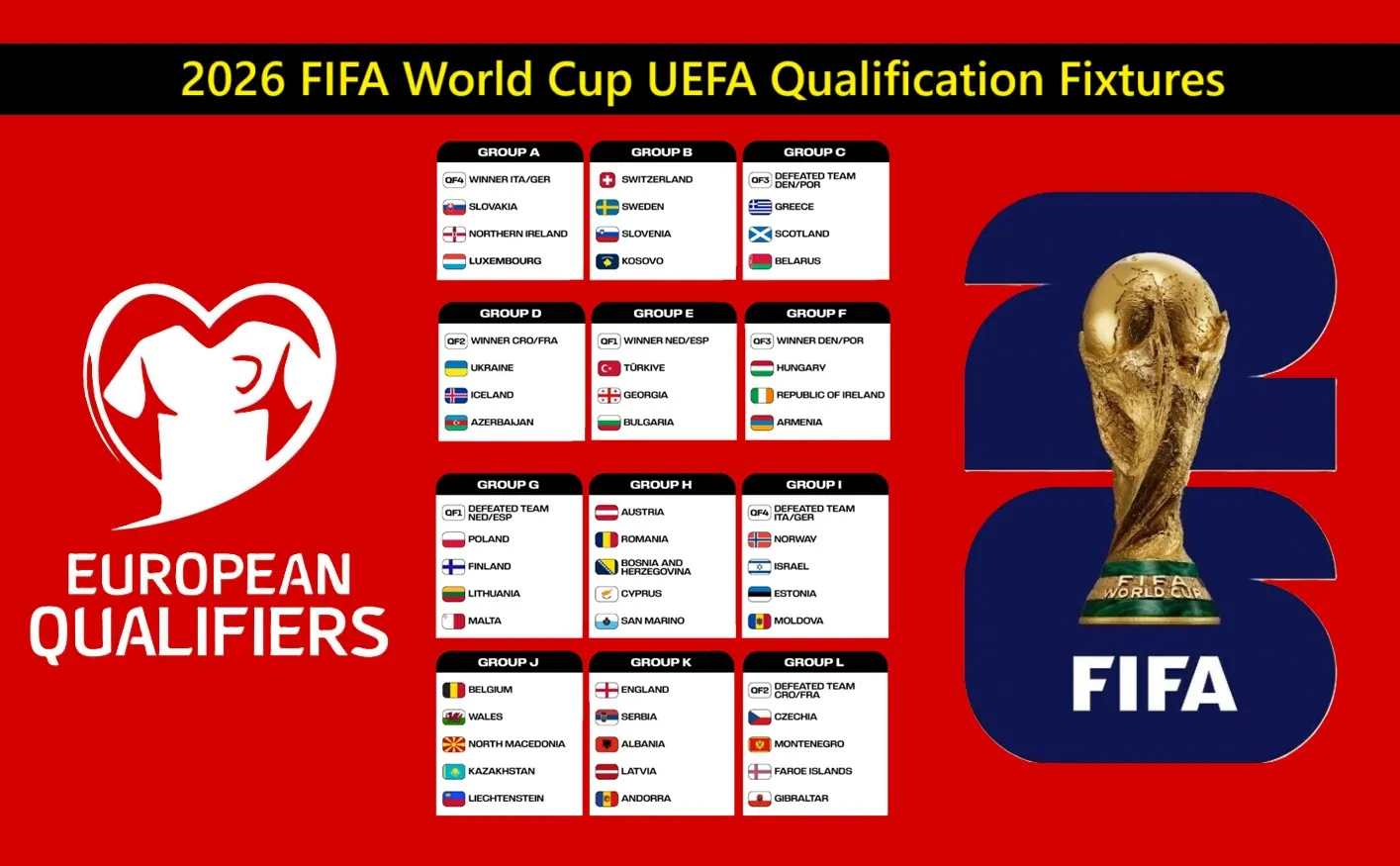
The premise that FIFA should pull the 2026 World Cup out of the United States is rooted in a fundamental misunderstanding of how power, money, and global influence actually flow. Most critics point to logistical nightmares, the lack of a "soccer soul" in the States, or the sheer arrogance of American exceptionalism as reasons to move the tournament to Europe or South America. They are wrong. Not because the US is a perfect host—it isn't—but because they are asking the wrong question.
The real crisis isn't whether the US is "ready" for the World Cup. The crisis is that the American sports machine is calcifying, and without the infusion of the world’s most efficient sporting product, it will continue its slow slide into irrelevance. FIFA isn’t doing the US a favor; FIFA is performing a forced organ transplant on a patient that doesn’t realize it’s sick.
The Myth of the Host Benefit
Standard economic analysis suggests that hosting a World Cup is a financial drain. Academics like Andrew Zimbalist have spent decades proving that the "economic multiplier" of mega-events is largely a fiction created by consulting firms. The US doesn't need the money. It has the stadiums. It has the infrastructure.
But the "lazy consensus" says the US should lose the tournament because it "doesn't care enough about football." This is a provincial view. FIFA doesn't care if you "care." FIFA cares about the colonization of the last major untapped commercial frontier.
If you pull the World Cup out of the US, you aren't punishing a "bad host." You are effectively surrendering the global game to the closed-loop systems of the NFL and NBA. That is a strategic failure of catastrophic proportions. The US needs this tournament to break the monopoly of its domestic "Big Four" leagues, which have become increasingly insular, bloated, and disconnected from the global athletic standard.
The Infrastructure Trap
Critics love to moan about the distance between host cities. "How can fans travel from Vancouver to Mexico City to Miami?" they ask. They cite the carbon footprint. They cite the lack of high-speed rail.
This is a logistical reality, not a reason for cancellation. The US is a continent masquerading as a country. Yes, the travel will be brutal. Yes, it will be expensive. But the alternative is hosting the tournament in a "football-pure" nation that will likely bankrupt itself building "white elephant" stadiums that rot the moment the final whistle blows.
I’ve seen cities in Brazil and South Africa pour billions into concrete husks that now serve as parking lots for buses. The US is one of the few places on earth where the infrastructure already exists in a state of high-functioning excess. Using it isn't an "American overreach"; it's the only fiscally responsible way to host a 48-team tournament. If you want a 48-team World Cup—a bloated monstrosity FIFA created for its own political ends—you have to host it in a place that can absorb the shock.
Cultural Elitism is Not a Strategy
The most tired argument for pulling the cup is the "Atmosphere" argument. European purists argue that the US lacks the "organic terrace culture" required for a true World Cup.
This is nothing more than gatekeeping.
The atmosphere in a US-hosted World Cup won't look like a rainy Tuesday in Dortmund. It will look like a global corporate gala. Is that "pure"? No. Is it the future of the sport? Absolutely. The "pure" fans they are worried about are already priced out of the modern game anyway.
The US offers something far more valuable to the longevity of the sport: a neutral ground where every single participating nation has a massive, built-in diaspora. You can play a match between South Korea and Ghana in Los Angeles, and the stadium will be split 50/50. You cannot achieve that level of organic, cross-border representation in England or Italy. The US is the only place where the "World" in World Cup actually feels literal in the stands.
The "Soccer is Growing" Lie
Let's dismantle the most common American defense: "Soccer is the sport of the future in the US."
People have been saying this since the 1970s. It’s a comfortable lie. Participation numbers are high, but the "Pay-to-Play" model in the US has effectively turned the sport into a suburban country club activity. It is a gated community sport.
By keeping the World Cup in the US, FIFA isn't rewarding growth; it's attempting to hijack the American youth. The US sports landscape is currently a battle for the attention of Gen Z and Alpha, who are increasingly bored by the four-hour, ad-saturated slog of American football and baseball.
The World Cup is the only product capable of shattering the American "Sports Industrial Complex." It introduces a sense of stakes—true, existential, national stakes—that a "World Series" played by two countries (one of them barely) can never replicate.
The Security and Political Smoke Screen
The "People Also Ask" sections of the internet are currently obsessed with US visa policies and political instability. "Will fans be able to get in?" "Is the US too polarized?"
This is a distraction. FIFA has worked with regimes far more restrictive and volatile than the US. To suggest that US border policy is a reason to move the tournament is to ignore the reality of Russia 2018 or Qatar 2022. FIFA deals in the currency of sovereignty; they will get their "FIFA lanes" at airports, and they will get their tax exemptions.
The real danger isn't that fans can't get in. The danger is that the US will try to "Americanize" the broadcast to the point of unwatchability. We are talking about the potential for "Green Zone" fan fests and "State Farm Injury Reports" during a VAR review. This is the legitimate threat—the dilution of the product by the American marketing machine.
But you don't solve that by pulling the tournament. You solve that by forcing the US to adapt to the global standard.
The Talent Vacuum
We also need to address the "Battle Scars" of the US Men’s National Team (USMNT). For years, the US has operated under the delusion that "development" means building more $50 million facilities. It doesn't. Development comes from pressure.
Hosting the World Cup is the ultimate pressure cooker. It exposes the flaws in the domestic system. When the US hosted in '94, it led to the creation of MLS. It was a survival tactic. In 2026, the stakes are higher. The US needs to be embarrassed on home soil to finally realize that their "exceptional" coaching and "athleticism-first" scouting is twenty years behind the rest of the world.
You don't get better by playing friendlies in empty NFL stadiums against B-teams from CONCACAF. You get better by inviting the world to your backyard and watching them burn it down.
Stop Asking if the US is Ready for FIFA
The question is whether the world is ready for what the US represents: the final stage of sports-as-entertainment.
If you take the World Cup away, you preserve a nostalgic version of the game that is already dying. The game is moving toward massive, multi-city, multi-national events. The 2030 World Cup is already slated for three continents. The 2026 US-led bid was the blueprint for this inevitable, albeit messy, future.
The US provides the scale. FIFA provides the soul (or what's left of it). It’s an uncomfortable, cynical, and purely transactional marriage. But marriages of convenience are often the most durable.
Pulling the cup would be a coward’s move. It would be an admission that the global game is too small to handle the world's largest market. If the beautiful game can’t survive the strip malls of New Jersey or the humidity of Houston, then it isn't as robust as we claim it is.
The World Cup stays. Not because the US deserves it, but because the US is the only mirror big enough for the sport to finally see how much it has changed. Stop complaining about the travel times and start preparing for the total Americanization of the global spectator. It’s coming, whether you move the tournament or not. You might as well be there to watch the collision.
Go buy your tickets. Or don't. The stadiums will be full regardless.