The light from the hallway lamp felt like a physical weight against Sarah’s eyelids. It wasn't a normal headache. It wasn't the kind of dull throb you get after a long shift or a night of poor sleep. This was sharp. Pulsing. It felt as though someone was tightening a vice around the base of her skull, pushing her eyes outward from the inside.
She reached for the glass of water on her nightstand, but her neck refused to bend. The stiffness was absolute.
In the next room, her toddler was finally asleep after a day of fussing. Sarah tried to tell herself it was just the flu—the seasonal visitor that turns every household into a battlefield of tissues and lukewarm tea. But the shivering wouldn't stop, even under three wool blankets. And then she saw it. A tiny, plum-colored smudge on her forearm. It didn't fade when she pressed her thumb against it.
This is how the numbers start.
Behind the sterile headlines about rising infection rates and logistical bottlenecks lies a frantic, quiet reality. We talk about "cases" as if they are abstract data points on a line graph. We discuss "vaccine queues" as if they are merely inconveniences, like waiting for a table at a popular brunch spot. But for Sarah, and for thousands of others across the country this year, those numbers are made of skin, bone, and a terrifyingly ticking clock.
Meningitis doesn't care about your schedule. It doesn't wait for the supply chain to right itself. It is a biological race, and right now, the bacteria are winning a head start.
The Invisible Siege
To understand why the current surge is causing such a tremor through the medical community, you have to understand the sheer speed of the enemy. Bacterial meningitis is an inflammation of the protective membranes covering the brain and spinal cord. It is an invasion of the inner sanctum.
Imagine your body as a fortress. Most illnesses are like a rowdy crowd at the gates; they cause a stir, maybe break a window, but the structure holds. Meningitis is a silent breach. It slips past the blood-brain barrier—a filter so selective it usually keeps out even the most advanced medicines—and begins to multiply in the cerebral spinal fluid.
Within hours, the pressure builds. The brain swells against the rigid confines of the skull. This isn't a slow decline. It is a vertical drop. A person can go from feeling "under the weather" at breakfast to fighting for their life by dinner.
The recent data points to a specific, unsettling trend: the return of Group B and W strains in demographics that previously felt insulated. For years, we leaned on the success of childhood immunization programs. We felt safe. But immunity is not a static shield; it is a garden that requires constant tending. When gaps appear in the schedule—whether due to pandemic-era disruptions, waning public focus, or simple exhaustion with the medical system—the bacteria find a way back in.
The current rise in cases isn't just a fluke of biology. It is the result of a collective lowering of our guard.
The Weight of the Line
Walk past any community clinic this week and you will see the physical manifestation of our anxiety. The queues wrap around corners, trailing into parking lots and shivering under grey skies. There is a specific kind of silence in these lines. It’s not the frustrated chatter of people waiting for a government document. It’s the hushed, rhythmic tapping of feet. It’s parents checking their children’s foreheads for the fifth time in an hour.
The bottleneck is real. While the headlines focus on the "rising cases," the deeper story is the friction of the response. Public health infrastructure is currently a system of pipes built for a steady trickle, suddenly forced to handle a flash flood.
There is a psychological cost to the wait. Every hour spent in a queue is an hour of vulnerability. We are living in a moment where the demand for protection has finally outpaced the convenience of receiving it. For the people standing in the cold, the vaccine isn't just a medical procedure. It is a passport back to a world where a headache is just a headache.
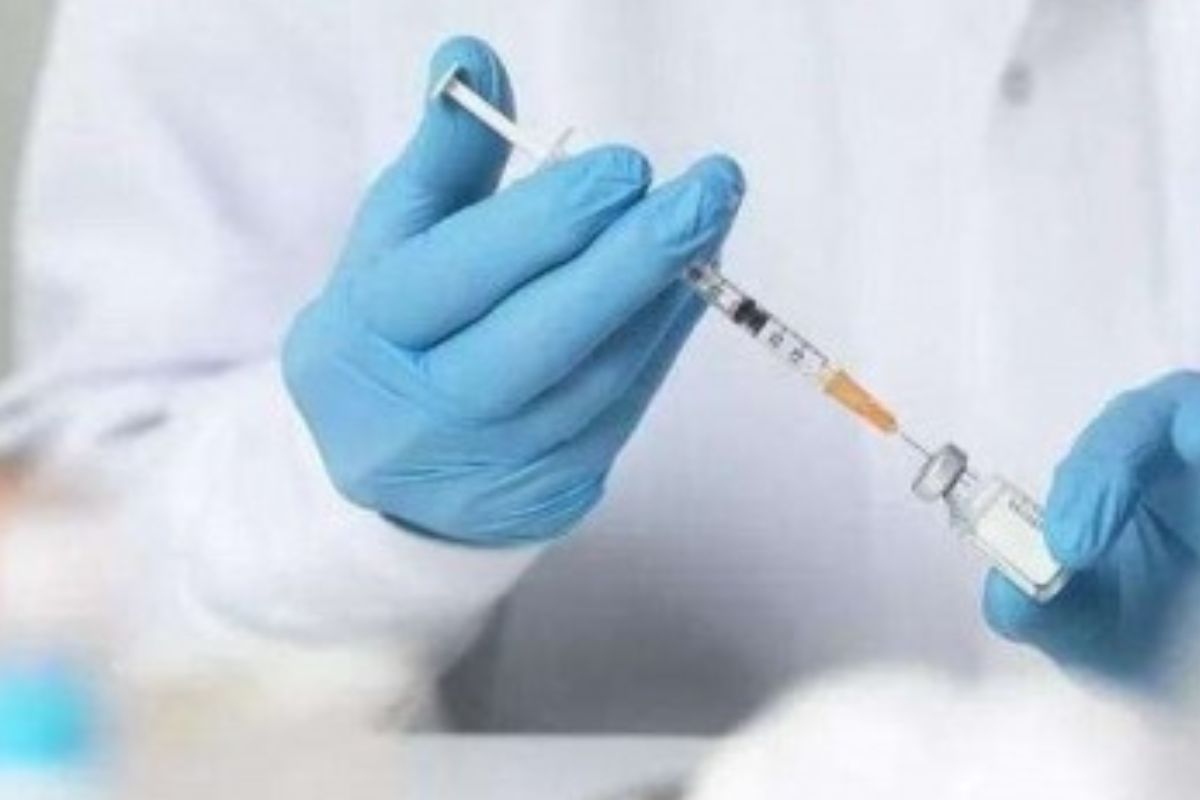
Consider the logistics of a single vial. It requires a temperature-controlled journey, a verified chain of custody, and a trained hand to administer it. Now multiply that by millions. When we see "shortages" in a news ticker, we should see the frantic phone calls of pharmacists, the exhausted nurses pulling double shifts, and the high-stakes gamble of a parent deciding whether to wait another day or drive three towns over to a clinic that might have a dose.
The Geometry of Protection
Why does one person’s choice to skip a booster affect the person standing three feet away in a grocery store? The concept of "herd immunity" is often tossed around in academic papers, but its reality is far more intimate.
Think of it as a forest. If every tree is lush and green, a small spark on the forest floor will eventually sputter out. It has nowhere to go. But if every fourth or fifth tree is dry and brittle, that spark finds a bridge. It jumps. It gathers heat. Eventually, even the healthiest trees are scorched by the sheer intensity of the blaze.
By entering the vaccine queue, you aren't just protecting your own nervous system. You are acting as a firebreak for the person who can't be vaccinated—the newborn baby too young for the shot, or the grandmother whose immune system is compromised by chemotherapy. The "human element" of this crisis is that our survival is fundamentally collaborative.
We have spent the last few years becoming experts in isolation. We learned how to stay apart to stay safe. But with meningitis, the defense is found in our proximity to the solution. The queue, as frustrating as it is, is actually a beautiful thing. It is a line of people deciding, however subconsciously, to protect the collective forest.
The Symptoms That Hide in Plain Sight
The danger of the current surge is compounded by how well the disease mimics the mundane. It starts with things we all experience:
- A stiff neck that feels like a pulled muscle from a bad night's sleep.
- Sensitivity to light that feels like a brewing migraine.
- Confusion that feels like the brain fog of a long week.
But then comes the differentiator. The "glass test" is a piece of folk wisdom that remains a vital clinical tool. If a rash appears and does not fade when a clear glass is pressed firmly against it, the situation has moved from "concerning" to "critical." That non-blanching rash is the sound of an alarm that cannot be silenced. It means the infection has entered the bloodstream, causing tiny hemorrhages under the skin.
Sarah knew about the glass test. She had read it on a pamphlet years ago, tucked away in a drawer of her mind alongside emergency exits and CPR instructions. When she pressed her water glass against that purple smudge on her arm and the color remained, the world became very small and very fast.
Beyond the Statistics
We often wait for a crisis to appreciate the mundane grace of health. We treat our bodies like machines that should simply run until they don't. But a surge in meningitis cases serves as a brutal reminder of our fragility. It forces us to look at the "vaccine queues" not as a failure of bureaucracy, but as a vital, life-saving scramble.
The doctors in the emergency rooms aren't looking at "case rises." They are looking at the way a patient's pupils react to light. They are feeling the tension in a spine. They are waiting for the results of a lumbar puncture—a procedure that feels like a violation but acts as a revelation.
There is no "back to normal" when it comes to infectious disease. There is only a continuous, shifting negotiation between us and the microscopic world. The current queues are a sign that we are renegotiating. We are paying the price of admission to a safer season.
Sarah made it to the hospital. She spent two weeks in a room where the lights were always dimmed, listening to the rhythmic beep of monitors that mapped her survival. She survived because she recognized the smudge. She survived because she didn't wait for the queue to get shorter.
The tragedy of the "rising cases" isn't just the illness itself; it’s the quiet, preventable nature of the loss. Every person in that line is a story that hasn't ended yet. Every dose administered is a door being locked against a thief.
As the sun began to rise on her final day in the ward, Sarah watched the dust motes dancing in a sliver of light from the window. Her neck turned easily now. The vice was gone. Outside, in the world she was about to rejoin, the lines were still forming at the clinics. People were still waiting.
They were waiting because they knew what Sarah now knew with every fiber of her being. The fever is coming, and the only way through it is together.
The line is long, but the alternative is a silence that no one should have to bear.