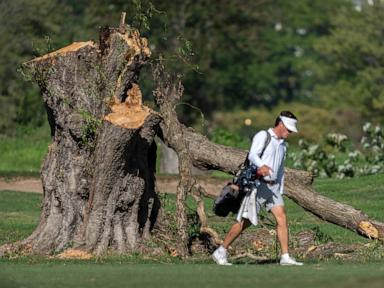
Courts rarely see raw, unfiltered judicial fury quite like the courtroom showdown over public green spaces in the nation's capital. When U.S. District Judge Ana Reyes unloaded on administration lawyers regarding the abrupt felling of hundreds of trees at a historic Washington public golf course, she didn't mince words.
Government attorneys found themselves on the receiving end of a historic dressing-down after more than 400 trees were cleared at East Potomac Golf Links without respecting prior judicial warnings. "You did not do your best! You did your absolute worst!" Judge Reyes exclaimed during a fiery hearing. That courtroom explosion highlights a much deeper conflict over executive overreach, public land management, and accountability in federal litigation.
The Breaking Point at East Potomac Park
The controversy centers on ambitious plans to overhaul East Potomac Park, a nearly 400-acre public recreation area in Washington, D.C. Administration officials argued that crumbling infrastructure, including a failing seawall, demanded immediate closures and radical reconstruction. Critics and local preservationists pushed back hard, arguing that sweeping changes would permanently alter a historic urban sanctuary.
Things escalated rapidly when heavy machinery moved in and cleared over 430 trees before a pending legal challenge could be fully heard. Judge Reyes made it clear that her prior instructions regarding advance notice were entirely ignored. When government counsel claimed they had done their best to provide notice, the bench rejected the defense outright.
The judge questioned whether the administration had misled the court about project timelines and underlying plans. For a federal judge to openly state they feel lied to by government counsel signals a total breakdown of trust between the executive branch and the judiciary.
Public Outcry and the Battle Over Urban Green Space
Public sentiment quickly rallied around protecting the historic grounds. During subsequent court proceedings, the divide between local stakeholders and federal planners became visually striking. When the presiding judge asked courtroom spectators to raise their hands if they opposed the renovation design, a massive majority of the more than 100 people in attendance raised their hands.
Administration defenders frequently label outdated infrastructure as "Trash Island", arguing that a modern luxury revamp could attract prestigious tournaments like the U.S. Open or the Ryder Cup. On the flip side, local advocates view the project as an aggressive land grab that destroys mature urban canopy under the guise of infrastructure repair.
Judicial skepticism didn't stop at verbal warnings. The court ultimately blocked attempts to shut down the historic site for prolonged construction, maintaining that administrative speed cannot bypass legal oversight and community input.
Why This Courtroom Clash Matters Long Term
This high-profile dispute goes way beyond a single municipal golf course. It exposes the friction points that happen when federal agencies try to fast-track major structural overhauls without judicial sign-off. When courts demand transparency and administration lawyers fail to deliver precise timelines, the checks and balances system grinds into motion.
Accountability in public land management requires strict adherence to court orders. If government attorneys lose credibility with federal judges, future infrastructure projects face immediate skepticism and heavy injunctions.
Urban green spaces belong to the public, and safeguarding them requires transparent coordination, not sudden bulldozers clearing hundreds of mature trees overnight. Judge Reyes drew a hard line in the sand, proving that executive authority still has to answer to the rule of law.