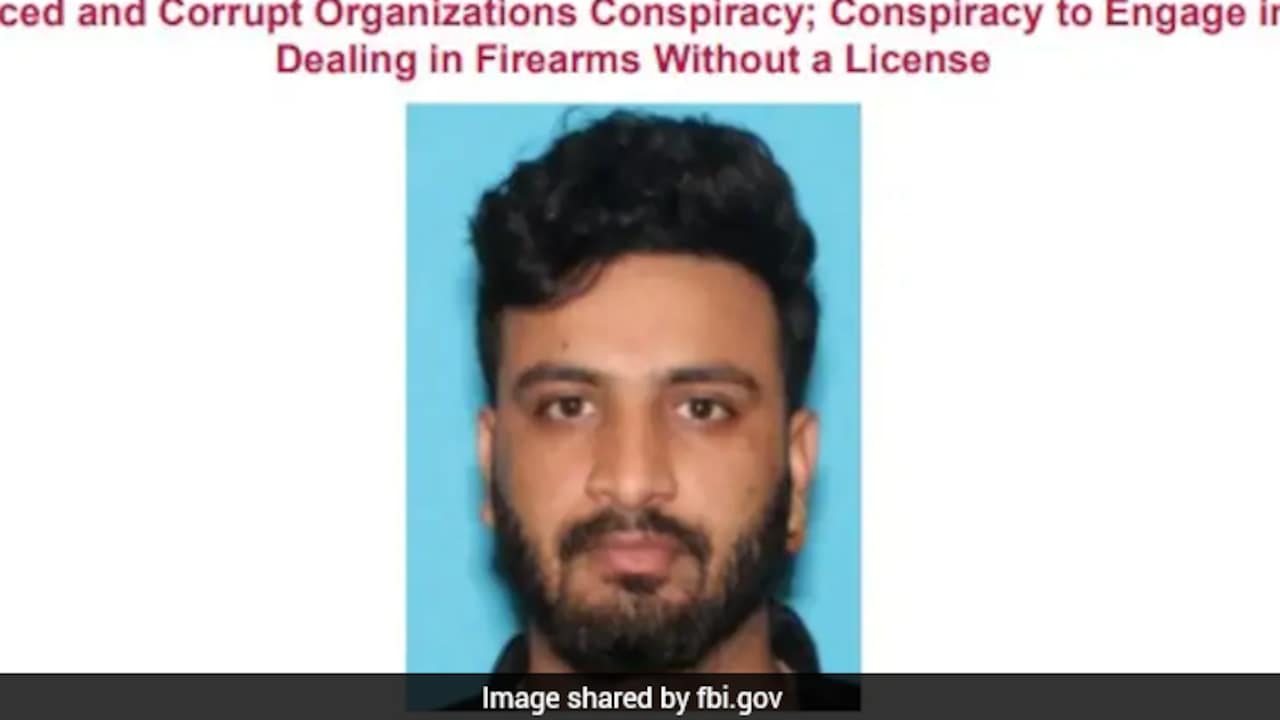
The headline drops like clockwork. Major Singh lands on the FBI Most Wanted list, and the security establishment acts like a breakthrough just happened. Pundits line up on cable news to hyperventilate about transnational crime syndicates, international police cooperation, and the tightening net of global justice.
It is theater. Expensive, performative theater designed to soothe taxpayers into thinking a chaotic world operates under the jurisdiction of a neat procedural drama.
I have spent the better part of two decades watching how transnational syndicates actually operate from the inside out, and the obsession with high-profile red notices misses the machinery entirely. When a name like Singh pops up on a federal watchlist, the media treats it as a tactical victory. They are looking at the marquee while the venue is burning down.
The lazy consensus says that putting a transnational figure on a public wanted poster signals the collapse of their operation. The reality is far uglier. Most of the time, public designation is a concession of failure disguised as an aggressive posture.
The Economics Of The Most Wanted Illusion
Let us break down what actually happens when an international fugitive hits peak visibility. Law enforcement agencies face a relentless budget cycle. They need political backing, legislative renewals, and public validation. A high-profile Indian gangster featured alongside traditional cartel bosses provides an immediate return on political investment.
It creates a phantom urgency.
Look at how these organizations function. They are decentralized networks, operating more like modern venture capital firms specializing in illicit arbitrage than hierarchical mob families from a bygone era. They do not rely on a single charismatic figurehead sitting in an identifiable office. They rely on shell companies, crypto-mixers, corrupt customs officials, and jurisdictional friction.
When the Federal Bureau of Investigation highlights an individual, they are freezing a dynamic network in amber for the public relations machine. Meanwhile, the actual capital flows have already shifted to three other operational fronts.
Public posters are rarely deployed because investigators are closing in. They are deployed when leads have gone cold and political masters demand proof of life from the investigative branch.
If you believe that a public poster disrupts money laundering pipelines or stops weapons trafficking across borders, you fundamentally misunderstand the mechanics of modern crime. The real powerbrokers in this space never make the top ten list. They buy commercial real estate in Dubai, invest in clean tech startups in Western Europe, and retain boutique law firms in London to handle compliance queries before they ever turn into warrants.
Why The Prosecution Model Is Broken
The entire framework of international law enforcement is built on a Westphalian model of sovereign states that no longer exists in a digital, globalized economy. Criminal syndicates realized twenty years ago that geography is an administrative inconvenience, while police departments are still bound by state lines and extradition treaties that take years to litigate.
When analysts ask how Singh managed to elude capture for this long, the question itself betrays a profound misunderstanding of modern state capacity. They assume the state is always trying its hardest and simply outmatched by clever criminals.
That is false.
States are constrained by bureaucracy, jurisdiction, and competing geopolitical priorities. Intelligence agencies routinely trade the arrest of a mid-to-high-level operational asset for long-term surveillance access or geopolitical leverage.
Imagine a scenario where an international crime syndicate provides passive counter-intelligence value against a hostile state actor. Do you genuinely believe a local field office is going to prioritize a localized extortion charge over a strategic intelligence pipeline? The hierarchy of state priorities is ruthless. Public outrage does not dictate enforcement priorities; geopolitical utility does.
This is the dirty secret of international policing. The most effective operations never make the news because publicizing them compromises sources, methods, and diplomatic backchannels. What you see on television is the retail product. The wholesale business happens behind closed doors where fugitives are currency, not just criminals.
Dismantling The Transnational Myth
We need to stop treating international crime like a Hollywood script where a lone detective tracks a mastermind across continents through sheer grit and intuition.
Transnational networks survive because of systemic friction. They exploit the gaps between legal systems. If India and Western law enforcement agencies want to dismantle organizations like the ones linked to Singh, they do not need more press conferences. They need to choke off the corporate structures that allow dirty money to masquerade as legitimate foreign direct investment.
As long as anonymous shell companies can purchase luxury real estate in global financial hubs with zero questions asked, adding a name to a digital bulletin board is nothing more than administrative virtue signaling.
Stop looking at the posters. Start looking at the balance sheets. The real threat is not the man whose face is plastered across the news. The real threat is the system that allowed him to build a multinational enterprise while everyone was too busy watching the trailer.


