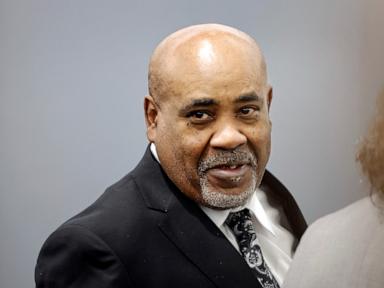
The trial of Duane "Keffe D" Davis is not merely a legal proceeding about a three-decade-old homicide. It is a grim testament to the modern era of performative justice, where the prosecution’s case rests almost entirely on the defendant’s own penchant for self-mythologizing. Nearly thirty years after the drive-by shooting that silenced Tupac Shakur, the state of Nevada is attempting to secure a murder conviction against the last living occupant of the white Cadillac involved in the 1996 attack. They do not claim Davis pulled the trigger. Instead, they argue he orchestrated a retaliatory hit, pinning the physical act of murder on his late nephew, Orlando "Baby Lane" Anderson.
For the legal system, this is a maneuver born of necessity. With every other potential accomplice long dead, prosecutors are relying on a transcript—a 2008 recorded interview where Davis, speaking under a promise of confidentiality, detailed the night of the shooting. The defense paints a different picture: a man who, long after the streets had cooled, spun yarns of his criminal past to secure book deals and notoriety, effectively talking himself into a life sentence.
The fundamental tension here is the reliability of "street lore" when it migrates into a courtroom. When Davis told investigators that he passed a gun to his nephew, he was, in his own mind, establishing his status as a shot-caller in the South Side Compton Crips. He was projecting power. Prosecutors are now treating that same projection as a sworn confession. It is a dangerous evidentiary gamble. If the state’s case is predicated on statements that were, by the defendant’s own account, embellished for the sake of a "Compton Street Legend" memoir, the jury is left to decide whether they are witnessing a murder confession or a final, fatal act of posturing.
The origins of this violence were mundane, born from the friction of a Las Vegas casino floor following the Mike Tyson fight on September 7, 1996. Tupac Shakur and his entourage, aligned with Death Row Records, assaulted Orlando Anderson in the MGM Grand lobby. This act of violence, captured on security footage, served as the catalyst. Retaliation was the currency of the era, and the South Side Compton Crips were operating on a high-stakes exchange rate.
The prosecution’s narrative is consistent with historical records: that the shooting was a targeted response to that casino brawl. Yet, the leap from motive to a murder conviction requires proving that Davis intentionally directed the lethal force. His defense team is dismantling this by highlighting the inconsistency of his own prior statements. Davis has, at various times, blamed New York interests or other associates, depending on who was listening and what gain he could extract from the interaction. He is a witness who has contradicted himself for decades. To build a conviction on his words is to invite the jury to play a guessing game with the truth.
There is also the matter of the "confidential" nature of the 2008 interview. The detectives who recorded Davis were, at the time, fishing for information regarding the separate, equally cold-case murder of Christopher "The Notorious B.I.G." Wallace. They offered him an environment where he felt safe enough to brag, believing his words would not be weaponized against him. The state now argues that because Davis went public with his story years later, that protection is void. This sets a murky precedent. It suggests that if a suspect ever speaks freely—whether for money, fame, or hubris—that speech effectively forfeits their right to be judged on actual forensic evidence.
The court must now reconcile the reality of 1996 with the storytelling of 2026. The actual shooter, Orlando Anderson, was killed in an unrelated gang dispute in 1998, leaving no way to verify the claims Davis made against him. The physical evidence from the scene—the bullets and the shell casings—has never provided a definitive link to any specific person, let alone a "shot caller."
What we are witnessing is the collision of two worlds. The hip-hop culture of the nineties, obsessed with image, posturing, and the accumulation of street-level gravity, has finally forced itself into the rigid, clinical framework of a Nevada murder trial. By chasing a headline-grabbing conviction, the state risks turning the trial into a circus of hearsay. They are banking on the jury’s willingness to accept that a man who spent his life lying for profit finally decided to tell the truth when it led to his own imprisonment.
If the prosecution succeeds, it will be hailed as a victory for justice, a final closing of the book on the most famous murder in music history. But if the jury sees through the performance, they will be left with the same vacuum that has existed since 1996. A man who was there, and perhaps even influential in that night’s events, may walk free simply because the evidence provided was never meant to be a record of history. It was meant to be a legend. And a legend, by definition, is not designed to stand up to the scrutiny of a cross-examination.
The pursuit of closure often blinds investigators to the reality of the evidence they hold. By prioritizing a high-profile target, the legal system has effectively admitted that it lacks the smoking gun required to convict the man who actually fired the weapon. Instead, they are left to prosecute the story of the crime, using the defendant's own hubris as the key witness. If this case collapses, it will not be because the truth wasn't out there, but because the truth was buried under three decades of ego, myth, and the shifting loyalties of a street war that everyone else involved has already escaped. The law is trying to reach back and grab a ghost, and in the process, it may well find that there is nothing left to hold.