The room smells of damp cloth and old tea. Outside, Toronto moves in its usual hurried blur, indifferent to the quiet corners where bodies break down behind closed doors. Inside, Claire Brosseau spends her hours pinned to a bed, her hair bundled into a simple bandana, her world reduced to the four walls of a room and the digital glow of a screen. When she reads official parliamentary documents, she isn't looking for political theater. She is looking for safety.
Instead, she found a sentence written by a doctor. For an alternative look, check out: this related article.
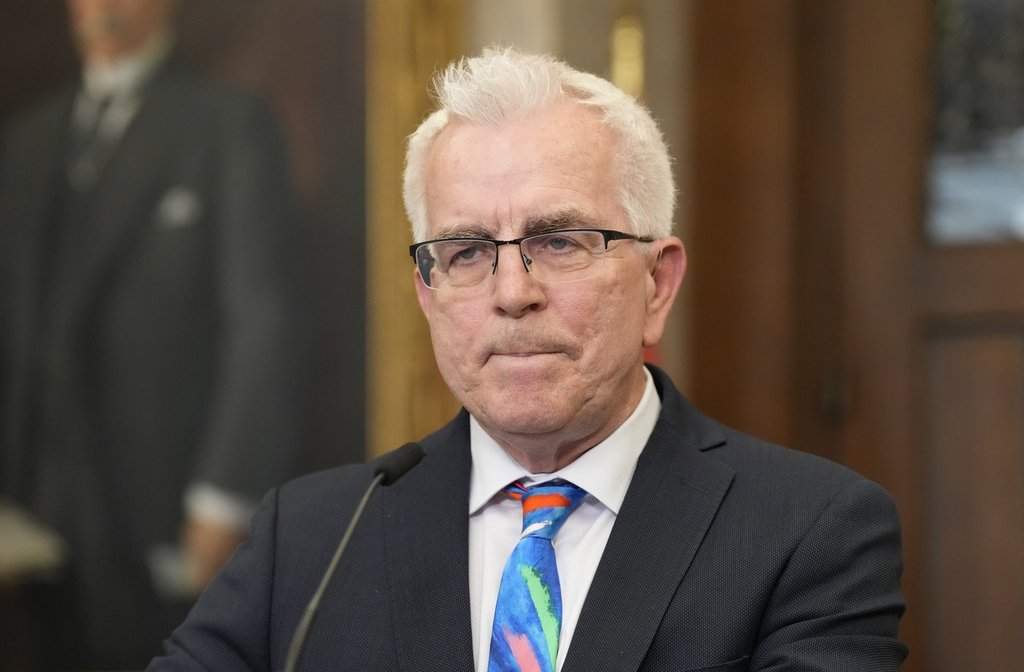
Marcus Powlowski—a Liberal member of Parliament and a licensed physician—sat at a committee table drafting a report on Medical Assistance in Dying, known across Canada as MAID. The debate itself was heavy enough, wrestling with the ethical boundaries of extending dying with dignity to those suffering from mental illness. But Powlowski chose to add a personal, supplementary argument. He wrote that the option to end one's life remains easily accessible regardless of the law. To illustrate his point, he noted that illicit narcotics like fentanyl offer a painless exit, adding that it was arguably easier for teenagers in his hometown to buy the synthetic opioid than it was for a doctor to renew a standard cholesterol prescription.
When Brosseau read those words, the air left her lungs. Similar coverage on this matter has been published by The Guardian.
To a politician working on a complex health policy, it was a blunt rhetorical flourish meant to highlight bureaucratic absurdity. To a person living with severe, crushing psychological distress, it read like something else entirely. It sounded like an official roadmap to oblivion. It sounded like a doctor pointing a trembling hand toward the nearest dark alley and whispering that the tools for self-destruction were cheap, effective, and open 24 hours a day.
Consider what happens next when a lawmaker forgets the gravity of a uniform.
Words spoken from a position of institutional authority carry an invisible weight. They do not merely describe reality; they shape it. When an elected official who also holds a medical license casually equates an illicit, highly lethal street drug with an accessible mechanism for dying, a dangerous shift occurs. Despair becomes practical. Desperation finds an administrative stamp of approval.
Brosseau didn't shrug the paragraph off. She drafted a formal complaint to the College of Physicians and Surgeons of Ontario. Her argument cuts straight to the ethical marrow of the medical profession. She contends that public remarks of this nature do something unforgivable: they normalize lethal means for vulnerable minds. They take the chaotic, terrifying impulse of suicidal ideation and dress it up in the respectable language of parliamentary discourse.
The regulatory college acknowledged the filing, setting wheels in motion that require a formal response from the MP. Yet the bureaucratic timeline of accountability moves at a glacial pace compared to the speed at which a mind can unravel in the dark.
We live in a culture obsessed with measuring safety in physical infrastructure—guardrails on bridges, childproof caps on medicine bottles, air filters in hospitals. Yet we routinely underestimate the toxic payload of linguistic negligence. When leaders treat human vulnerability as a chalkboard for provocative analogies, real people absorb the blow. Behind every policy paper on terminal options or mental health exclusions sits a population of citizens hanging on by threads so thin they can barely be felt.
The debate over MAID touches the most raw, sacred nerves of human autonomy and state protection. It forces a society to ask where mercy ends and abandonment begins. But that debate requires a standard of language that honors the fragility of the people caught in its crossfire.
When a doctor tells the public that a fatal dose is just around the corner, he is no longer diagnosing the disease. He is handing out matches in a room full of gas.
The regulatory process will eventually decide whether an elected official crossed an ethical line. But the deeper scar remains written in the quiet panic of those who looked to the halls of power for protection, only to find a casual invitation to the end.


