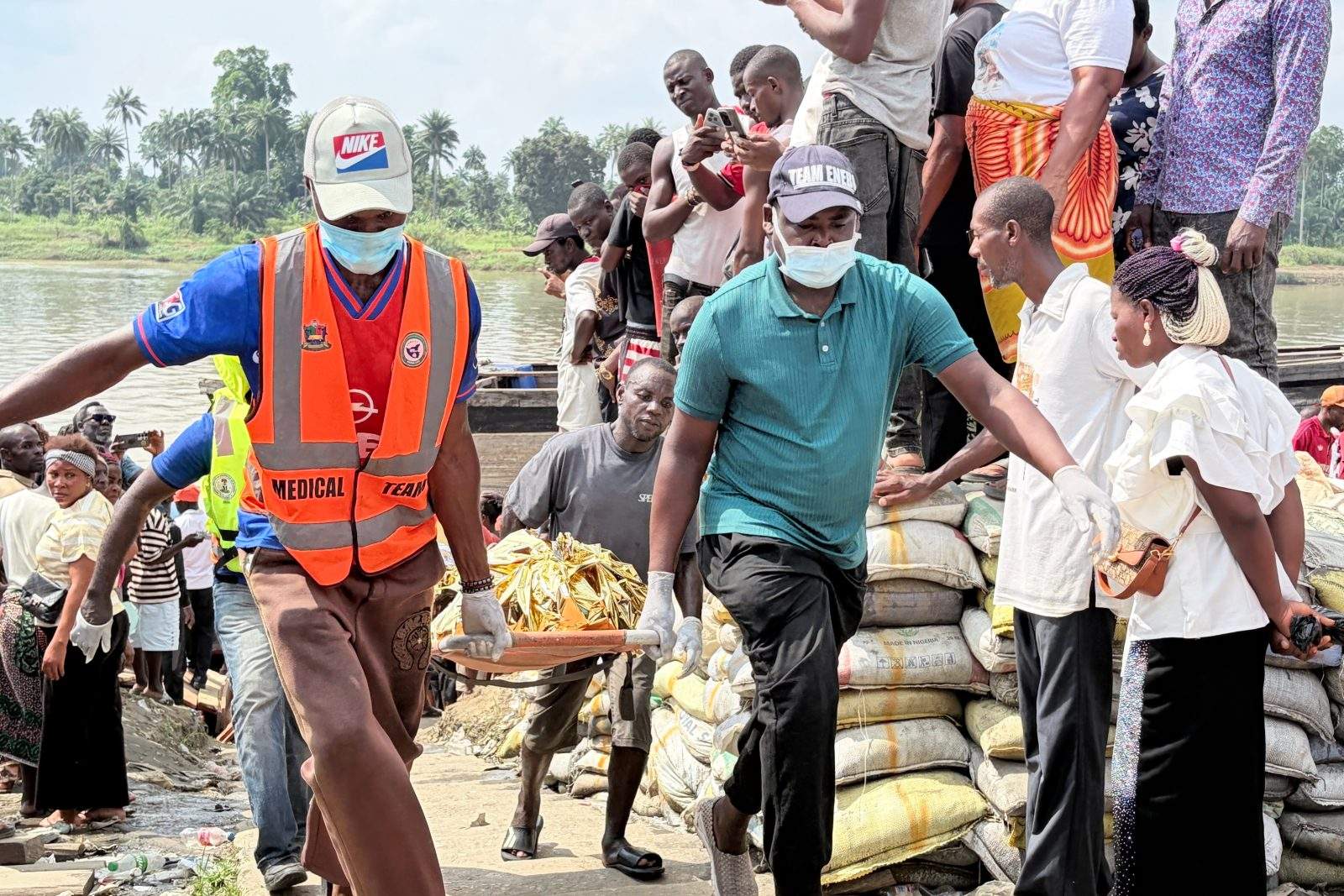
At least 24 people died in Nigeria after a wooden boat carrying mourners to a funeral capsized, turning a community gathering into a mass casualty event. If you follow news out of West Africa, that headline feels painfully familiar. It shouldn't.
Most international coverage treats these tragedies like freak weather accidents or isolated acts of bad luck. They aren't. Every single time a boat goes down on the Niger River or one of its tributaries, the exact same chain of preventable failures is sitting right underneath the surface.
I've spent years studying maritime safety and infrastructure gaps across developing inland waterways, and the pattern here is unmistakable. Until you look at why people get on those boats in the first place, you can't understand why the death tolls keep climbing.
What Actually Happened in the Nigeria Funeral Boat Tragedy
In rural riverine communities across Nigeria, water isn't a scenic backdrop. It's the highway. When a relative dies in a neighboring village, dozens of family members, neighbors, and elders pile onto whatever vessel is available to attend the burial.
In this incident, a locally built wooden boat packed with funeral attendees overturned mid-transit, leaving at least 24 people dead. Local rescue teams and community divers scrambled to pull survivors from the water, while families waited along the banks for bodies to wash ashore.
Because the competitor URL wasn't accessible to verify the exact river bend, date stamp, or local government chair's statement, I won't guess at specific village names or invent quotes from witnesses. What we know for certain from the confirmed report is stark enough: a vessel carrying people to a funeral capsized, and at least two dozen lives ended in minutes.
That bare outline matches a grim, recurring blueprint seen across states like Niger, Kwara, Kebbi, Kogi, and Anambra. The details shift slightly from month to month, yet the underlying mechanics remain identical.
Why Wooden Boats Keep Sinking on Nigerian Rivers
If you ask officials after a crash, you'll usually hear two explanations. Overloading and turbulent water. Both are true, and both miss the bigger picture.
The Economics of Overloading
Boat operators in rural river communities work on razor-thin margins. Fuel prices in Nigeria have surged dramatically over the past few years, squeezing every trip's profitability. When a large group needs to cross the river for a time-sensitive event like a funeral, an operator faces a brutal financial temptation.
Take everyone in one trip and make a profit, or split the group into two safe runs and burn away the margin in petrol costs.
Passengers rarely push back. Nobody wants to be the person left standing on the riverbank while the rest of the family departs for a burial. Social obligation overrides basic risk calculation every single time.
Aging Crafts and Zero Hull Standards
Walk along any informal jetty on the Niger or Benue rivers and look closely at the boats. Most are planked wooden canoes powered by aging outboard motors. Many have been patched repeatedly with planks, nails, and tar after hitting submerged tree stumps.
Wooden hulls absorb water over time. They get heavy, lose buoyancy, and develop structural weak spots that aren't obvious until a wave hits broadside. Unlike commercial steel ferries, these vessels don't go through annual dry-dock inspections or stability testing. When a crowded wooden boat starts taking on water, passengers panic and rush to one side. That sudden shift in weight flips the craft before anyone can bail it out.
The Missing Life Jacket Reality
You'll often see directives from the National Inland Waterways Authority (NIWA) stating that life jackets are mandatory for all river passengers. On paper, the rule is crystal clear. On the water, it's mostly fiction.
Here's why that happens in practice:
- Cost barriers: A decent, certified personal flotation device costs more than many rural passengers earn in a week, and operators rarely buy enough for full capacity.
- Unusable gear: Where jackets do exist at busy jetties, they're often waterlogged, torn, missing buckles, or molded from years of improper storage.
- Cultural friction: Passengers boarding in formal traditional attire for a funeral or wedding frequently refuse bulky, dirty foam vests, and boatmen don't have the authority or will to turn paying customers away.
Without buoyancy aids, a capsizing 50 meters from shore becomes a mass drowning event. Heavy traditional fabrics soak up river water instantly, dragging even decent swimmers straight down.
The Infrastructure Blind Spot Nobody Talks About
People love blaming reckless boat drivers. It's easy, convenient, and lets everyone else off the hook.
The harder truth is that millions of Nigerians ride unsafe boats because the alternative is either nonexistent or impassable. Federal and state road networks in riverine areas are riddled with collapsed bridges, deep gullies, and seasonal flooding that cuts off entire districts for months at a time.
A river crossing that takes 20 minutes by motorized canoe might require a four-hour detour over broken roads—assuming you can even afford commercial road transport. During peak rainy seasons, water levels rise, currents accelerate, and submerged debris washes into main channels. Precisely when river travel becomes most dangerous, road conditions deteriorate to the point where water transport becomes the only viable option.
Night Travel and Unmarked Hazards
Many fatal boat accidents happen at dusk or after dark. Funerals, markets, and community ceremonies frequently run late, leaving travelers stranded unless a boatman agrees to make a twilight run.
Nigerian inland waterways largely lack lighted buoys, channel markers, or sonar mapping. Navigating at night means relying entirely on a pilot's memory of where sandbars and submerged logs sat last week. One shifting sandbar or floating tree trunk at 15 knots is all it takes to rip open a wooden hull in pitch darkness.
Why Enforcement Fails Every Single Time
Nigeria doesn't lack maritime laws. The National Inland Waterways Authority Act gives regulators broad powers to license vessels, certify operators, enforce passenger limits, and shut down unsafe jetties.
The problem is basic math and geography.
Nigeria has over 10,000 kilometers of navigable waterways, thousands of tiny informal landing points, and a small fraction of the patrol boats and inspectors needed to police them. Enforcement teams can monitor major commercial terminals in Lagos, Port Harcourt, or Lokoja. They cannot station an officer at every muddy riverbank where twenty villagers decide to hire a neighbor's canoe for a funeral.
Even when governors announce strict crackdowns following a high-profile tragedy, the pattern is predictable. Patrols increase for two weeks, a few wooden boats get impounded, headlines fade, and operations quietly revert to normal because communities still need to move.
What Actually Stops River Fatalities
Throwing more press releases at the problem won't save a single life. Countries that have successfully cut rural ferry and riverboat deaths—from Bangladesh to parts of Southeast Asia—didn't do it through speeches. They focused on boring, practical interventions at the village level.
1. Community-Managed Jetty Marshals
External inspectors will never reach every rural crossing, so enforcement has to live inside the community. Empowering local youth associations or jetty unions to act as safety marshals works far better than sporadic visits from state officials. When a local marshal has the backing of village elders to block a boat from leaving until the passenger count matches the hull's painted waterline mark, operators comply.
2. Subsidized, Durable Flotation Gear
Telling poor operators to buy expensive life jackets doesn't work. State governments and disaster agencies need to distribute high-durability, closed-cell foam vests directly to registered community jetties, paired with simple buy-back programs that replace damaged gear every year. Making flotation devices free at the point of boarding removes the financial excuse overnight.
3. Transitioning Away from Planked Wood
Wooden plank boats are inherently fragile under heavy loads. Targeted micro-credit schemes that help local boatbuilders and operators transition to fiberglass-reinforced plastic (FRP) hulls change the physics of a crash. Properly built fiberglass boats can be fitted with sealed buoyancy chambers—meaning even if the hull floods completely, it stays afloat instead of sinking like a stone.
4. Clearing Wreckage and Banning Night Runs
Routine mechanical clearing of submerged logs and wrecks along high-traffic rural routes prevents hull breaches before they happen. Alongside that, strict community-enforced curfews banning passenger runs after 6:30 PM eliminate the deadliest slice of river accidents, when rescue visibility drops to zero.
How to Stay Safer When Using Inland Waterways
If you live in, work in, or travel through riverine regions in Nigeria, waiting for systemic infrastructure reform isn't a realistic personal safety plan. You have to manage your own risk at the dock.
- Check the freeboard before stepping aboard: Look at how much wooden hull sits above the waterline before you get in. If the boat is already sitting low and flat in the water, wait for the next trip—no funeral, wedding, or meeting is worth boarding an overloaded craft.
- Inspect your vest personally: Don't just grab the first life jacket handed to you. Check that the straps aren't frayed, the buckles click securely, and the foam isn't crushed flat.
- Refuse night crossings: Plan travel so you cross before dusk. If a boatman insists on leaving after dark without navigation lights, walk away and find lodging until morning.
- Keep weight low and centered: Sit on the lowest benches available rather than perching on the gunwales or cargo piles, which raises the boat's center of gravity and makes a capsize much easier.
Until rural roads are rebuilt and fiberglass vessels replace rotting timber, the responsibility for surviving a river crossing falls heavily on the people standing on the bank. Treat every boarding decision like your life depends on it, because on Nigeria's inland waterways, it genuinely does.