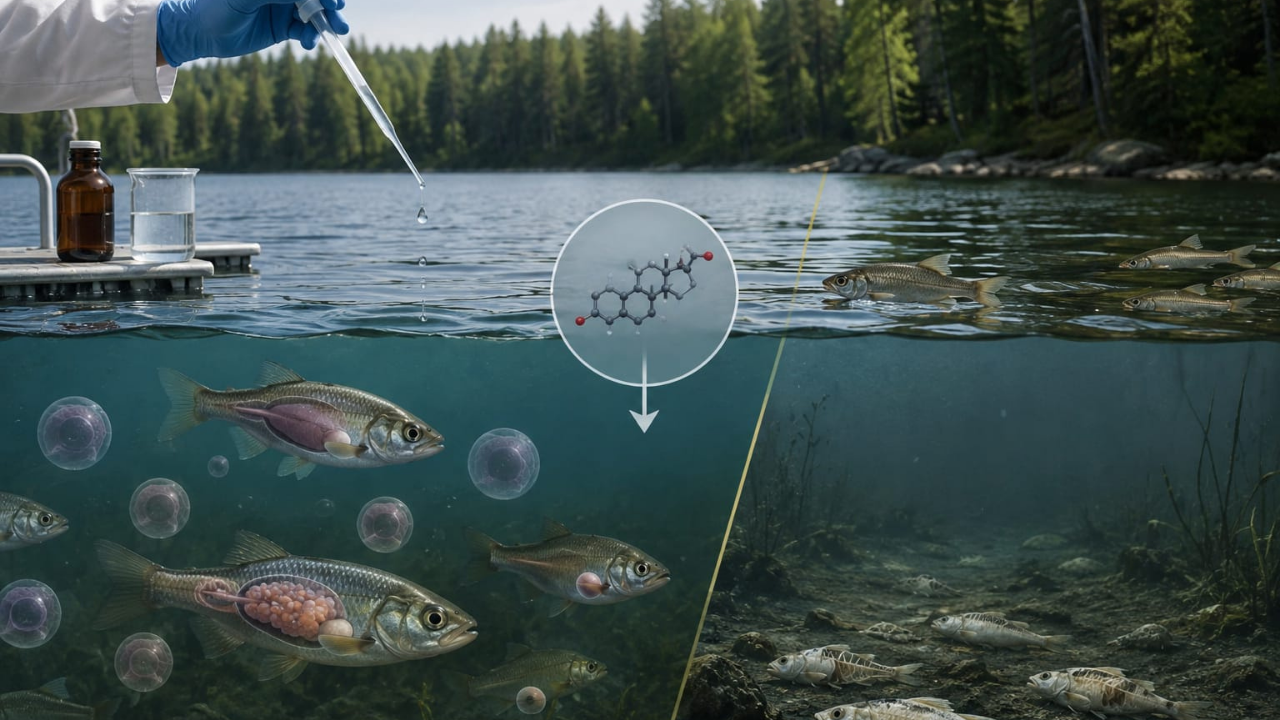
For two decades, environmental purists have clung to a single, tidy narrative about the Experimental Lakes Area in northwestern Ontario. In 2001, researchers dumped synthetic estrogen—specifically EE2, the active ingredient in birth control pills—into Lake 229. Within two seasons, the fathead minnow population crashed. The narrative was instant, seductive, and lazy: human pharmaceuticals in the water supply are ticking time bombs that will inevitably wipe out aquatic life.
The story is routinely trotted out to terrify the public about wastewater treatment plants, endocrine disruptors, and the chemical apocalypse. It fits on a protest placard. It secures grant money.
It is also an egregious misinterpretation of how ecological systems actually function under real-world pressure.
I have spent years watching institutions panic over isolated laboratory variables while entirely ignoring systemic resilience. The Lake 229 experiment did not prove that synthetic estrogen destroys aquatic ecosystems. It proved that dumping a massive, uninterrupted pulse of a potent hormone into an isolated, unbuffered body of water creates a localized shockwave that bears zero resemblance to how trace pharmaceuticals move through actual municipal watersheds.
Let us look at the methodology everyone conveniently ignores. Researchers did not simulate a trickle. They maintained artificial, high-concentration levels of EE2 throughout the ice-free seasons of 2001, 2002, and 2003. They engineered a worst-case toxicological stress test and then acted surprised when the system showed stress.
The Fallacy of Closed-System Alarmism
The fundamental error in the standard interpretation of the Ontario lake study is assuming closed-system reactions apply to open, flowing networks. Rivers flow. Sediments bind compounds. Microbial communities adapt, mutate, and metabolize foreign molecules at rates that laboratory dogmatists refuse to acknowledge.
When environmentalists warn that birth control residues in municipal drinking water are feminizing fish populations downstream, they point directly to Lake 229. But they omit the dilution factor, the degradation half-life of EE2 in natural sunlight, and the presence of dissolved organic carbon that neutralizes bioavailability.
Imagine a scenario where you pump pure caffeine into a single isolated goldfish bowl until the fish dies of cardiac arrest. Does that prove your morning espresso is a lethal weapon? Of course not. Dose makes the poison, and context makes the ecology.
Yet, regulatory bodies draft draconian policies based on these catastrophic outlier models. Billions of dollars are funneled into tertiary wastewater upgrades to chase parts-per-trillion reductions of compounds that degrade naturally within miles of discharge. We are treating symptoms of a statistical ghost while ignoring genuine, structural threats to freshwater habitats, such as agricultural runoff, thermal pollution, and actual habitat fragmentation.
What the Minnow Collapse Actually Taught Us
The fathead minnow didn't vanish because estrogen is an inescapable reaper. It vanished because male minnows stopped producing vitellogenin, failed to develop secondary sex characteristics, and reproductive output ground to a halt. It was a population bottleneck driven by reproductive failure, not a mass die-off of adult organisms.
Here is the nuance the alarmists miss: populations recover with astonishing speed once the pressure lifts. When the researchers stopped adding EE2 to Lake 229, the hormone concentrations plummeted. Within a few years, the ecosystem rebounded. The minnows came back. The food web re-established its equilibrium.
Nature is not a fragile porcelain figurine that shatters at the first touch of a synthetic molecule. It is a ruthless, adaptive, self-correcting machine. By framing the experiment as permanent devastation, activists intentionally obscured the resilience demonstrated in the post-addition recovery phase.
The Real Threat Is Our Addiction to Simple Narratives
The obsession with single-chemical bogeymen serves a political purpose, but it fails scientific rigor. It allows policymakers to point to a dramatic lake experiment and claim they are addressing water quality, all while ignoring the unglamorous, systemic destruction caused by urban sprawl and industrial fertilizer runoffs.
Stop buying the clean, terrifying myth of the hormonal apocalypse. The next time someone cites the Ontario lake study to argue that modern chemistry is inherently incompatible with wild biology, ask them why they are ignoring the recovery data, and ask them how a continuous high-dose injection mirrors a downstream municipal effluent pipe.
They won't have an answer. They never do.