The Bureaucratic Distraction
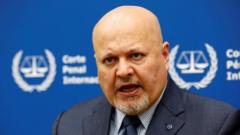
The global media loves a moral drama. When news broke that high-ranking leadership at the International Criminal Court faced removal over sexual misconduct allegations, the narrative immediately self-assembled into a neat, palatable story. Outlets rushed to frame the event as a triumph of internal oversight—proof that even the most powerful human rights crusaders are subject to the rule of law.
They got it completely wrong.
Focusing on the personal scandal of a single prosecutor treats a structural collapse like a minor HR headache. The consensus view celebrates this administrative housecleaning as a sign of institutional health, but removing an official for personal misconduct does nothing to address the core issue: the court itself is fundamentally broken, toothless, and increasingly irrelevant.
By fixating on personal ethics, commentary glosses over the institutional failure that defines the Hague. The drama surrounding leadership isn't evidence that the system works. It is a convenient smokescreen that hides an uncomfortable truth—the court was designed to fail from the day the Rome Statute was signed.
Power Without Enforcement Is Just Theater
Let's look at how global justice actually operates when stripped of diplomatic theater.
The International Criminal Court relies entirely on the voluntary cooperation of sovereign nations to enforce its mandates. It possesses no police force, no independent capability to execute warrants, and no mechanism to compel compliance from non-signatory superpowers.
- The Big Three Exclusion: The United States, China, and Russia do not recognize the court's jurisdiction over their citizens.
- Selective Compliance: Member states routinely ignore obligation directives when geopolitics demands it, inviting indicted figures across their borders without fear of consequence.
- Asymmetric Focus: The court disproportionately targets actors from non-aligned or developing nations while larger powers operate with complete impunity.
I have spent years watching policy analysts treat international tribunals as if they were domestic supreme courts. They aren't. Domestic courts backed by state force can execute judgments regardless of the defendant's wealth or status. The court in the Hague, conversely, functions like a debater's club with an expensive stationery budget.
When a high-profile prosecutor is ousted over workplace misconduct, headlines scream about accountability. But where is the accountability for the billions spent securing a handful of convictions over two decades? Where is the accountability for the thousands of victims whose cases sit in permanent procedural limbo because enforcing a warrant would upset regional trade deals?
Focusing on personal misconduct shifts the debate away from efficacy and onto corporate ethics. It allows diplomats to wring their hands over conduct codes while ignoring the fact that their grand experiment in global jurisprudence cannot execute a single arrest without begging a sovereign military to do it for them.
The Illusion of Universal Justice
The fundamental flaw of the Rome Statute isn't bad leadership; it's the absurd premise that powerful states will voluntarily bow to an abstract global authority.
To understand why replacing one prosecutor with another changes nothing, you have to dismantle the premise of the court's existence. The public asks: How do we make the court more transparent and accountable?
That is the wrong question.
The real question is: Why do we expect a political tribunal to act as an impartial judicial body?
The court operates under the guise of legal neutrality, yet its docket is dictated almost entirely by geopolitical leverage. When small nations fall out of favor with global trade blocs, their military leaders end up in the dock. When permanent members of the UN Security Council engage in unilateral military actions, their leaders receive diplomatic immunity and invitations to international summits.
| Entity | Real Power | Operational Reality |
|---|---|---|
| Domestic Courts | High | Armed enforcement, absolute territorial jurisdiction, mandatory compliance. |
| International Tribunals | Zero | Purely symbolic, dependent on host nations, ignored by major military powers. |
| Geopolitical Reality | Absolute | Might makes right; alliances supersede legal treaties every single time. |
Removing a figurehead over misconduct charges lets the institution pretend it holds its own accountable. It projects an image of uncompromising ethics. Yet, the same court routinely drops or soft-pedals investigations into major powers to avoid political suicide or financial starvation.
This isn't a failure of individual character. It is an act of institutional self-preservation.
The High Cost of Symbolic Morality
The narrative surrounding this scandal suggests that restoring integrity to leadership will rebuild faith in the system. This is a dangerous delusion.
Replacing personnel without changing the structural mechanics only deepens the cynicism of the global public. Taxpayers in donor nations funnel hundreds of millions annually into maintaining a vast legal architecture in the Netherlands. In return, they get endless pre-trial hearings, bureaucratic infighting, and public relations disasters.
Meanwhile, victims of real, ongoing atrocities are sold a false promise. They are told that an international warrant carries weight, only to watch accused perpetrators travel freely through neighboring countries that prioritize diplomatic convenience over theoretical treaties.
Consider the operational pipeline of a typical investigation:
- A crisis breaks out, accompanied by public outcry.
- The court opens a preliminary examination, generating headlines and hope.
- Years pass in evidence collection, consuming millions in operational costs.
- An indictment is issued against a warlord or head of state.
- The accused ignores the warrant, continues ruling, or retires in luxury within a non-compliant state.
This cycle doesn't deliver justice; it commodifies outrage. It creates a self-sustaining ecosystem of consultants, investigators, and bureaucrats whose livelihoods depend on the process of justice rather than its execution.
Admitting this reality is painful for those who built their careers on the ideal of universal human rights. But continuing to defend an ineffective structure simply because it sounds noble isn't idealism—it's negligence.
Stop Fixing the Figureheads, Dismantle the Framework
If international law is ever to mean anything beyond academic posturing, we must stop viewing personal scandals as the primary threat to credibility. The scandal isn't that a top official broke rules behind closed doors. The scandal is that the institution demands respect while possessing zero capacity to deliver on its foundational mandate.
The path forward requires abandoning the fantasy of a centralized legal court for the world. We need to stop pretending that replacing a flawed prosecutor with a clean resume will magically grant an underfunded, politically constrained body the power to tame sovereign nations.
- Acknowledge the Limits of Global Authority: Accept that international legal bodies cannot function like domestic courts without a unified, enforcement-capable global government—something that does not exist and will not exist anytime soon.
- Shift Resources to Regional Security: Instead of funding centralized mega-tribunals, divert resources toward regional coalitions with actual economic and military leverage to enforce local treaties.
- Demystify Mandates: Stop issuing symbolic warrants that cannot be enforced. Every ignored indictment damages the concept of international law far more than a corrupt official ever could.
The removal of a top prosecutor is not a victory for global integrity; it is an irrelevance. Fixating on administrative misdeeds keeps us from confronting the stark reality that international legal institutions are failing at their primary objective.
If you want real justice on the world stage, stop managing the HR crises of an ineffective court and start dismantling the naive assumptions that built it.