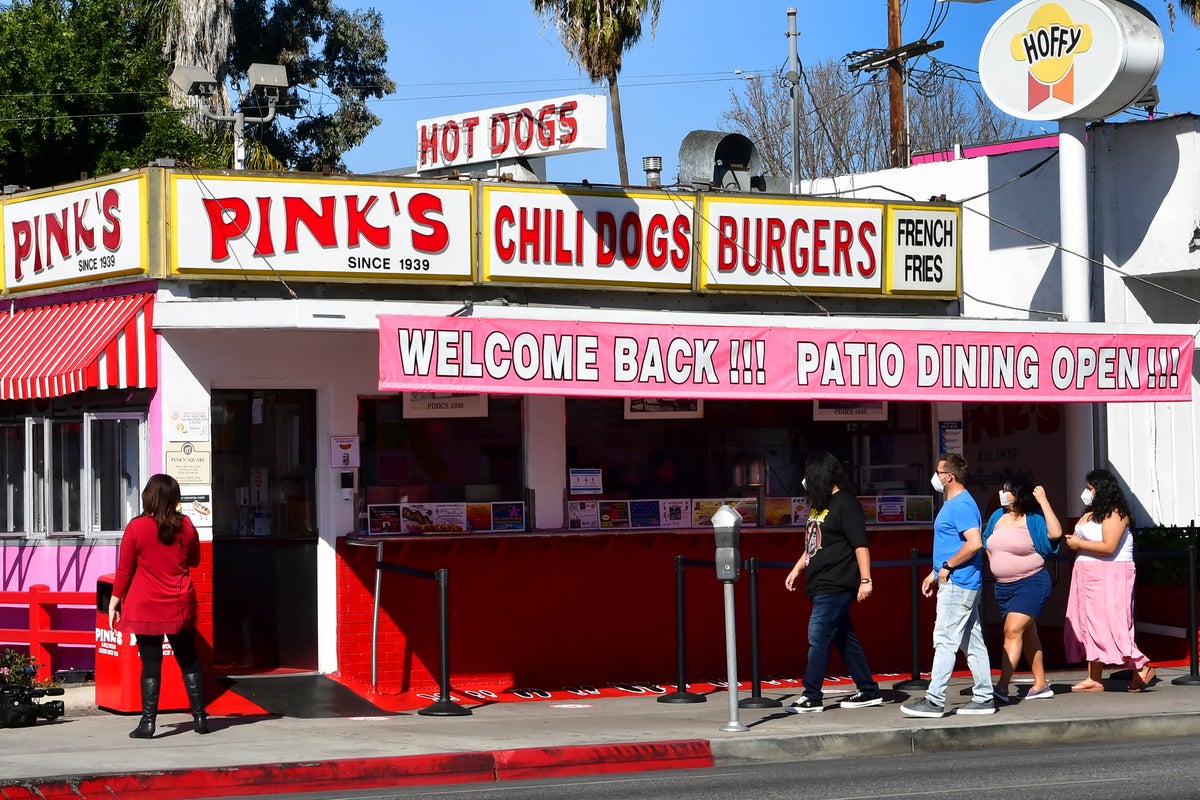
For decades, food industry commentators have treated the international expansion of American nostalgia brands like a one-way ticket to free money. When news broke that Los Angeles staple Pink’s Hot Dogs inked a master franchise deal with Osaka-based Sunpark Co. to drop a Tokyo flagship by late 2026 and twenty stores by 2030, the culinary press erupted in predictable applause. They called it a cultural bridge. They framed it as a natural evolution for a Hollywood landmark that has slung chili dogs on La Brea Avenue since 1939.
They are entirely wrong.
I have watched corporate restaurant groups burn millions of dollars trying to transplant American tourist traps into foreign markets that operate on completely different thermodynamic and cultural rules. Copying a formula that relies on midnight queues in Hollywood and expecting it to replicate organically in a city with the most hyper-competitive, hyper-efficient dining ecosystem on earth is not a strategy. It is an expensive vanity project.
Let us dismantle the lazy consensus surrounding the Pink’s Hot Dogs Japan expansion and look at the brutal economic and operational realities facing this venture.
The Nostalgia Trap Does Not Translate Across the Pacific
The core error analysts make when evaluating brands like Pink’s is confusing celebrity headshots with product-market fit. On La Brea, you are not waiting forty minutes at 1 AM because a nine-inch stretch dog transcends the laws of gastronomy. You are participating in an LA ritual. The allure is tied to the physical space: the iconic pink awning, the fading autographed glossies of 1950s television stars, the gritty asphalt of a Hollywood boulevard, and the chaotic late-night energy of Southern California.
Strip away the Hollywood grime and drop the concept into Tokyo, and what do you actually have? A heated sausage buried under a heavy blanket of canned-style chili, yellow mustard, and shredded cheddar.
Tokyo does not need imported novelty hot dogs. This is a city where convenience store egg salad sandwiches achieve Michelin-level devotion, and where specialized local vendors treat street food with surgical precision. Japanese consumers do not suffer from a shortage of casual food options; they suffer from an abundance of extraordinarily high-quality, reasonably priced alternatives. Relying on the novelty of "an American tradition" has a shelf life that typically expires about six months after the grand opening hype fades.
The Scale Delusion: Targeting Twenty Units by 2030
Sunpark’s blueprint calls for twenty locations across the greater Tokyo area by 2030. This is where ambition collides with unit economics.
In the United States, high-volume legacy stands survive on massive throughput and cheap real estate footprints that amortize labor costs over decades of brand equity. Tokyo real estate operates under entirely different economic pressures. Prime foot traffic in Shibuya, Shinjuku, or Ginza commands astronomical rent per square foot. To service those leases with a low-margin, high-labor ticket item like a customized, twelve-inch chili cheese dog, a restaurant needs relentless, clockwork velocity.
Imagine a scenario where the initial novelty wears off, foot traffic normalizes to local baseline levels, and management is left maintaining high-rent flagship spaces while local salarymen choose a fast, fresh bowl of standing-bar udon for a fraction of the cost. The math breaks down rapidly. Scaling a single-unit eccentric landmark into a twenty-unit regional chain requires transforming a quirky mom-and-pop operation into a hyper-optimized machine. When you systemize a quirky hot dog stand, you dilute the exact thing people thought they were buying.
The Menu Compromise Fallacy
To adapt to the Japanese market, the expansion strategy already includes scaling down portion sizes and introducing localized menu variations. This is presented as smart localization. It is actually a slippery slope of identity dilution.
When you shrink a foot-long dog and tweak the flavor profile to suit local palates, you alienate the exact demographic you are trying to capture: the expats, the tourists, and the local trendsetters who wanted the genuine, unapologetically gluttonous American article. Simultaneously, you fail to outcompete local institutions at their own game. Japanese fast food developers spend decades perfecting items tailored specifically to local chemistry. A modified, smaller, cross-cultural hybrid hot dog risks sitting in the worst possible strategic middle ground: too heavy for a quick daily snack, too altered to satisfy the purist craving a genuine piece of Hollywood history.
The True Path Forward for Transnational Food Brands
If international expansion is going to work for legacy novelties, it cannot be executed as a routine franchise rollout. It must be treated as a pop-up art installation or a strictly limited-run residency.
The smartest play would have been a five-year scarcity model: a single, high-concept Tokyo pop-up that leans entirely into the Hollywood absurdity, rotating out of the market before the novelty decays. Instead, the commitment to twenty permanent brick-and-mortar storefronts locks the brand into long-term liabilities based on short-term enthusiasm.
Tokyo will undoubtedly show up for the opening weeks. The lines will look impressive on social media feeds. But long-term commercial survival requires structural superiority, not historical imported clout. When the novelty factor meets the harsh reality of Tokyo's restaurant turnover rates, nostalgia alone will not pay the rent.