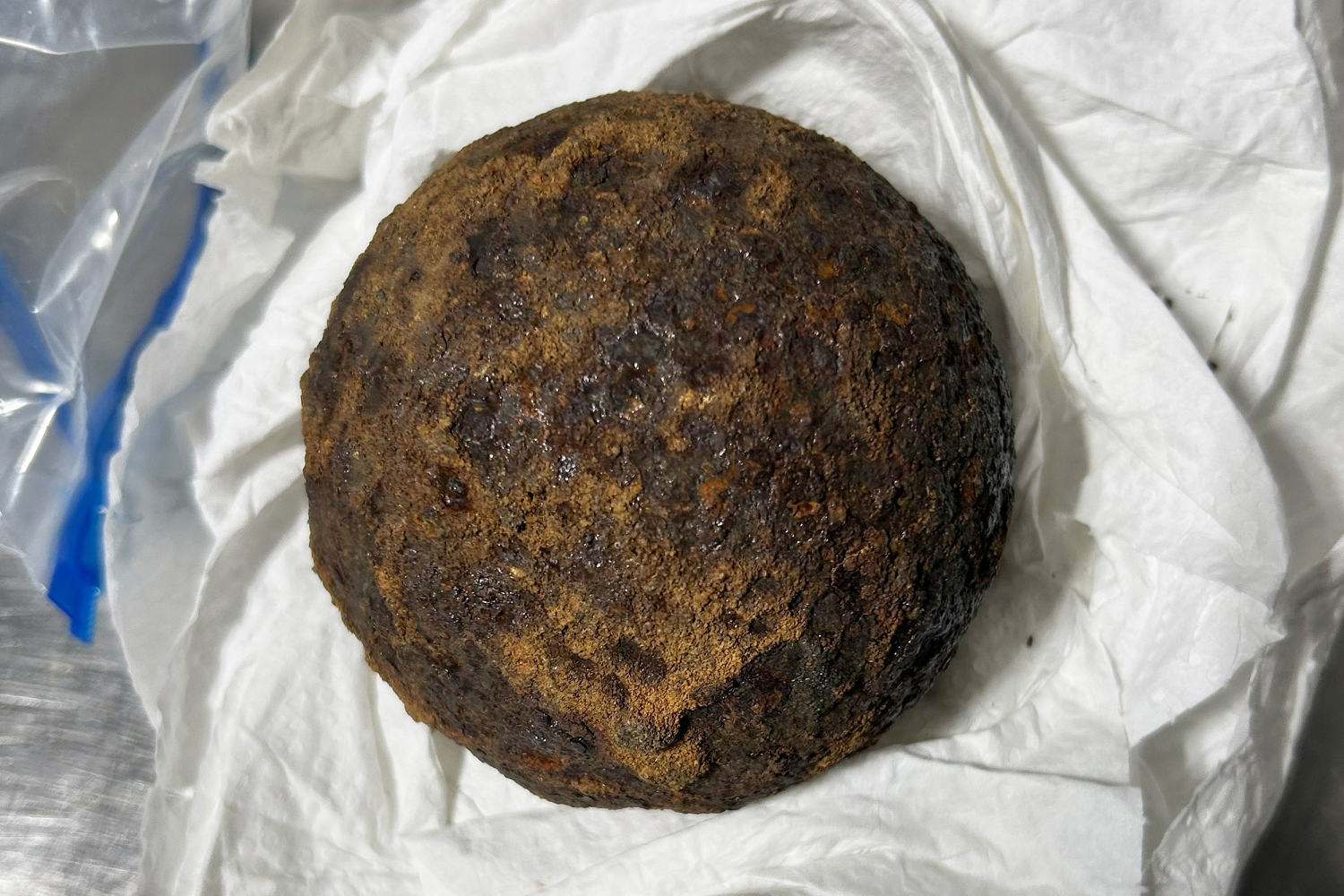
Airport security checkpoints are designed to catch modern threats, yet screeners routinely pull centuries-old ordnance out of passenger luggage. Recently at an Alabama airport, Transportation Security Administration officers discovered five stolen Civil War-era cannonballs inside a traveler's carry-on bag. This absurd discovery highlights a persistent security blind spot. Travelers continually underestimate the danger and legality of moving unexploded historical artifacts through commercial aviation.
Years of covering transportation security reveal a recurring truth. People consistently fail to realize that history does not exempt them from federal law or basic physics.
The Mechanics of a Century-Old Hazard
Most travelers assume that if an object has sat in a field or a barn for one hundred and sixty years, it has transformed into a harmless paperweight. This assumption is dangerously wrong.
Civil War artillery projectiles come in various configurations, but many rely on black powder charges and percussion fuses. While prolonged exposure to moisture can degrade explosive contents, it can equally make compounds unstable. Iron casings rust, chemical compositions shift, and internal mechanisms seize up. A cannonball is not merely a heavy iron sphere. It is a sealed pressure vessel containing volatile material that reacts poorly to the atmospheric pressure changes and rough handling inherent in commercial flight.
Transportation security agents do not guess when they spot a spherical iron object on an X-ray screen. They stop the line.
When a checkpoint halts operations for a suspected explosive, the disruption is immediate and costly. Bomb squads deploy. Terminals evacuate. Flights face delays. All because a vacationer decided to pack historical souvenirs next to their socks.
The Illusion of Ownership and Theft
The Alabama incident involved stolen items, adding a layer of criminal culpability to an already reckless travel choice. Looting historical sites remains an underground economy. Relic hunters scour battlefields across the American South, often trespassing on protected federal, state, or private land to dig up iron.
Amateur excavation of military heritage sites violates federal statutes like the Archaeological Resources Protection Act. Yet, a subculture of collectors operates with total disregard for preservation laws. When these individuals acquire illegal artifacts, moving them home creates a logistical nightmare. Shipping companies maintain strict hazardous materials policies. Private carriers will not accept suspicious iron spheres with unknown chemical contents.
Desperate to avoid detection or shipping fees, these travelers resort to stuffing illicit contraband into checked bags or carry-ons. They gamble that airport screeners will misidentify the object as a decorative paperweight or an oversized bowling ball.
The gamble fails every single time.
Advanced X-ray imaging at security checkpoints penetrates dense metals with ease. Operators look for uniform density, internal cavities, and fuse channels. A solid iron ball looks different on a monitor than a hollow shell packed with gunpowder. The moment the scanner operator spots the signature silhouette of a nineteenth-century artillery shell, local law enforcement and explosive ordnance disposal units receive an immediate dispatch.
Regulatory Blind Spots and Passenger Ignorance
The Transportation Security Administration publishes comprehensive lists of prohibited items. Firearms, ammunition, and explosives top every iteration of these guidelines. Yet, thousands of passengers treat these rules as flexible suggestions rather than binding federal mandates.
Education campaigns fail because casual collectors do not view heritage items as weapons. They view them as art, history, or investment pieces. They separate the object's original function from its physical reality.
Federal regulations draw no distinction between a newly manufactured grenade and a muzzle-loading projectile cast in 1863. Both fall under strict prohibitions governing the transport of explosives and incendiary devices. Ignorance of the law offers zero defense when federal prosecutors review an incident report involving the carriage of hazardous materials aboard an aircraft.
Consequences extend beyond confiscated souvenirs. Travelers facing these discoveries routinely encounter local theft charges, federal wildlife or artifact protection violations, and civil penalties from aviation authorities running into the tens of thousands of dollars. Criminal records follow. Travel privileges vanish.
The Broader Cultural Property Crisis
The Alabama case points to a broader institutional failure within heritage preservation. Museums and historical societies lack the resources to monitor every square acre of former conflict zones. Looters exploit this vulnerability, stripping sites of material culture before professional archaeologists can document contexts.
When stolen artifacts circulate in private markets, accountability dissolves. Buyers acquire items without provenance, accepting oral histories that obscure illicit origins. By the time these objects reach an airport security lane, the paper trail is non-existent, and the legal ownership is disputed.
Airport checkpoints function as an unexpected final filter for the illegal antiquities trade. Screeners are not trained historians, but their X-ray units serve as an unyielding audit of traveler behavior. Every intercepted shell exposes the intersection of criminal looting, historical ignorance, and aviation security risks.
Historical preservation requires respect for context, legality, and safety. Treating a battlefield like a souvenir shop demonstrates a profound detachment from the gravity of history. Iron from the Civil War endured decades underground, waiting to rust or detonate. Hauling it into the terminal guarantees only one outcome.
Interruption, investigation, and confiscation.