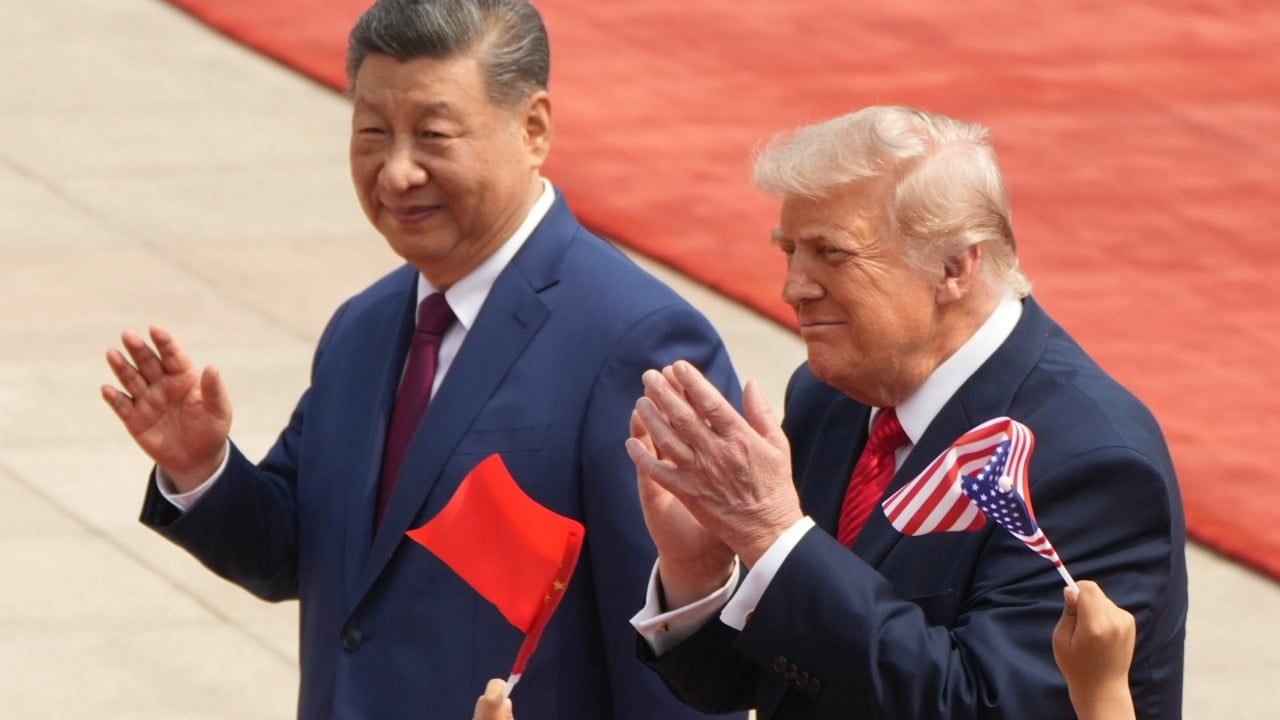
The anticipated absence of China’s top corporate executives from President Xi Jinping’s diplomatic delegation to the United States is not a scheduling anomaly or a sign of logistical friction. It is a calculated risk-mitigation maneuver driven by asymmetric legal exposure, domestic political signaling, and the structural collapse of bilateral commercial diplomacy. When senior Chinese founders and chief executives remain in Beijing rather than accompanying the head of state to Washington or San Francisco, they are responding to a rational cost-benefit matrix in which the reputational and regulatory penalties of American proximity vastly outweigh the diminishing returns of cross-border dealmaking.
To understand why China’s private-sector and state-owned enterprise (SOE) leaders are opting out of high-profile diplomatic travel, one must replace superficial political commentary with an institutional analysis of cross-border corporate governance. Historically, presidential delegations served as mobile trade shows. A seat on the state plane or at a bilateral state dinner signaled domestic political favor in Beijing while granting access to American capital markets, institutional investors, and supply chain partners. That mechanism has broken down. Today, the same visibility acts as a target-acquisition system for Western regulators and domestic ideological enforcers alike.
The Three Pillars of Executive Risk Aversion
The decision by Chinese corporate leadership to stay home rests on three distinct structural pressures: extraterritorial legal liability, domestic regulatory alignment, and the exhaustion of commercial deliverables. Each factor independently raises the cost of travel; combined, they create a prohibitive barrier to participation.
1. Extraterritorial Legal and Regulatory Exposure
For a Chinese executive operating in sectors touching semiconductors, telecommunications, artificial intelligence, biotechnology, or critical minerals, stepping onto United States soil introduces immediate jurisdictional vulnerability. Over the past several years, the U.S. Department of Commerce, the Treasury Department, and the Department of Justice have expanded the reach of export controls, entity lists, and sanctions enforcement.
In corporate risk management, physical presence within a foreign jurisdiction eliminates the buffer of corporate personhood when criminal or civil subpoenas are issued. Executives face three acute operational hazards upon entry:
- Subpoena and Deposition Risk: High-profile executives of firms under investigation by the Bureau of Industry and Security (BIS) or the Committee on Foreign Investment in the United States (CFIUS) risk being served with compulsory legal notices the moment they clear customs.
- Congressional Scrutiny: Publicized attendance at a bilateral summit invites immediate inquiries from U.S. House and Senate committees, which frequently use executive travel as a catalyst to demand public disclosures, audit supply chains, or propose targeted legislative restrictions against the visiting firm.
- Secondary Sanctions Fallout: Associating publicly with state-aligned delegations reinforces Western perceptions that nominally private Chinese firms are instruments of statecraft, accelerating their placement on restricted investment lists such as the Non-SDN Chinese Military-Industrial Complex Companies List (NS-CMIC).
2. Domestic Political Signaling and Common Prosperity Constraints
Inside China, the political economy governing the relationship between the state and the private sector has undergone a fundamental recalibration. During the era of rapid globalization, international visibility was an asset for a Chinese entrepreneur; it validated global competitiveness and attracted foreign direct investment (FDI). Under the current governance model—characterized by strict regulatory oversight of platform economies, anti-corruption campaigns in the financial and healthcare sectors, and the ideological mandate of "common prosperity"—overt displays of Western alignment carry severe domestic liabilities.
Accompanying the head of state abroad was once a shield against domestic criticism. Now, the calculus is inverted. If a bilateral summit yields minimal diplomatic breakthroughs—often termed "thin summit expectations"—the executives present risk being associated with an underwhelming diplomatic outcome. Furthermore, Beijing’s domestic industrial policy prioritizes self-reliance (indigenous innovation) over external integration. For a Chinese CEO, demonstrating loyalty to state objectives is more effectively achieved by remaining in domestic manufacturing hubs, announcing capital expenditures in local research and development, and aligning with Five-Year Plan targets than by attending banquets in the United States.
3. The Exhaustion of Commercial Deliverables
Bilateral summits require tangible commercial announcements to justify the political capital expended by both governments. Historically, this meant massive, state-directed procurement contracts: bulk orders of commercial aircraft, agricultural commodities, semiconductors, and enterprise software. Those transactions gave Chinese CEOs a clear operational mandate to attend—they were there to sign contracts and secure supply agreements.
Current geopolitical constraints have stripped the bilateral agenda of these foundational commercial deliverables:
- Technology Transfer Restrictions: U.S. export controls prohibit the sale of advanced semiconductor manufacturing equipment and high-end AI chips to Chinese buyers, removing the highest-value items from the negotiation table.
- Supply Chain Decoupling ("De-risking"): American multinational corporations are actively diversifying manufacturing footprints toward Southeast Asia, India, and Mexico. Chinese suppliers have little incentive to send their top executives to court buyers whose corporate boards have mandated a reduction in China-based sourcing.
- Capital Market Contraction: With initial public offerings (IPOs) of Chinese firms on the New York Stock Exchange and Nasdaq effectively frozen by auditing disputes and geopolitical friction, Chinese founders no longer need to conduct investor roadshows in Manhattan or Silicon Valley.
The Mechanics of Thin Summit Expectations
When diplomatic observers describe summit expectations as "thin," they are referring to a specific negotiation equilibrium in which both parties seek to manage competition and prevent military or economic escalation without making structural concessions. In international relations theory, this is known as crisis-management diplomacy rather than integrative bargaining.
Integrative bargaining requires expansive trade delegations because the goal is to expand the economic pie through new treaties, tariff reductions, and joint ventures. Crisis-management diplomacy requires narrow, tightly controlled delegations composed almost exclusively of foreign ministry officials, national security advisors, and macroeconomic regulators.
The mechanics of this shift affect corporate actors directly:
- Agenda Compression: When the head-of-state meeting focuses on military-to-military communication channels, fentanyl precursor controls, and baseline macroeconomic stability, there is no institutional space on the schedule for business-to-business matchmaking.
- Asymmetric Concession Risks: Neither Washington nor Beijing can afford to appear conciliatory to domestic audiences. If a Chinese CEO signs a major investment deal in the U.S., domestic nationalist commentators may criticize the capital outflow at a time of sluggish domestic growth. Conversely, if an American CEO announces a major expansion in China during the summit, Washington lawmakers may accuse the firm of undermining national security.
- The Death of Track II Commercial Diplomacy: For decades, American and Chinese business councils served as a stabilizing ballast in the bilateral relationship, lobbying their respective governments to resolve trade disputes. As national security imperatives have superseded economic efficiency in both capitals, the lobbying power of corporate executives has evaporated. CEOs recognize that their presence cannot alter tariff schedules or export control regimes, rendering their participation purely ceremonial.
Distinguishing Empirical Reality from Strategic Hypotheses
In analyzing diplomatic staging prior to an official state visit, rigorous assessment requires separating verified operational facts from educated strategic hypotheses.
Verified Structural Facts:
- Bilateral trade volumes between the U.S. and China have shifted away from high-tech manufactured goods toward non-strategic consumer items and agricultural products, reducing the strategic necessity of tech-sector executive travel.
- The number of Chinese corporate executives traveling to the U.S. for bilateral business forums has declined steadily since 2018, correlating directly with the implementation of Section 301 tariffs and expanded Department of Commerce entity listings.
- Both governments have increasingly relied on working-level economic and financial dialogues led by civil servants rather than private-sector trade missions to resolve technical disputes.
Educated Strategic Hypotheses:
- Hypothesis A (Deliberate State Curation): Beijing may be intentionally excluding private-sector titans to keep the focus strictly on state-to-state protocol, preventing any single billionaire founder from eclipsing the official diplomatic messaging—a lesson reinforced by past regulatory crackdowns on overly prominent tech entrepreneurs.
- Hypothesis B (Voluntary Corporate Abstention): Even if seats on the delegation were offered, major Chinese CEOs are likely declining invitations through backchannels, citing operational demands at home to avoid the personal legal and reputational exposure of traveling to a hostile regulatory environment.
Both hypotheses point toward the same operational reality: the institutional incentives that once bound Chinese corporate leadership to state diplomatic travel have inverted. Whether the absence is dictated by Beijing’s protocol officers or chosen by risk-averse corporate boards, the outcome reflects a permanent structural change in how bilateral commerce is conducted.
Operational Implications for Multinational Strategy
The absence of Chinese CEOs from top-level diplomatic events serves as a leading indicator for multinational corporations, institutional investors, and supply chain managers. It signals that the era of top-down, politically brokered market access is over.
First, Western firms can no longer rely on bilateral political summits to resolve operational bottlenecks in China, such as cross-border data transfer restrictions, intellectual property enforcement, or local procurement biases. Because the Chinese corporate counterparts who would normally lobby Beijing for reciprocal concessions are absent from the diplomatic process, those grievances remain unaddressed at the highest levels.
Second, investor relations and corporate development teams must adjust how they evaluate Chinese competitors. A lack of international travel by a Chinese CEO does not indicate corporate stagnation or financial distress. On the contrary, Chinese firms in electric vehicles, battery manufacturing, industrial robotics, and green energy are aggressively expanding market share in Europe, Latin America, the Middle East, and Southeast Asia. Their executives are simply redirecting their travel budgets toward jurisdictions where capital is welcomed, regulatory friction is manageable, and commercial contracts are still viable.
Third, risk officers must recognize that the bifurcation of global business networks is accelerating. When executives cease meeting face-to-face during diplomatic summits, informal information networks degrade. Misunderstandings regarding regulatory intent, product standards, and market capacity become more frequent, increasing the likelihood of sudden trade disputes, anti-dumping tariffs, and abrupt supply chain disruptions.
The Strategic Play for Corporate Leadership
For multinational executives and institutional allocators observing this diplomatic retrenchment, waiting for a bilateral summit to restore predictability to U.S.-China commerce is a losing strategy. Diplomatic staging now reflects containment management rather than economic integration.
Organizations with exposure to cross-border supply chains or bilateral revenue streams must execute three immediate structural adjustments:
- Decouple Corporate Strategy from Diplomatic Calendars: Eliminate summit-driven milestones from capital allocation models. Assume that tariffs, export controls, and investment screening mechanisms will remain static or tighten regardless of the rhetorical tone emerging from head-of-state meetings.
- Shift Government Affairs from Washington-Beijing Axes to Regional Hubs: Reallocate lobbying and regulatory engagement resources away from bilateral Washington-based trade associations and toward regional regulatory bodies in Brussels, Singapore, Tokyo, and Riyadh, where actual commercial rulemaking and industrial policy alignment are actively occurring.
- Enforce Operational Ring-Fencing: Treat Chinese subsidiaries and joint ventures as legally, financially, and technologically autonomous units. Because top-level executives on both sides face mounting barriers to cross-border travel and direct coordination, local management teams must possess the independent authority and localized supply chains required to operate without real-time intervention from global headquarters.