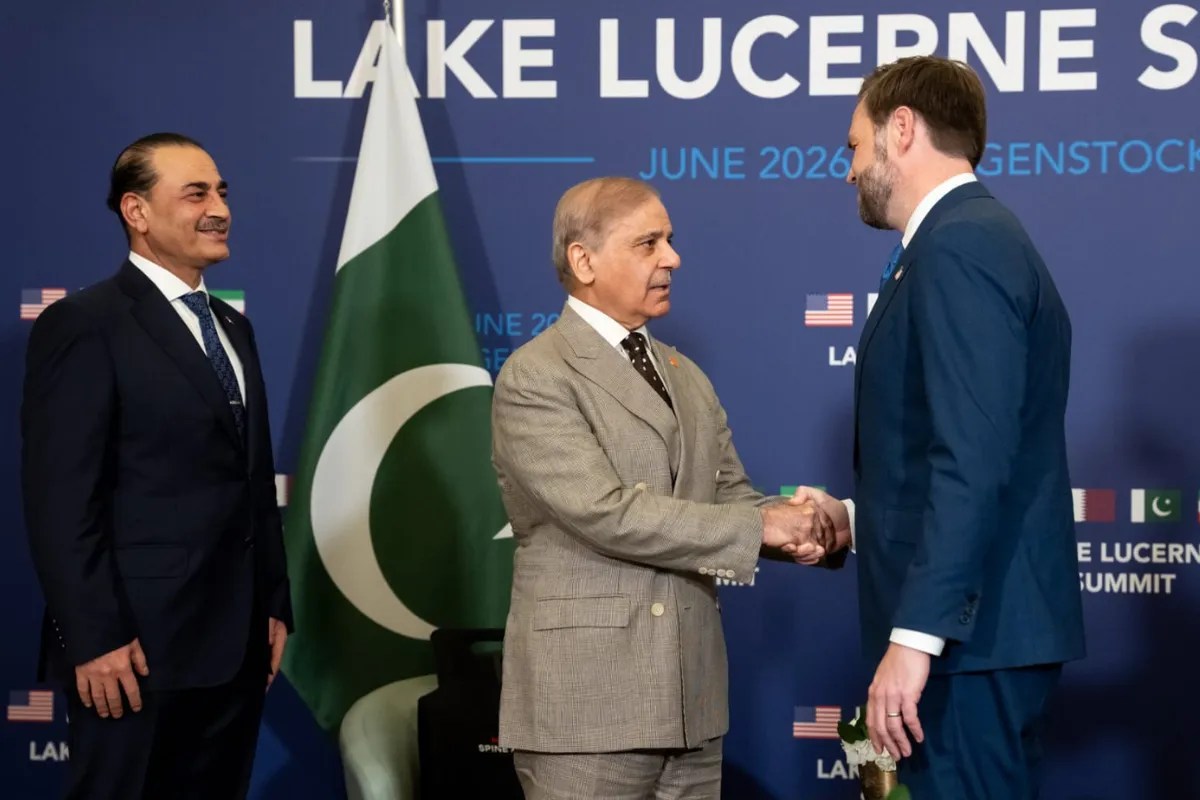
JD Vance knows how to grab a headline. During a high-profile interaction at the World Economic Forum in Davos, Switzerland, the US Vice President found himself sharing a platform with Pakistani Prime Minister Shehbaz Sharif. Instead of sticking to dry diplomatic scripts, Vance dropped a personal bomb that left political analysts scrambling. He looked out at the audience, acknowledged the Pakistani PM, and declared that an Indian and a Pakistani are the two most important people in his life.
It sounds like a classic political line. People instantly thought he was just playing to the gallery or trying to balance a tricky geopolitical tightrope. They are wrong. This wasn't a rehearsed diplomatic stunt. It was a glimpse into the bizarre, hyper-connected reality of modern American politics and Vance's own household.
The Real Story Behind Vance Comments to the Pakistani PM
To understand why this matters, you have to look at Vance's inner circle. He wasn't talking about obscure political advisors or foreign policy gurus. He was talking about his family and his professional backbone.
The Indian in question is his wife, Usha Chilukuri Vance. She is the daughter of Indian immigrants, a brilliant litigator, and a graduate of Yale Law School. She has been his closest advisor since their university days. She shapes his worldview more than any Washington think tank ever could.
The Pakistani he referred to is his best friend and former business partner, Yasir Qadri. They went to law school together, built businesses, and stayed fiercely loyal through Vance’s meteoric rise from a small-town author to the second most powerful man in the United States.
When Vance spoke in Switzerland, he used this personal reality to make a broader point about global talent. He looked right at Shehbaz Sharif and noted how the subcontinent shapes global leadership. It wasn't a policy shift. It was an acknowledgment of human capital.
Why Washington Insiders Misread the Subcontinent Connection
American foreign policy experts love to put things in neat boxes. They look at India and Pakistan through the lens of defense deals, border disputes, and nuclear deterrence. They completely miss the human element.
Vance’s statements highlight a massive shift in how the new generation of American leaders views South Asia. For decades, US politicians saw the region as a problem to be managed. Now, it is a source of direct intellectual and personal influence.
Consider the sheer scale of the South Asian diaspora in US politics today. You have leaders across the political spectrum with deep roots in the region. By bringing his personal relationships into a formal discussion with a foreign head of state, Vance bypassed traditional diplomatic channels. He made it personal.
Beyond the Rhetoric
Geopolitics is brutal. Personal friendships do not dictate trade tariffs or military alliances. Washington still views New Delhi as a crucial strategic partner to counterbalance China. At the same time, the US maintains a transactional, security-focused relationship with Islamabad.
Vance's personal affinity won't change the Pentagon's strategic calculations. It won't alter state department briefings. What it does change is access. Having individuals who understand the nuances of South Asian culture sitting at the absolute peak of American power matters. It changes how conversations start. It alters how crises are perceived.
The next time you see a clip of a US leader speaking at a global summit, look past the official press release. The real drivers of foreign policy aren't just the briefing papers. They are the people sitting at the dinner table and the friends who answer the phone at midnight. Watch how these personal networks influence upcoming trade negotiations and diplomatic appointments over the coming months.