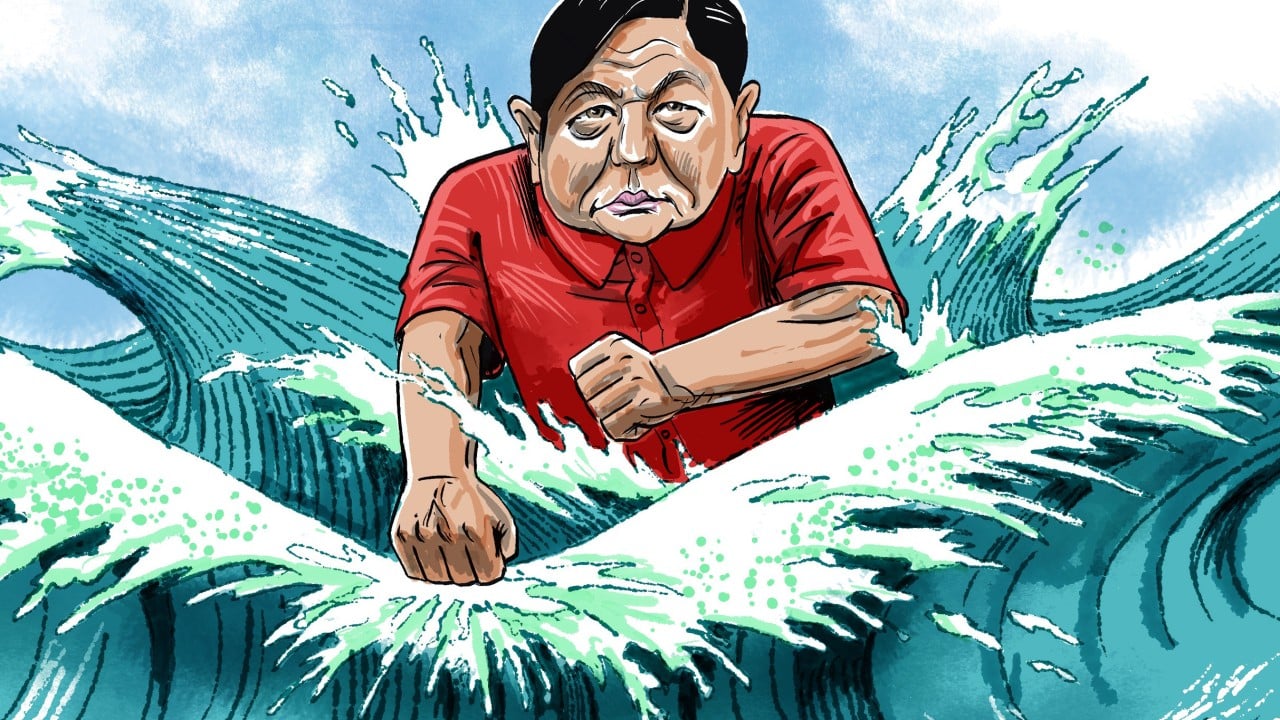
Western commentators love to paint Southeast Asia as a monolithic bloc where everyone agrees on how to handle Beijing. They look at the Association of Southeast Asian Nations (ASEAN) and see a group dedicated to quiet consensus, economic integration, and avoiding conflict at all costs. From that perspective, the assertive actions of Manila under President Ferdinand Marcos Jr. look like an outlier. Critics call it a dangerous, isolated policy that splits regional unity.
They are missing the entire picture.
Manila isn't acting out of a desire to disrupt regional peace. It's responding to an immediate, existential threat in its own backyard. The idea that Manila is out of step with its neighbors ignores a simple reality: different countries face completely different levels of threat. It’s easy for landlocked or distant ASEAN states to preach quiet diplomacy when their fishermen aren’t the ones being hit with high-powered water cannons at Scarborough Shoal or rammed by maritime militia at Second Thomas Shoal.
Manila's strategy isn't a rejection of Southeast Asian diplomacy. It's a calculated, necessary adjustment to a reality where quiet diplomacy has failed to stop the physical takeover of maritime territories.
The Myth of Regional Isolation
Critics argue that Manila’s decision to call out Beijing's actions publicly and build stronger defense ties with the United States, Japan, and Australia alienates it from the rest of the region. This argument falls apart under scrutiny.
Look closely at how individual Southeast Asian states actually behave when their own vital sovereign interests are threatened. Vietnam has quietly but aggressively expanded its island outposts in the Spratly Islands and built up its own maritime law enforcement capabilities. Hanoi and Manila even filed joint claims for extended continental shelf entitlements at the United Nations, demonstrating a shared commitment to international legal frameworks over unilateral historical claims.
Malaysia, under Prime Minister Anwar Ibrahim, often speaks the language of restraint and emphasizes resolving disputes through dialogue. Yet, when Beijing’s state-owned vessels regularly sail near Malaysia’s Kasawari gas field off Sarawak, Kuala Lumpur continues its energy exploration activities anyway, defended by its own navy.
The difference isn't a lack of shared anxiety over Beijing's expansion. The difference is tactical transparency. Manila chose to pull back the curtain on grey-zone tactics, filming and broadcasting encounters at sea for the world to see. This transparency isn't a sign of diplomatic failure; it is a calculated effort to build international leverage because ASEAN’s internal mechanisms cannot enforce maritime law.
The Structural Limits of Consensus Diplomacy
Expecting the regional bloc to solve high-stakes security crises is a fundamental misunderstanding of what the organization was built to do. It excels at keeping economic channels open, setting up dialogue forums, and maintaining a baseline of diplomatic contact. It is structurally incapable of enforcing hard security outcomes.
The core reason is the requirement for absolute consensus. Every single member state holds an effective veto. Countries like Cambodia and Laos, which have no maritime claims in the South China Sea and rely heavily on Chinese investment, will never agree to a strong, unified statement condemning maritime gray-zone operations. Beijing knows this and uses these internal divisions to ensure the bloc remains diplomatically paralyzed on security matters.
The long-running negotiations for a Code of Conduct (COC) in the South China Sea illustrate this structural weakness. These talks have dragged on for decades with zero meaningful progress on creating a legally binding, enforceable agreement. While negotiations drag on, the physical reality on the water changes completely. Artificial islands become militarized, nature reserves are unilaterally declared over occupied reefs, and access to traditional fishing grounds is cut off.
Manila recognizes that waiting for a regional consensus means accepting a slow, permanent loss of sovereign territory. Holding the ASEAN chairmanship means managing a complex diplomatic process, but it doesn't mean sacrificing national defense for the illusion of total harmony.
Building a Security Web Beyond the Bloc
Because the regional architecture lacks teeth, Manila has built an interconnected web of defense agreements designed to deter further escalation. This isn't a simple return to Cold War-style client state politics. It's a modern, multi-directional strategy.
- The U.S. Alliance: The 1951 Mutual Defense Treaty remains the ultimate backstop. Manila has expanded access under the Enhanced Defense Cooperation Agreement (EDCA), allowing American forces to operate from strategic bases facing the Taiwan Strait and the South China Sea.
- The Japanese Partnership: The Reciprocal Access Agreement (RAA) allows Japanese forces to train on Philippine soil, bringing Asia’s most advanced maritime self-defense force directly into the regional security equation.
- Middle-Power Alignments: Regular joint patrols and defense discussions with Australia, France, and Canada show that Manila is diversifying its partnerships, ensuring it isn't solely dependent on Washington.
This defense network provides the leverage Manila needs to stay at the negotiating table without being forced into total submission. It creates a balance of power that makes outright military conflict too costly for an aggressor, preserving a fragile peace that benefits the entire region, whether other member states admit it publicly or not.
Balancing Trade and Territory
A common counterargument is that Manila’s approach risks destroying its economic relationship with its largest trading partner. It's a fair concern. Southeast Asian nations rely heavily on Chinese markets, supply chains, and infrastructure funding. No one in Manila wants an economic embargo.
But the idea that a country must completely surrender its maritime sovereignty to maintain economic ties is a false choice. Other nations manage this balancing act every day. Japan and South Korea have intense territorial and political friction with Beijing, yet they maintain massive, vital trade relationships.
Manila's current approach separates economic cooperation from security red lines. It continues to welcome trade and investment while drawing a clear, public boundary at sea. Giving up sovereign rights under the illusion of securing economic favors doesn't buy security; it simply invites further encroachment.
The Real Goal of the Strategy
Manila's actions are not an attempt to start a war or force its neighbors into an unwanted geopolitical conflict. The objective is stability through deterrence and adherence to international law, specifically the UN Convention on the Law of the Sea (UNCLOS) and the 2016 arbitral ruling that invalidated sweeping historical maritime claims.
For Manila, the path forward requires maintaining this dual-track strategy. It must continue to participate fully in regional forums, fulfill its duties as a diplomatic convener, and push for a meaningful Code of Conduct. At the same time, it cannot afford to pause its transparency campaign or stop upgrading its naval and coast guard capabilities.
True regional stability doesn't come from pretending that structural divisions don't exist or by letting one powerful nation rewrite maritime boundaries through coercion. It comes from small and medium-sized states standing firm on international law, building strong partnerships, and making it clear that sovereignty is not up for negotiation. Manila isn't out of step with the region; it's simply leading the way in dealing with a reality that the rest of Southeast Asia will eventually have to face.