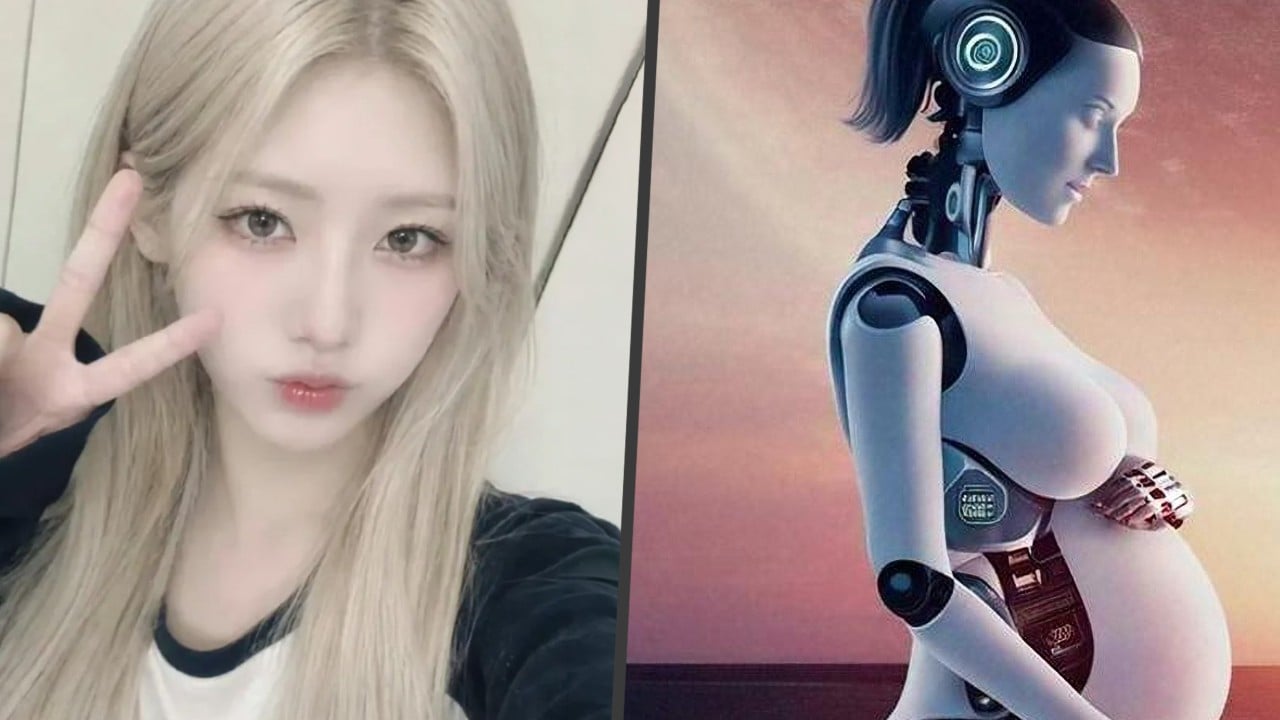
An AI idol "gets pregnant." Comment sections melt down. Think pieces multiply like rabbits. And the lazy consensus arrives right on schedule: We have crossed a dangerous digital boundary. Synthetic humans are deceiving vulnerable fans and eroding real-world intimacy.
Spare me.
That reaction isn't moral clarity. It's a category error dressed up as outrage. When a studio puts a virtual persona through a "pregnancy" arc, the scandal isn't that pixels forgot how biology works. The scandal is that audiences, critics, and half the entertainment executives in the room still think virtual idols are supposed to be fake people instead of what they actually are: serialized IP vessels with an emotional billing model.
I have watched media companies burn tens of millions of dollars trying to make synthetic talent feel "authentic" by copying human soap operas. They hire writers to simulate vulnerability, heartbreaks, domestic milestones, and life crises. Then, the moment a studio pushes that melodrama into an uncanny or taboo zone—like a simulated pregnancy—everyone acts shocked that a computer-generated character behaved like a scripted character.
You cannot violate a boundary that was never real in the first place. You can only misread the contract.
The "Digital Boundaries" Panic Is Solving the Wrong Problem
Whenever a synthetic creator pulls a stunt that triggers backlash, the conversation immediately drifts toward digital boundaries. Journalists ask where the line is between harmless fantasy and emotional manipulation. Commenters worry that lonely young fans will confuse rendered expressions with genuine care.
Let's be precise about the terms before we start handing out moral hall passes. A virtual idol or AI idol is not a person with interiority, agency, or legal personhood. Even when backed by large language models, voice synthesis, motion capture, and lore bibles, a virtual idol is a managed character franchise operated by a commercial entity (an agency, a tech firm, or a production house).
When critics talk about "digital boundaries" around a pregnant AI idol, they usually mean one of three things:
- Audience deception: Making viewers believe something real or unscripted is happening when it is staged.
- Parasocial exploitation: Encouraging one-sided emotional attachment for profit.
- Cultural taboo violation: Touching themes like reproduction, family, or youth idol tropes in ways that clash with audience expectations.
None of those three concerns is new. Wrestling kayfabe played with reality for decades. Reality television has manufactured emotional arcs out of edited footage since the Real World era. Traditional pop idol agencies have curated sanitized, aspirational illusions—and monetized parasocial devotion—long before generative AI entered a server rack.
What changed isn't the existence of manipulation. What changed is the cost of staging a narrative and the speed of audience pushback.
When a human idol has a real scandal, there are bodies, contracts, health risks, and reputational fallout that cannot be rolled back with a patch. When a virtual idol has a "pregnancy" storyline, there is no biological reality at risk—only brand equity, fan loyalty, and creative judgment. Treating a synthetic storyline like a breach of sacred human intimacy mistakes a marketing or storytelling misfire for an ethical crisis.
Why "Pregnancy" Hits Different in Idol Culture
If pregnancy isn't biologically possible for an AI idol, why did it spark backlash instead of eye-rolls?
Context. Idol culture—especially in East Asia, where virtual idols first scaled into a massive commercial engine—runs on specific emotional architecture. Traditional idol ecosystems frequently rely on an implicit promise of accessibility, pure aspirational appeal, or curated "girl-next-door / boy-next-door" closeness. Even when agencies don't promise romance, they sell availability within a tightly controlled fantasy frame.
A pregnancy storyline blows up that frame from two directions at once:
- It forces a collision between fantasy and domestic realism. Idol personas thrive on stylized glamour, youth, and aspirational projection. Pregnancy drags a stylized avatar straight into adult domesticity, bodily tropes, and high-stakes melodrama that many fans never opted into watching.
- It feels like clickbait wearing emotional clothes. When audiences suspect a major life event is just a retention hook—an engagement spike engineered to keep metrics climbing—they don't feel moved. They feel played.
Notice the difference between feeling immersed and feeling played. Fans accept fiction all the time. Anime fans watch characters suffer, age, fall in love, die, and get resurrected without accusing the studio of violating "digital boundaries." Gamers watch fictional companions go through traumatic arcs and stay invested.
Backlash happens when the boundary between diegetic story (something happening inside the fictional world) and extrinsic PR stunt (something happening to game the algorithm) becomes too obvious. If a pregnancy arc reads like a cheap engagement bait tactic rather than earned character lore, people push back because the writing is lazy, not because AI has a womb.
What Heavy Hitters in Media and Psychology Already Know
If you want to understand why this keeps happening, look at the people who have actually studied media illusions and audience behavior—not hot-take pundits chasing clicks.
In the 1950s, sociologists Donald Horton and R. Richard Wohl coined the term parasocial interaction to describe how audiences form one-sided relationships with media figures—radio hosts, television personalities, performers. Horton and Wohl's core insight wasn't that viewers are idiots who think the TV is their best friend. Their insight was that media performers design cues of intimacy, direct address, and continuity that invite viewers to respond socially.
Decades later, media scholars like Byron Reeves and Clifford Nass demonstrated the media equation in their classic research: humans routinely respond to media and computers using social rules—politeness, trust, emotional reactions—even when they consciously know the system isn't human.
Put Horton, Wohl, Reeves, and Nass together and the picture gets uncomfortable for both sides of the AI idol debate:
- Critics are right that human brains are wired to react socially to expressive faces, voices, and ongoing narratives.
- Critics are wrong to act as if AI idols invented parasocial attachment or suddenly turned sane adults into helpless zombies.
Meanwhile, look at how major entertainment and gaming companies operate when they actually know what they're doing. Studios behind massive franchises—whether Riot Games with K/DA, or major game publishers managing long-running live-service characters—treat character arcs as long-term canon. Every shift in tone, appearance, or relationship status has to earn its place in the world's logic. If you yank a character into a jarring storyline just to spike a weekly trend chart, you train your core audience to stop trusting the world.
The Real Questions You Should Be Asking
Most coverage around a pregnant AI idol asks the wrong questions. Here is how to reframe the ones people actually type into search bars.
"Are virtual idols crossing an ethical line by faking real-life milestones?"
Wrong framing. A virtual idol isn't "faking" a real-life milestone unless the studio lies and claims a real human or real-world event is involved. When a fictional or semi-fictional persona goes through a simulated life event, the ethical question isn't Is a computer allowed to be pregnant? The ethical question is Did the creator misrepresent what the audience was engaging with, or exploit vulnerable users with false reciprocity?
If a brand pretends a synthetic character has real personal needs and pushes lonely followers to "support" her through manufactured crises, that's manipulative regardless of whether the stunt is a pregnancy, an illness, or a fake breakup. If a studio treats the character as an ongoing serialized drama with clear creative framing, it's just storytelling—good, bad, or tacky.
"How do fans actually react to synthetic idols?"
Not as a monolith. Anyone who covers idol culture as if every fan has the exact same emotional wiring is guessing.
Some fans engage purely for aesthetic design, music, dance choreography, or technical novelty. Others treat the persona like a favorite anime or game character. A smaller, louder slice leans heavily into parasocial fantasy—and that slice reacts most violently when a storyline breaks the fantasy they liked best.
Ignoring that split is why executives misread backlash. A viral wave of angry comments doesn't automatically mean the whole fanbase is traumatized. Sometimes it means the loudest corner of the audience disliked the creative direction, while silent majority viewers either shrugged or moved on.
"Should AI idols have strict rules on adult or sensitive storylines?"
Rules aren't the problem. Inconsistency and cowardice are.
If a studio builds an AI idol brand around wholesome, all-ages, music-first entertainment, throwing a shock pregnancy plot at the audience is tone-deaf brand whiplash. If a studio builds a gritty, satirical, or mature speculative fiction project, adult themes fit the premise. What ruins brands is wanting the shock value of adult drama while demanding the safety and goodwill of a wholesome mascot.
A Thought Experiment: Two Versions of the Same Stunt
Imagine a scenario where two different studios run the exact same "AI idol pregnancy" storyline in the same month.
Studio A runs a shiny, sweet virtual pop idol whose whole brand revolves around upbeat songs, gaming streams, and cute daily check-ins. Out of nowhere, a dramatic teaser drops showing her holding a positive test with sad piano music and vague hints about "hard choices ahead." No context. No lore buildup. Just pure shock and engagement farming. Within 48 hours, fans feel blindsided, brands get nervous, and the stunt looks like cheap clout-chasing.
Studio B runs a gritty sci-fi transmedia project about synthetic beings trying to understand human family structures in a near-future city. A pregnancy simulation—or an AI companion's attempt to model parenthood and grief—is woven into a multi-part narrative with clear artistic framing, credits, and thematic payoff. Critics still debate it, some viewers find it weird, and some dislike the direction—but nobody feels tricked into thinking a pop star's secret baby just leaked on TikTok.
Same technology. Same broad motif. Completely different execution, intent, and audience contract.
Where My Contrarian Take Can Backfire
I'm not going to pretend my view has zero blind spots. Pushing back against moral panic doesn't mean handing studios a blank check.
Here is where taking a hard "it's just content/IP" stance can go wrong:
- Underestimating real psychological friction in heavy users. Even when people know something is artificial, heavy daily interaction with lifelike voices, faces, and conversational AI can still create real emotional strain for people going through isolation or mental health struggles. Calling it "just IP" doesn't erase how a lonely person feels at 2 a.m.
- Giving lazy creators too much cover. If I argue that studios should be bold with character arcs, bad marketers will use that logic to excuse genuinely tasteless, exploitative, or poorly thought-out shock stunts. Boldness without craft is just noise.
- Ignoring platform and cultural norms. What flies in one media ecosystem or age bracket can trigger severe reputational damage in another. Treating cultural norms as irrelevant is a fast way to lose distribution and partnerships.
Acknowledging those risks doesn't weaken the argument. It keeps it honest.
What Creators and Brands Should Actually Do Instead
If you run an entertainment brand, a virtual talent project, or a marketing team watching these controversies unfold, stop writing defensive apologies about "respecting digital boundaries" and fix your fundamentals.
- Audit your audience contract before launching any shock arc. Ask yourself plainly: What promise did we make to the people watching this, and does this move honor it or break it? If your brand sells escapism and comfort, don't ambush people with melodrama for a quick spike in impressions.
- Stop confusing outrage with reach. A spike in quote-tweets and angry replies isn't automatically healthy brand momentum. Check retention after the stunt fades, sentiment among repeat viewers, and whether sponsors view the attention as toxic or tolerable.
- Invest in real creative craft instead of novelty shocks. A synthetic idol doesn't need fake life milestones to stay relevant. Good music, sharp writing, distinct visual identity, consistent world-building, and genuine community interaction beat cheap shock value every single time.
- Keep transparency clean and boring. Be clear about what is scripted, fictional, or AI-generated. You don't need a ten-paragraph lecture; you need zero ambiguity so audiences never feel deceived about reality.
The panic over a pregnant AI idol isn't a warning from the future about machines taking over human emotion. It's a mirror held up to an entertainment industry that still hasn't figured out how to tell compelling stories without relying on cheap tricks. Fix the storytelling, respect the audience's intelligence, and drop the fake pearls.