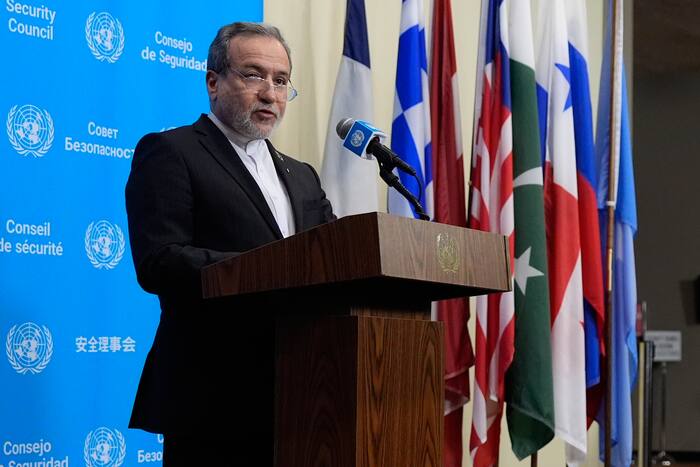
The diplomatic press corps is currently hyperventilating over backchannel mediators scrambling to rescue a phantom US-Iran accord. The narrative being spoon-fed to the public is familiar, lazy, and fundamentally broken: Tehran just needs to soften its posture, Washington needs a diplomatic win ahead of domestic political headwinds, and some weary European envoy in a beige suit is going to save the day over lukewarm espresso.
It is a comforting fantasy for people who mistake motion for progress. For a closer look into this area, we recommend: this related article.
I have watched diplomatic corps spin their wheels on this exact track for over a decade. Every time a proposal stalls—whether over IAEA inspector access, sanctions relief sequencing, or third-party guarantees—the media treats it as a temporary traffic jam on the highway to peace.
They are looking at the wrong map. For broader context on this topic, comprehensive coverage can also be found at Reuters.
The stalled talks are not suffering from a lack of creativity or a failure of mediation. They are stalled because the entire premise of a grand bargain is a structural impossibility. Both capitals are trapped in domestic political loops that treat compromise as treason. When Donald Trump rejected Tehran's latest proposal, he did not commit a tactical blunder; he simply acknowledged a reality that professional diplomats refuse to accept: you cannot negotiate a permanent treaty with a counterparty whose core survival mechanism requires permanent antagonism.
Let us define terms because the mainstream media refuses to do so. A negotiation assumes both sides share an underlying interest in stability that outweighs their interest in friction. That assumption is dead on arrival here. For Iran’s hardline apparatus, sanctions relief is an existential threat to their domestic political economy, which thrives on siege mentality and economic control via the Islamic Revolutionary Guard Corps. For Washington, any deal that does not include permanent sunset-free dismantling of regional proxy networks is treated by domestic hawks as appeasement.
Mediators are trying to bridge a chasm with toothpicks because admitting the chasm is unbridgeable puts them out of a job.
Imagine a scenario where a Swiss diplomat somehow manages to bully both sides into signing a text tomorrow morning. What happens on day two? Tehran tests a ballistic missile to appease its domestic base. Washington snaps back sanctions because a congressional committee smells blood in the water. The deal collapses within seventy-two hours, leaving everyone right back where they started, only poorer and more cynical.
The obsession with reaching a formal deal is the disease, not the cure.
The media loves to ask: "Will backchannel talks resume before the deadline?" It is the wrong question entirely. The right question is: Why do we expect a diplomatic breakthrough when neither regime can survive the domestic blowback of honoring it?
Instead of chasing a grand text that will be shredded by the next administration or the next Friday prayer sermon, smart observers should be looking at unacknowledged, transactional containment. Quiet, unheralded de-escalation channels already work when nobody puts microphones in front of them. Prisoner swaps happen. Unwritten understandings on oil export enforcement quietly shift. These aren't peace treaties; they are pressure valves. They keep the tankers moving and the centrifuges humming just below the threshold of kinetic war, without requiring either side to lose face or abandon their founding myths.
Admitting the limits of diplomacy has a downside. It forces politicians to manage a chronic security headache indefinitely rather than selling voters a miraculous cure. It means accepting a tense, managed stalemate instead of a Kodak-moment handshake on the White House lawn.
Stop waiting for a diplomatic miracle. The mediators will keep flying, the proposals will keep bouncing, and the status quo will remain ironclad because neither side actually wants what they are pretending to buy.


