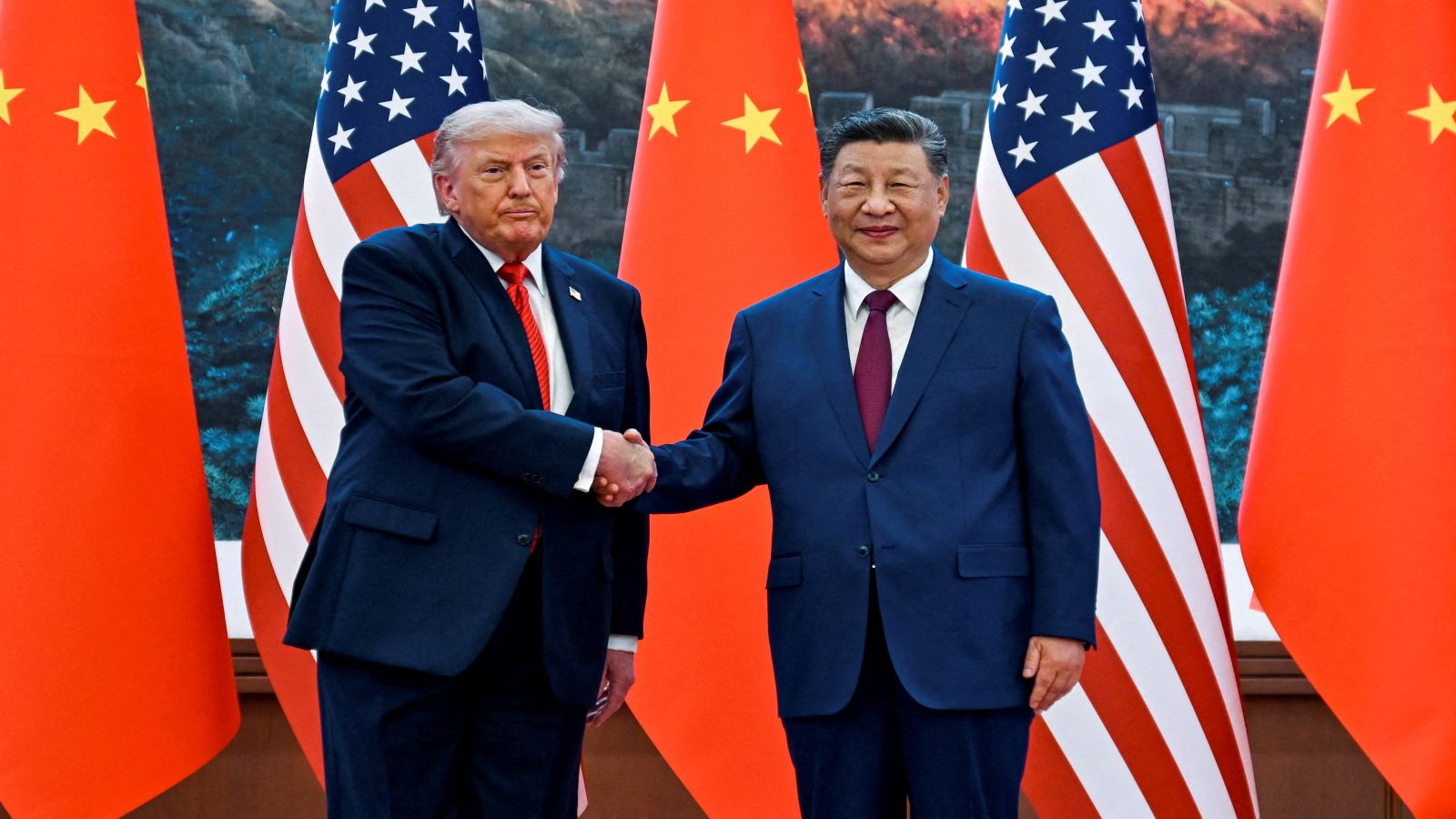
The media machine treats geopolitics like professional wrestling. They pitch you a simple matchup. Red corner versus blue corner. Tariff hawks versus state planners. Xi Jinping demanding concessions on Taiwan while Donald Trump waves around a fresh schedule of import taxes like a blunt instrument.
It is a comforting narrative. It is also entirely bankrupt. Learn more on a related subject: this related article.
I have watched corporate boardrooms panic over headline-level trade rhetoric for a decade, burning millions on consultants who map out fictional negotiation outcomes based on press releases. The lazy consensus says a new summit means a grand bargain. A grand bargain where America swaps semiconductor restrictions for agricultural purchases, or where Beijing quietly backs down on its red lines over the South China Sea in exchange for a temporary tariff truce.
Stop buying the script. More reporting by Forbes highlights similar perspectives on this issue.
The real architecture of the United States and China relationship is no longer negotiated in wood-paneled halls with translators and formal communiques. It is hammered out in supply chain basements, in quiet fab plant back-channels, and through asymmetric economic weaponization that makes traditional trade deals look like antiquated parlor games.
Let us dismantle the four pillars of the standard summit fantasy. Trade, artificial intelligence, Iran, and Taiwan.
The Tariff Fallacy and the Death of Grand Bargains
Every mainstream pundit loves to frame the trade discussion as an accounting exercise. They look at trade deficits, currency manipulation claims, and intellectual property theft as line items on a corporate balance sheet that can be adjusted with the right stroke of a pen.
That mindset belongs in the nineteen-nineties.
When you hear that a summit is going to resolve the trade imbalance, you are listening to people who do not understand how decoupled the underlying machinery has become. Capital flows have evolved past the point where a bilateral handshake can stuff the genie back into the bottle. Beijing does not want access to American consumer markets on old terms because they have already spent the last decade building alternative domestic demand and pivoting trade routes toward the Global South.
The baseline reality is that tariffs are no longer tools of economic persuasion. They are permanent industrial policy walls. Neither administration treats them as bargaining chips anymore. They are structural barricades designed to shelter domestic manufacturing bases from external shocks.
If you are a corporate strategist waiting for a summit to clear the regulatory fog so you can return to cheap sourcing models in Guangdong, you are driving while staring strictly in the rearview mirror. The decoupling is architectural. It is baked into the concrete.
The Silicon Iron Curtain
Then comes artificial intelligence. This is where the commentary reaches peak hysteria. The common take argues that Washington can simply export control its way to technological supremacy by choking off high-end graphics processing units and advanced lithography equipment.
It sounds tidy. It is profoundly mistaken.
Export restrictions do not stop indigenous innovation; they subsidize it with state-mandated desperation. When you cut off the supply of elite hardware, you force an adversary to optimize software efficiency, redesign chip architectures around legacy nodes, and pour astronomical capital into domestic semiconductor fabrication.
I have seen venture portfolios crater because founders believed Washington paperwork could permanently freeze a superpower's technological clock. It does not freeze. It accelerates in a different direction.
Beijing views computing power through the exact same lens the United States viewed the Manhattan Project. They are not waiting for permission to scale domestic neural networks. They are working around the bottlenecks. By focusing entirely on hardware blockades, Western policymakers ignore the real battlefield: algorithmic efficiency, energy infrastructure, and proprietary industrial datasets.
While the headline debate focuses on whether a specific chip designer can sell advanced silicon to a Chinese cloud provider, the actual technological center of gravity is shifting toward environments where Western oversight holds zero sway.
The Geopolitical Side-Shows
Next on the standard briefing memo are the peripheral pressure points. Iran. Middle Eastern energy corridors. Regional proxies.
The conventional narrative tries to paint Beijing as an indispensable diplomatic mediator that Washington must bargain with to keep energy flows stable. This gives state planners in China far too much credit as global peacemakers, while misunderstanding why they engage with resource-rich rogue states in the first place.
Energy security is an existential requirement for Beijing. They buy Iranian crude at a discount not because they want to poke the American eagle in the eye, but because math dictates it. When you consume millions of barrels a day, you secure your supply lines wherever you find willing sellers outside the reach of dollar-denominated financial sanctions.
Pretending that a bilateral summit between Trump and Xi will alter Beijing's calculus on energy imports is pure theatre. They are playing a multi-decade game of resource securitization. They will trade diplomatic pleasantries in front of the cameras and sign meaningless memoranda of understanding about regional stability, while quietly locking in long-term delivery contracts through non-dollar clearing mechanisms.
The Taiwan Illusion
Which brings us to the core fixation of every strategist in Washington and Beijing: Taiwan.
The lazy consensus treats Taiwan as a powder keg waiting for a spark, a potential amphibious invasion modeled after twentieth-century military history. Analysts draw maps, count amphibious landing ships, and calculate missile stockpiles as if we are staging a modern D-Day across the strait.
This is a category error of historic proportions.
An outright kinetic invasion is the least likely outcome of this standoff because it is the most inefficient way to achieve geopolitical objectives. It destroys the very asset everyone wants to control. The semiconductor fabrication plants that anchor global technology would be vaporized in the first forty-eight hours of traditional warfare.
Instead, the real conflict over Taiwan is happening right now through economic quarantine, cyber subversion, maritime gray-zone pressure, and elite capture. It is a slow-motion squeeze. Beijing does not need to launch a million-man amphibious assault if they can gradually integrate the island's economic arteries into the mainland network until formal political status becomes an irrelevance.
When a summit communiqué addresses Taiwan with diplomatic boilerplate about stability and adherence to historical communiques, pay zero attention to the words. Look at the shipping lanes. Look at the air defense identification zone incursions. Look at the submarine cable networks on the ocean floor.
That is where the actual contest is won or lost.
The Playbook for Realists
If you are running a business, investing capital, or trying to understand where the global economy is heading over the next five years, stop consuming summit coverage like a soap opera.
First, abandon the hope of a grand reset. The structural drivers separating the United States and China are permanent fixtures of the modern global order. They are competing models of state capitalism versus market democracy, and neither side intends to blink.
Second, map your exposure to single-point choke points. If your entire operational model relies on frictionless cross-border trade between these two superpowers, your business plan is built on sand. Build redundancy not as a temporary fix, but as a core operational discipline.
Third, recognize that policy volatility is the new normal. Administrations change, rhetoric shifts from fiery to conciliatory, and photo ops give the illusion of progress. Beneath the surface noise, the machinery of economic nationalism grinds forward regardless of who sits across the table.
Stop waiting for the handshake that changes everything. It is never coming.