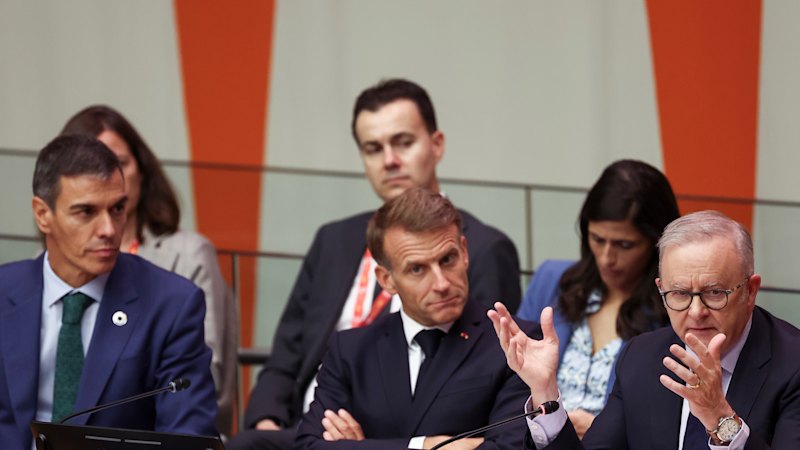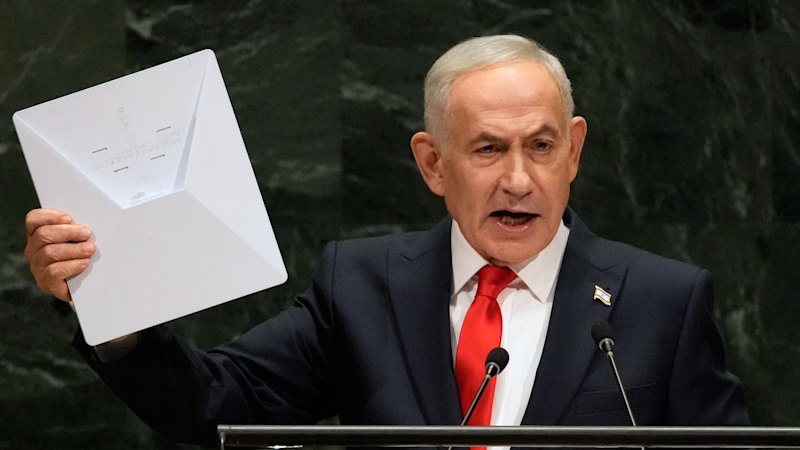
The lazy consensus in international journalism runs on a predictable script. A leader stands at a podium, deflects international pressure, sharpens domestic rhetoric, and the global press corps files the exact same dispatch they filed twenty years ago. The headlines write themselves. Indignant, defiant, isolated, winning few new friends. It is a comforting narrative for diplomats and armchair pundits who view statecraft through the lens of a high school popularity contest.
It is also entirely detached from how power actually operates in the Middle East. Learn more on a similar subject: this related article.
When observers lament that a prime minister is failing to win friends abroad, they are judging a survival strategy by the metrics of a diplomatic cocktail party. Sovereignty is not a LinkedIn endorsement. In a neighborhood where entire state structures evaporate overnight, the primary metric of leadership is not likability. It is endurance.
Let us dismantle the core fallacy underpinning modern commentary on Israeli statecraft: the persistent belief that international approval translates to national security. More analysis by The New York Times highlights similar views on the subject.
History offers a brutal audit of that premise. Every major strategic shift Israel executed over the past seven decades—from the preemptive strike in 1967 to the dismantling of the Osirak reactor in 1981, and the ongoing containment of asymmetric threats—was met with universal condemnation from the global peanut gallery. Had successive governments optimized for favorable op-eds in European dailies rather than tactical dominance, the country would not exist.
Popularity is a lagging indicator of weakness. When you are universally loved by foreign editorial boards, it usually means you are no longer doing anything inconvenient to your adversaries.
To understand why the standard critique misses the mark, you have to look past the theatrical posturing of the United Nations General Assembly and examine the structural mechanics of deterrence. Deterrence is not maintained by cultivating warm diplomatic ties with nations three thousand miles away whose trade relationships are transactional at best. It is maintained by establishing a credible, unyielding threshold of cost for hostile actors.
Critics focus endlessly on the friction—the rhetorical sparring matches, the frozen summits, the icy communiqués. They mistake the friction for the malfunction. In reality, the friction is often the friction of a gear grinding against an opposing force that wants to dismantle it. A leader who avoids all friction in international relations is a leader who is conceding ground.
Consider the domestic dimension of this dynamic. The conventional take assumes that stubborn defiance alienates the local populace, eroding political capital. Yet, the opposite frequently occurs in high-threat environments. When citizens perceive an existential squeeze, their tolerance for diplomatic niceties plummets to zero. They do not want a statesman who excels at crafting polite press releases; they want an anvil.
This brings us to the fundamental misunderstanding of political survival. Critics look at polarized parliamentary votes and noisy street protests and diagnose a regime on the brink of collapse. They fail to recognize that intense domestic turbulence is the default operating state of a vibrant, anxious democracy under siege. Democracies that face existential threats do not enjoy quiet, orderly consensus. They argue viciously because the stakes are absolute.
When an administration stares down its critics, it is rarely an act of mere stubbornness or ego. It is a calculated projection of resolve to internal and external audiences simultaneously. In the language of game theory, signaling matters more than intent. If a leader blinks under pressure from foreign allies who do not bear the direct consequences of regional instability, they signal vulnerability to adversaries who do.
Downplaying this reality is professional malpractice for analysts. When international commentators write about political isolation as if it were a fatal poison, they ignore the reality of strategic independence. True sovereignty often requires the willingness to be profoundly unpopular.
Let us look at the economic reality that underpins this geopolitical defiance. Pundits love to predict imminent financial ruin driven by diplomatic estrangement. Yet, the macroeconomic indicators of advanced technology sectors tell a different story. Capital flows toward innovation, resilience, and problem-solving capability, not moral approval from foreign ministries. While foreign policy analysts hyperventilate over diplomatic snubs, venture capital and defense tech ecosystems continue to compound because the underlying engineering solves problems the world cannot easily ignore.
None of this is to suggest that leadership decisions are immune to error. There is a vast difference between strategic defiance and operational hubris. Blind stubbornness without tactical flexibility is a recipe for disaster. The danger of an entrenched leadership style is that it can harden into institutional myopia, mistaking legitimate domestic critique for external subversion.
Yet, the critique leveled by mainstream media rarely targets actual policy missteps. Instead, it obsesses over tone, optics, and the refusal to conform to western diplomatic etiquette. That is a category error of the highest order. Expecting a nation fighting on multiple fronts to prioritize polite diplomatic decorum over hard security calculations is like criticizing a firefighter for ruining your lawn while putting out a blaze in your living room.
The next time you read a breathless analysis about a leader alienating allies and standing defiant against the tide of global opinion, ask yourself a simple question. Are those allies bearing the cost of failure, or are they demanding that a sovereign state trade its long-term survival for their short-term comfort?
The answer dictates everything. History does not remember who won the most applause at the summit. It remembers who was left standing when the room emptied out.