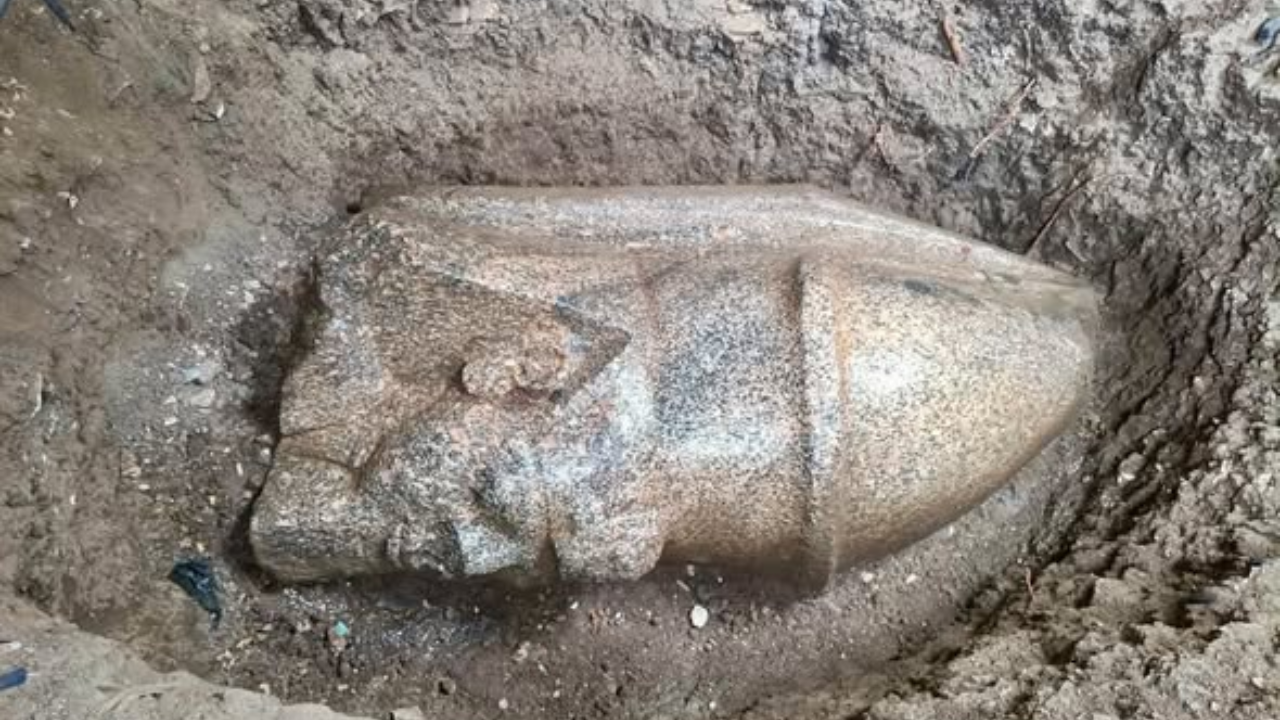
A farmer hits stone in the dirt. A headline screams about a biblical pharaoh who enslaved Israelis. Clicks spike.
The narrative is tidy. Too tidy. It flattens three thousand years of shifting borders, imperial propaganda, and material culture into a Sunday school plot twist. Recently making news in this space: Transboundary Haze in Southeast Asia by the Numbers What Most People Miss.
Every time a colossal limestone or granite figure emerges from Egyptian soil, click-hungry coverage rushes to solder it to Exodus. A 28-foot statue of a New Kingdom ruler—almost certainly Ramesses II when headlines use this shorthand—gets treated as a smoking gun for biblical bondage. It is not. Treating monumental Egyptian stone as a literal receipt for the Book of Exodus confuses state spectacle with historical proof.
I have spent years watching media outlets and amateur commentators burn credibility trying to force archaeological finds into pre-packaged ideological boxes. I have seen publishing teams chase viral search spikes with breathless claims about "proof of the Exodus," only to face quiet retractions or credibility hits when historians point out the gap between a ruler's stone vanity and the text of Genesis and Exodus. When you read those competing articles side by side, the lazy consensus is obvious: assume the statue proves the Bible, assume the farmer stumbled onto a secret vault, and skip the boring work of stratigraphy, epigraphy, and economic history. Additional details regarding the matter are explored by The Guardian.
Let's strip the drama down to actual mechanics.
What Clickbait Headlines Miss About Egyptian Colossi
Competitor coverage loves a dramatic arc: an ordinary farmer in the Nile Delta or Middle Egypt, a towering monolith, a link to ancient Israel, and a sense that mainstream scholars are hiding something. That framing sells ads. It also misleads readers about how ancient Egypt worked and how archaeologists actually date and interpret a find.
First, scale in ancient Egypt was a tool of royal projection, not a biographical logbook. When a pharaoh commissioned a 28-foot statue or an even larger colossus, he was advertising invincibility, divine favor, and administrative reach across dozens of sites. Ramesses II ruled for roughly 66 years (c. 1279–1213 BCE) and put his cartouche on almost everything that stood still—including monuments carved before his birth. Finding a massive statue bearing his name tells you a monumental building or sanctuary once stood nearby and that the state had the logistics to quarry, transport, and erect heavy stone. It does not automatically tell you who hauled it, who lived in the surrounding fields, or how a biblical narrative maps onto that specific decade.
Second, the "biblical pharaoh" label is doing heavy lifting that the evidence cannot support. In popular lore, Ramesses II is cast as the unnamed oppressor of Exodus because the text mentions the store cities Pithom and Rameses. Serious Egyptologists and biblical historians—figures like Israel Finkelstein, Kenneth Kitchen, and Manfred Bietak—have debated the timeline, geography, and literary layers of the Exodus tradition for decades. Notice what those specialists agree on even when they disagree on dating: a single statue is a shard of state art, not a census record of Semitic populations in the eastern Delta.
Third, "discovered by a farmer" sounds romantic until you look at real-world archaeology. Agricultural land in Egypt has sat over ancient settlements and temples for millennia. Farmers dig irrigation channels, level plots, and turn soil constantly. Sometimes they hit carved stone. When they report it to the Ministry of Tourism and Antiquities, rescue excavations follow. Turning a routine agricultural encounter into a lone-wolf treasure hunt distorts how field work actually happens—and ignores the local salvage crews, epigraphers, and conservators who keep fragile stone from crumbling once exposed to air and salt.
The Question You Should Be Asking Instead
Readers searching for a biblical pharaoh statue usually want one of two things: validation that the Bible's dramatic showdown with Egypt happened in plain sight, or a quick thrill from a massive ancient object pulled out of the mud.
Both questions point at the wrong target.
Instead of asking, "Does this statue prove the enslavement of Israelites?" ask: What does this monument actually reveal about how New Kingdom Egypt controlled labor, resources, and territory?
That shift changes everything. Ancient states used monumental building projects to project power over both domestic subjects and foreign captives or migrants. In the New Kingdom, workforce organization mixed corvée labor (state-mandated service by local peasants), skilled artisans, military personnel, and foreign prisoners or settlers—often called habiru or Canaanite/Levantine groups in Egyptian administrative texts. Calling every laborer in ancient Egypt a carbon copy of the biblical narrative erases how complex the Egyptian economy actually was.
Think of it like judging a modern superpower's labor policy solely by looking at a 30-foot bronze monument outside a federal building. The statue proves the government had steel, cranes, and an ego. It does not tell you the payroll structure, the union rules, or every group of people who passed the gates.
Dismantling Common "People Also Ask" Myths
- "Did Pharaoh really enslave the Israelites?" The Bible describes oppressive forced labor in Egypt, and Egyptian texts confirm forced and corvée labor existed in the ancient Near East. However, direct, unambiguous archaeological proof of the specific Exodus narrative—let alone a single statue proving it—remains contested among scholars. Treating a statue as settled proof skips the entire evidentiary debate.
- "Why do news stories always call Ramesses II the pharaoh of the Exodus?" Convenience and literary association. The name Pi-Ramesses appears in Exodus, making Ramesses II the default shorthand in pop culture. That shorthand is a hypothesis and a cultural habit, not a proven open-and-shut verdict.
- "Can a farmer keep something like that or get paid for it?" No—and thank goodness. Under Egyptian antiquities law, antiquities are state property, and illicit digging destroys context forever. Proper reporting protects the find; black-market looting turns a historical clue into a looted rock with no provenance.
How Ancient Stone Actually Gets Read in the Field
When a large statue comes out of the ground, field specialists do not start with theology. They start with geology, tool marks, context, and inscriptions.
A limestone colossus behaves very differently from an Aswan granite one. Limestone is softer, easier to carve with copper and stone tools, and far more vulnerable to groundwater salts and agricultural moisture once unearthed. Granite is harder, heavier to haul hundreds of miles north along the Nile, and tougher to reuse—though ancient rulers still recarved rival or predecessor monuments when convenient.
Imagine a scenario where a team uncovers a 28-foot statue lying face-down in waterlogged Delta silt. Before anyone writes a press release, a conservator has to manage moisture loss so the surface does not flake apart, while an epigrapher checks whether the cartouche is original or chiseled over an earlier king's name. If the statue was moved in antiquity—a common practice in Egypt—its findspot might not even be its original home.
That is why hype ages like milk. A headline claims a monumental discovery unlocks ancient history overnight. Six months later, a technical report notes the statue was reused, weathered, or stripped of its surrounding architectural context, and the clickbait site has already moved on to the next shiny object.
What Smart Readers and Writers Should Do Instead
If you write about history, cover archaeology, or simply refuse to be fooled by sensationalist headlines, change your operating rules immediately.
- Demand provenance before pronouncement. Whenever a story links a newly found statue to a famous biblical or historical event, check the stratigraphy and inscription details first. If the article cannot distinguish between a ruler's name on a monument and direct evidence of a specific historical event, treat the connection as speculative.
- Separate monument scale from narrative proof. A 28-foot statue proves royal ambition and stoneworking capacity. Nothing more on its own. Make the monument earn every claim attached to it.
- Respect the unglamorous work. Real archaeological breakthroughs happen in lab notes, ceramic sequences, soil layers, and slow conservation—not in 500-word outrage bait.
I will admit the downside of taking this contrarian line: nuance does not go viral as fast as certainty. When you tell people a giant statue does not settle a three-thousand-year-old debate about ancient slavery and scripture, some readers feel let down. They wanted fireworks, not footnotes.
Let them chase the fireworks. Real history is sharper, stranger, and far harder to fake than a headline.