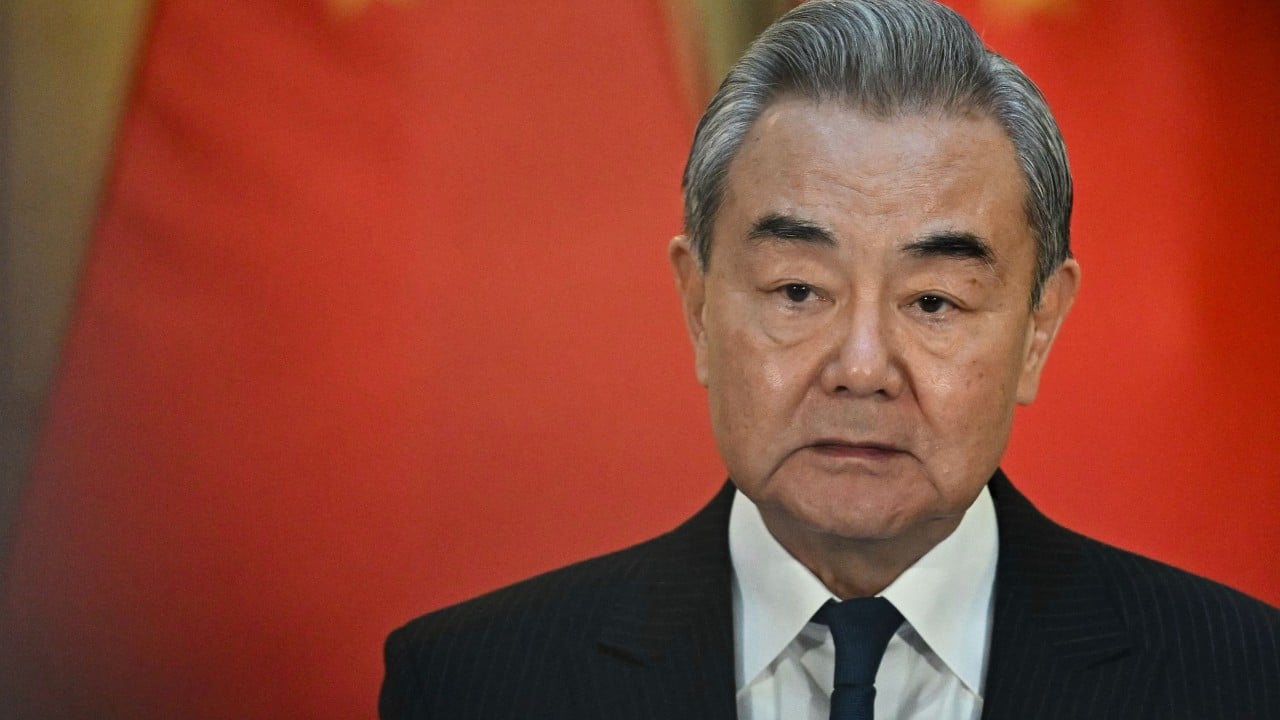
The mainstream foreign policy establishment is trapped in a collective delusion about Northern Europe. Walk through the corridors of any Brussels think tank or read the standard media coverage regarding Chinese Foreign Minister Wang Yi’s diplomatic tours, and you will hear the same repetitive narrative: the "Nordic hawks" are an impenetrable wall of transatlantic solidarity, ready to freeze out Beijing over human rights, supply chain dependencies, and the war in Ukraine.
This analysis is not just lazy; it is fundamentally wrong.
The conventional wisdom presumes that the Nordic and Baltic states possess a unified, ironclad resistance to Chinese influence that can withstand the tectonic shifts of shifting US politics. In reality, the region’s vaunted hawkishness is a fragile, hyper-reactive posture built entirely on a geopolitical assumption that is currently evaporating. By treating Northern Europe as a monolith of moral clarity, Western analysts are blind to the exact structural cracks that Beijing is quietly preparing to exploit. Wang Yi isn't testing whether transatlantic turmoil can soften these governments. He already knows it will.
The Illusion of the Impenetrable Northern Wall
To understand why the mainstream consensus is flawed, look at the actual mechanics of Nordic foreign policy rather than their press releases. For years, countries like Sweden, Finland, Denmark, and Lithuania have positioned themselves as the moral conscience of the European Union regarding external authoritarian threats. Lithuania famously defied Beijing by allowing Taiwan to open a representative office under its own name in Vilnius. Sweden closed its Confucius Institutes. Finland joined NATO in record time.
On paper, it looks like a unified front. In practice, it is a luxury belief system funded entirely by an American security guarantee.
The fatal flaw in European strategic thinking is the belief that values drive policy. Interest drives policy. The moment the cost of maintaining a moral posture exceeds the economic or security benefit, the posture collapses.
Consider the economic reality. While the Nordic countries talk a big game about decoupling and de-risking, their industrial supply chains tell a completely different story. Volvo, the crown jewel of Swedish automotive history, is owned by Geely, a Chinese multinational. Ericsson relies heavily on global supply chains deeply intertwined with Chinese manufacturing. Stockholm and Helsinki cannot simply unplug from the second-largest economy in the world without triggering domestic industrial crises.
I have watched corporate boardrooms across Northern Europe scramble during internal risk assessments. They publicly applaud government statements on strategic autonomy, but privately, executives admit that true decoupling is a fantasy that would destroy their margins. Beijing understands this hypocrisy perfectly.
The Transatlantic Trap: What the Critics Miss
The standard narrative suggests that Wang Yi’s diplomatic efforts are a desperate gamble to see if Europe will blink. This misunderstands the nature of Chinese diplomacy, which operates on decades-long horizons rather than electoral cycles.
The true vulnerability of the Nordic hawks lies in their absolute dependence on Washington. This dependence creates an acute strategic anxiety. When American politics fluctuates between isolationism and transactional unilateralism, the foundation of Nordic foreign policy cracks.
Imagine a scenario where Washington demands a total European embargo on Chinese green technology, semiconductors, and electric vehicles, while simultaneously cutting back on its commitments to European defense infrastructure to focus exclusively on the Indo-Pacific. The Nordic states suddenly face a brutal calculus:
- Maintain a hawkish stance against Beijing to please an unreliable partner in Washington.
- Suffer catastrophic economic fallout while losing their primary security umbrella.
- Quietly seek a pragmatic, bilateral accommodation with China to stabilize their economies.
When forced to choose between economic survival and adherence to an abstract transatlantic ideal that Washington itself is abandoning, pragmatism wins every single time.
Dismantling the "People Also Ask" Myth: Can Europe Stand Alone Against China?
The short answer is no. The long answer requires looking at the profound fragmentation within the European Union itself.
The common question asked by analysts is: "Will European unity hold against Chinese economic coercion?" The premise of the question is flawed because it assumes European unity exists in the first place.
The Nordic states are not fighting in a vacuum. They are anchored to a European Union where Paris openly advocates for "strategic autonomy" (which Beijing interprets as a green light to separate Europe from US influence) and Berlin routinely sends massive trade delegations to China to protect German automotive interests.
When Lithuania faced a de facto Chinese trade blockade in 2021, the initial response from its European neighbors was a wave of rhetorical solidarity followed by immense, behind-the-scenes pressure to fix the issue quietly so it wouldn't disrupt wider European supply chains. The EU's Anti-Coercion Instrument is a bureaucratic paper tiger; it cannot compel a German factory owner to stop buying Chinese components or force a French shipping line to reroute its vessels.
The Anatomy of the Coming Capitulation
Beijing’s strategy in Northern Europe is not a blunt instrument; it is a surgical dissection of vulnerabilities. Wang Yi does not need to convince the Nordic hawks to love China. He only needs to convince them that relying exclusively on the United States is a form of economic suicide.
The pivot will not happen overnight with a dramatic joint statement. It will happen through a series of quiet, incremental concessions:
- The Technology Compromise: Nordic telecom giants and green tech innovators will negotiate carve-outs for specific components under the guise of "managed risk sharing," ensuring that critical infrastructure remains dependent on Chinese manufacturing inputs.
- The Arctic Pivot: As climate change opens new shipping routes in the High North, the economic reality of the Polar Silk Road will become too lucrative for Nordic ports and maritime logistics firms to ignore, driving a wedge between their security rhetoric and their commercial incentives.
- The Quiet De-escalation: Diplomatic rhetoric regarding human rights and territorial integrity will be subtly downgraded from minister-level statements to obscure working-group reports, trading public criticism for market access.
The downside to acknowledging this reality is uncomfortable for Western policymakers. It exposes the fact that Europe has failed to build an independent, self-sustaining security or economic architecture. Without Washington acting as a predictable, benevolent guardian, the entire framework of Nordic hawkishness is revealed to be a regional luxury rather than a sustainable global strategy.
The Actionable Reality for Global Business
Stop building corporate strategies around the assumption that Europe’s current regulatory hostility toward China is permanent. The hawkishness has peaked. The structural dependencies and the shifting geopolitical landscape mean a correction is inevitable.
If you are running a global enterprise or managing capital allocation, look past the aggressive press releases coming out of Northern European ministries. Monitor the trade volumes, look at the joint ventures being quietly signed in mid-sized manufacturing sectors, and track the flow of green energy investments.
The nations currently labeled as the most unyielding critics of Beijing are precisely the ones most exposed to the chilling reality of a multipolar world. They will be the first to adapt when the transatlantic wind shifts.
The real test isn't whether Wang Yi can soften the Nordic hawks. The test is whether Western analysts will wake up to the fact that the softening has already begun.