Western Europe has a massive, terrifying gap in its skies. While military analysts have spent years debating tank divisions and artillery shells, Russia has been rampantly scaling up its ballistic missile production. These aren't slow-moving drones you can shoot down with a heavy machine gun. They fly high, descend at hypersonic speeds, and give virtually zero warning before impact.
Until now, Europe relied on American stockpiles to bail them out. But those stockpiles are drying up, redirected to active conflicts elsewhere. Don't miss our recent article on this related article.
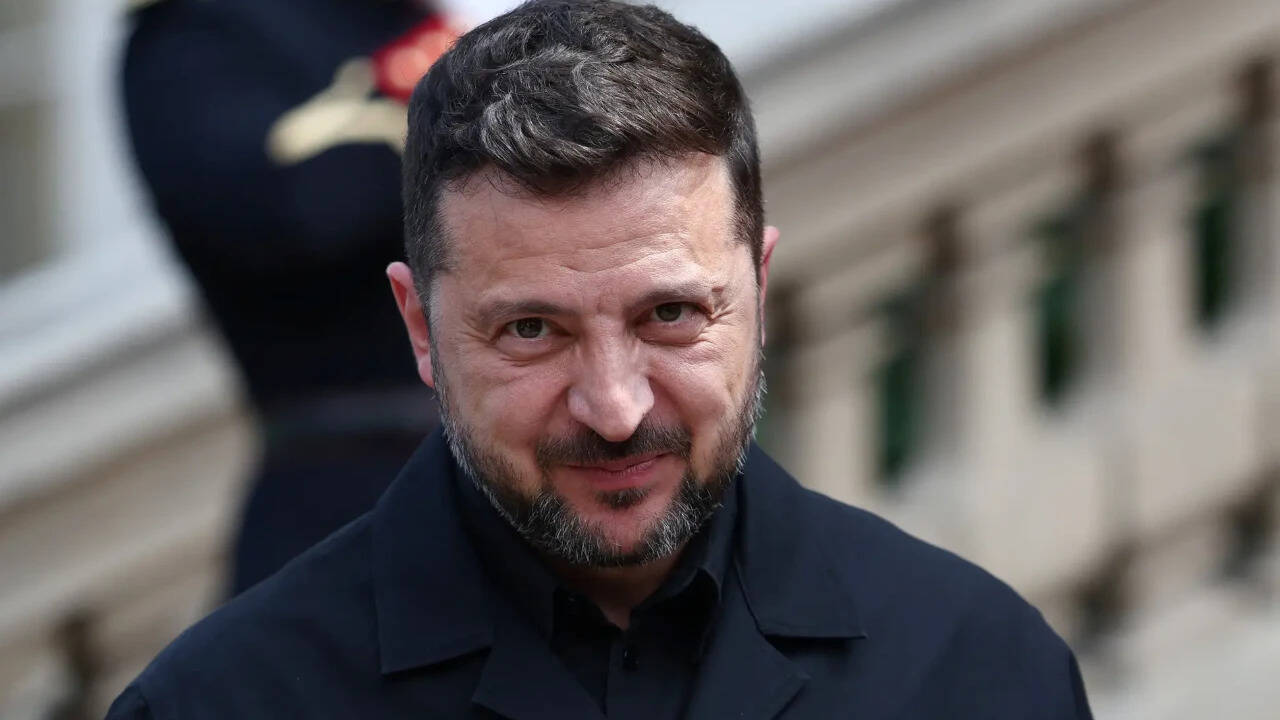
The realization of this vulnerability is what drove nine European nations to gather in Paris alongside Ukrainian President Volodymyr Zelenskyy. Together, they signed a pact to build the Integrated Anti-Ballistic Missile Coalition. This isn't just another dry bureaucratic declaration. It is a desperate, fast-tracked push to build a homegrown European shield before the continent runs completely out of interceptor missiles.
The Math Behind the Panic
To understand why Denmark, France, Germany, Italy, the Netherlands, Norway, Spain, Sweden, the United Kingdom, and Ukraine took this step, you have to look at the cold, hard numbers. To read more about the background of this, NBC News offers an excellent summary.
Right now, Europe's only homegrown system capable of taking down complex ballistic threats is the Franco-Italian SAMP/T, which fires Aster 30 interceptors.
- Russian ballistic missile production: Roughly 800 to 1,000 units per year.
- European Aster 30 production: A mere 230 to 270 units per year.
- The deficit: To establish a credible, continental deterrent against a massive aerial barrage, Europe needs about 2,200 interceptor missiles annually.
We are currently producing just over 10% of what is actually required.
Historically, we filled this massive gap by purchasing American Patriot PAC-2 and PAC-3 interceptors. But US production is capped at around 850 to 880 missiles a year, and intense conflicts in the Middle East have drained American reserves. Europe can no longer assume that Washington will keep shipping interceptors across the Atlantic whenever things get tense.
Enter Project Freya
This coalition is unique because it isn't just a group of wealthy Western nations charity-funding Ukraine. It is a reciprocal arrangement. Europe is bringing the industrial capital, but Ukraine is bringing something far more valuable: real-world, high-intensity operational experience in defeating modern ballistic threats.
The focal point of this joint effort is Project Freya.
Developed by the Ukrainian defense firm Fire Point, Freya is designed as a highly mobile, drastically lower-cost alternative to the American Patriot system. The goal is to build an interceptor that can reliably swat down Russian Iskander or Kinzhal missiles without the eye-watering $4 million-per-shot price tag of a Patriot interceptor.
By backing Freya, the coalition aims to bypass the sluggish procurement cycles of traditional defense giants. Zelenskyy noted that the ambition is to have the Freya system fully operational within the next 12 months. If successful, it won't just protect Kyiv, Kharkiv, and Odesa; it will be integrated into a broader European air defense network to protect cities from Warsaw to Paris.
Industrial Giants in the Room
This wasn't just a political summit for heads of state. The Paris meeting featured a heavy-hitting roster of defense industry executives. Representatives from Thales, Leonardo, Saab, Kongsberg, Diehl Defence, MBDA, and Eurosam sat at the table alongside Ukrainian innovators like Fire Point and Destinus.
The plan is to break down the silos that usually stall joint European defense projects. Instead of every nation building its own proprietary tech that can't talk to its neighbor's systems, the coalition is committing to:
- Shared operational requirements: Agreeing on what the threat looks like and how to target it.
- Technological openness: Allowing different companies to build components that integrate seamlessly.
- Cross-border funding: Pooling cash to rapidly scale manufacturing lines for both Freya and the existing Aster 30 missiles.
Actionable Next Steps for European Security
Setting up a coalition is easy; building and deploying complex rocket hardware under fire is incredibly hard. For this initiative to succeed, the participating nations must immediately focus on three fronts:
- Standardize the Data Architecture: The coalition's joint declaration highlights "integrated architecture". This means radar installations in Poland must be able to feed targeting telemetry directly to interceptor batteries in Germany or Ukraine in real time. Governments must rapidly clear the regulatory red tape around military intelligence sharing.
- Fund the Ukrainian Supply Chain: Ukraine's defense industry has shown incredible agility, but its factories are constantly targeted by Russian strikes. Western members of the coalition must fund secure, underground, or decentralized production facilities for Freya components, potentially co-locating final assembly lines in neighboring Poland or Romania.
- Ramp Up Aster 30 Production Immediately: While Freya is the mid-term hope, Aster 30 is the immediate reality. France and Italy need to inject serious capital into MBDA to double or triple production capacity within the year.
The era of relying on a distant American shield is ending. This new coalition is Europe's loudest admission yet that if it wants to secure its skies, it has to build the hammer itself.