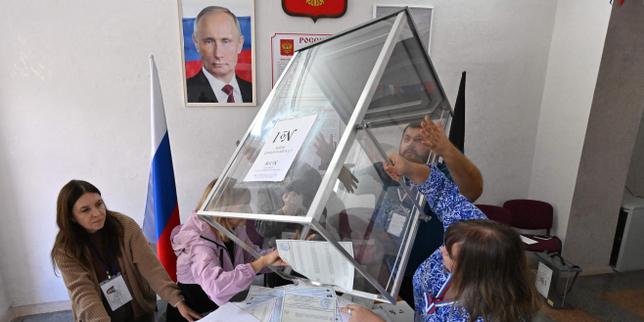
Moscow just ran another controlled exercise masquerading as an election for the State Duma, and western capitals reacted with predictable outrage. Kaja Kallas, the European Union's top diplomatic voice, labeled the entire process a severe blow to Russian democracy. She isn't wrong about the outcome, but calling it a blow to democracy implies there was a functioning democratic system left to damage. That is a dangerous fantasy.
Pretending these votes are legitimate contests stripped of their integrity misses the entire point of how modern authoritarian regimes maintain power. They don't accidentally rig elections. Rigging is the feature, not a bug. If you liked this piece, you should read: this related article.
Let's look at how the Russian political machinery actually operates behind the glossy rhetoric coming out of Brussels. You have to understand that the Kremlin views domestic political control as an existential security matter. When Kallas or other leaders express shock over excluded opposition candidates, ballot box stuffing, or state-media monopolies, they are judging an autocracy by the standards of a parliamentary democracy. It doesn't work. It was never meant to work.
The Illusion of Choice in Modern Autocracies
Autocratic governance has evolved past simple intimidation and midnight knocks on the door. Modern authoritarianism relies heavily on participation theater. The regime needs citizens to go to the polls. It needs high turnout numbers to project popular legitimacy, even if the result is written before the first ballot drops. For another perspective on this event, check out the recent update from The New York Times.
When independent politicians try to run, they face a wall of bureaucratic hurdles. They get labeled as foreign agents, barred by dubious financial audits, or simply locked away on trumped-up charges. The system absorbs dissent, neutralizes it early, and leaves voters with a binary choice between the ruling party and carefully managed systemic opposition.
Kallas pointed out that these elections marked a major setback. But you cannot suffer a setback in a game you stopped playing years ago. Russia's electoral landscape has been systematically vacuumed clean of genuine opposition since the early 2010s. Every cycle simply tightens the screws a bit more.
Why Western Condemnation Falls Flat Inside Russia
When foreign diplomats issue stern warnings about democratic backsliding, the Kremlin turns it into a domestic propaganda win. State television plays clips of western leaders condemning the vote, framing the criticism as proof that Europe fears a strong, independent Russia.
This creates a powerful siege mentality among the domestic electorate. If Brussels hates the election results, ordinary citizens under the influence of state media assume the election must be serving Russian national interests. Western politicians keep expecting moral outrage from a populace that has learned to tune out political noise in exchange for basic economic stability.
You can't shame a government that stopped caring about its international democratic reputation a decade ago. Sanctions hurt, sure. Diplomatic rebukes do nothing. They serve domestic audiences in Europe and Washington, letting politicians look tough without altering realities on the ground in Moscow.
What Real Resistance Looks Like Now
If traditional elections are dead ends, how does dissent manifest inside Russia? It happens in quiet, dangerous ways. It looks like mothers of mobilized soldiers demanding answers about front-line losses. It looks like anonymous crypto channels sharing frontline casualty data. It looks like artists facing arrest for anti-war installations.
The real political story in Russia isn't happening inside the halls of the State Duma. The Duma is a rubber-stamp parliament where legislation passes unanimously or near enough. Watching vote counts there is like analyzing professional wrestling for athletic integrity.
Instead, watch the regional budgets. Watch the quiet reallocation of funds toward the military-industrial complex and away from social services. Watch how the security apparatus handles low-level dissent in provincial towns far from the media glare of Moscow and St. Petersburg.
The Cost of Ignoring the Root Cause
When leaders like Kallas frame these events primarily as failures of democracy, they misdiagnose the threat. This isn't just about stolen ballots or ballot box manipulation. It is about a fully militarized state apparatus that has subordinated its entire economy and social fabric to an imperial war project.
Democracy didn't lose a round in Russia. Democracy was buried, and the current regime is dancing on the grave while demanding applause. Treating these political rituals as legitimate elections with technical flaws gives the Kremlin a veneer of normalcy it does not deserve.
Stop calling them elections. Call them what they are: loyalty tests designed to enforce compliance and weed out remaining pockets of internal resistance. Until western policy shifts from expressing disappointment to understanding the hard mechanics of modern autocracy, our responses will remain as hollow as the votes cast in Moscow.