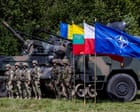
The headline cycle runs on panic. Every few months, capitals across the continent trot out breathless briefings about impending border provocations, hybrid aggression, and the imminent shattering of collective defense treaties. Analysts nod grimly. Pundits dust off maps from the Cold War. Everyone assumes that statecraft still works the way it did in nineteen forty-four, with armor rolling across the plains and diplomats scrambling in smoke-filled rooms.
They are looking at the wrong century.
Europe is not bracing for a conventional onslaught from the east. It is reacting to the death of traditional territorial conquest, masking its own economic stagnation behind the theater of military readiness.
Let us dismantle the lazy consensus. The reigning assumption across policy circles is simple: Moscow looks at the alliance's eastern flank, calculates the cost of direct confrontation, and searches for loopholes to test resolve through cyber attacks, airspace violations, and sabotage. This narrative assumes that territory remains the primary currency of power. It treats modern states like sixteenth-century fiefdoms waiting for a breach in the gate.
That framework is broken.
Power today is transactional, digital, and infrastructural. No major power gains anything by seizing strip mines in the Baltics or freezing rain in the Baltics when they can achieve strategic paralysis through supply chain manipulation, financial leverage, and information ecosystems. When a government stages a GPS spoofing campaign or cuts an undersea data cable, pundits scream about crossing red lines. They call it a test of resolve.
It is not a test. It is noise.
It is low-cost friction designed to keep rival bureaucracies perpetually reactive, burning capital on defensive posture while domestic economies rust from within. By treating every minor cyber disruption or diplomatic spat as a prelude to total war, leaders accomplish two things: they justify bloated defense budgets that fail to solve structural decay, and they distract populations from stagnant living standards, demographic decline, and industrial hollow-out.
Look at the actual mechanics of modern friction. Real deterrence stopped being about battalions a decade ago. It became about semiconductor access, energy grids, and financial clearing houses. When an adversary disrupts a power station or leaks classified cables, the correct response is not a solemn emergency summit or a hurried re-arming of infantry divisions. The correct response is economic excision, silent retaliation in code, and systematic removal from global value chains.
Yet the continent remains hooked on the aesthetic of defense. Parades, procurement cycles, and press conferences about readiness soothe the public anxiety of declining global relevance. It is much easier to buy tanks for a war that will never be fought than to fix the energy policies, regulatory bottlenecks, and educational deficits that actually determine whether a nation survives the next fifty years.
The real vulnerability of the West is not a lack of armored brigades. It is a chronic inability to think past the physical battlefield. While analysts obsess over whether a fighter jet crossed a specific coordinate line by three miles, capital flows, algorithmic manipulation, and technological dependency rewrite the balance of power entirely out of sight.
Stop waiting for the tanks. They are rusting in fields while the real war happens in the server racks, the currency markets, and the boardrooms where the future is actually bought and sold.