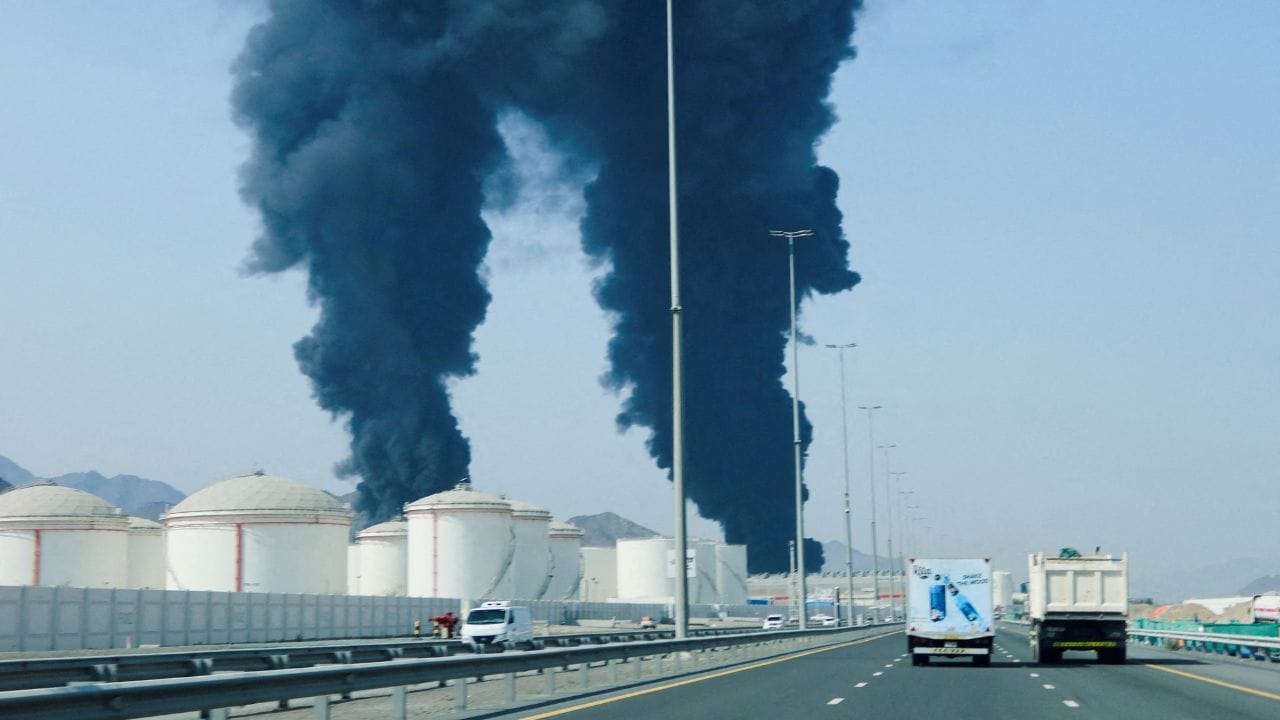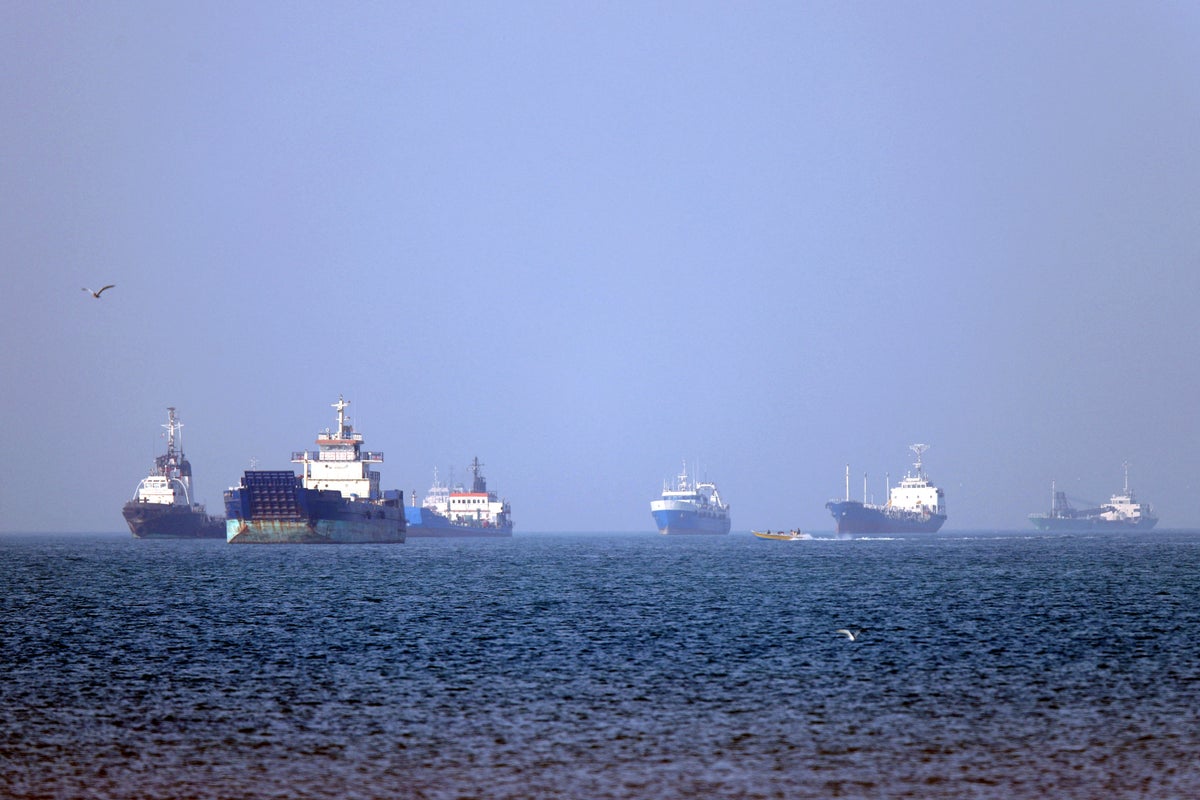
The hand-wringing over "Project Freedom" has reached a fever pitch. Traditional foreign policy circles are currently obsessed with the idea that American naval escorts for commercial tankers in the Strait of Hormuz will trigger a "regional conflagration." They claim it is an overextension of power. They argue it invites asymmetric retaliation. They are wrong.
The "lazy consensus" suggests that maintaining a passive, over-the-horizon presence is the "safe" play. This perspective ignores the cold, hard mechanics of global trade and the psychological reality of maritime insurance markets. When a state actor can harass a vessel with a $50,000 drone and cause $500 million in economic friction via soaring premiums, "restraint" isn't a strategy. It is a subsidy for chaos.
The Insurance Trap Most Analysts Ignore
Most armchair generals look at the Strait of Hormuz and see a chokepoint. I look at it and see an actuarial nightmare.
The moment a kinetic threat becomes "normalized"—meaning it happens once a week instead of once a decade—the maritime insurance industry undergoes a violent recalibration. We aren't just talking about "war risk" premiums. We are talking about the total withdrawal of coverage for certain flags.
When Lloyd's of London or the International Group of P&I Clubs decides a route is too volatile, the physical presence of the oil becomes irrelevant. The oil stays in the ground because the hull carrying it isn't covered. Project Freedom isn't about starting a war; it is about providing the physical guarantee required to keep the global financial plumbing from seizing up.
The critics argue that escorts "provoke" regional powers. This is a fundamental misunderstanding of power dynamics in the Middle East. In this theater, a vacuum is not a peace offering. It is an invitation. By refusing to provide direct protection, the U.S. essentially tells every proxy group with a speedboat that the global economy is an open target with zero consequences.
The Myth of the Asymmetric Advantage
You will hear experts talk about "swarming tactics." They envision hundreds of small, explosive-laden boats overwhelming a multi-billion dollar destroyer. It makes for great cinema. It is terrible military science.
A naval escort isn't just a shield; it is a sensor node. Project Freedom utilizes integrated Aegis combat systems and advanced electronic warfare suites to create a "bubble" of denial that stretches for miles.
Imagine a scenario where a commercial tanker is sailing alone. It is blind. It has no way to jam incoming guidance systems. It has no way to intercept a low-profile suicide craft. Now, put that same tanker 500 yards behind a destroyer. The "asymmetric" advantage of the attacker vanishes the moment they are forced to deal with active radar, CIWS (Close-In Weapon Systems), and hellfire missiles before they even see the tanker's hull.
- Fact: In 1987-1988, during "Operation Earnest Will," the U.S. escorted Kuwaiti tankers.
- The Result: Despite mine hits and skirmishes, the oil kept flowing, and the regional power realized that attacking the convoy meant certain destruction of their own naval assets.
- The Lesson: Direct escorting creates a binary choice for the aggressor—total de-escalation or total war. Most rational actors choose the former when the latter leads to their own extinction.
Deterrence is Binary Not Linear
The fatal flaw in the "de-escalation" argument is the belief that deterrence is a sliding scale. It isn't. You either have it or you don't.
If you allow a single ship to be seized without a direct, physical response, you haven't "prevented a wider conflict." You have simply lowered the price of admission for the next seizure. Project Freedom sets the price of admission at "the destruction of your navy." That is how you stabilize a market.
Critics point to the cost. Yes, steaming a carrier strike group or a set of littoral combat ships is expensive. But compare that to the cost of a $150-per-barrel oil spike triggered by a week-long closure of the Strait.
The math is brutal:
- Project Freedom Cost: A few billion in operational budget.
- Inaction Cost: A global recession, the collapse of supply chains, and the permanent loss of Western credibility in the Indo-Pacific.
The idea that we can protect global interests through "sternly worded letters" or "multilateral sanctions" is a relic of a 1990s mindset that no longer exists. We are in a post-globalization era where physical security is the only currency that matters.
Why the Tech Matters More Than the Hull
The "experts" attacking Project Freedom often miss the technological shift. We aren't just talking about 1940s-style convoys. We are talking about the integration of unmanned surface vessels (USVs) and persistent aerial surveillance.
The goal isn't just to put a ship next to a ship. It is to create a digital "safe corridor" where any movement within five miles of the shipping lane is automatically tracked, identified, and targeted.
If an aggressor knows that the moment they launch a drone, it will be splashed by a laser or jammed by an electronic warfare suite, the incentive to attack drops to zero. This isn't "escorting." It is the creation of a high-tech toll road where the only price is peace.
The Brutal Reality of Middle Eastern Geopolitics
Stop looking at this through the lens of Western diplomacy. Look at it through the lens of regional survival.
Our allies in the Gulf don't want "nuanced dialogue." They want to know if their primary export—the thing that keeps their societies from collapsing—can actually reach the market. If the U.S. won't do it, they will look elsewhere. China is already waiting in the wings, eager to trade "security" for long-term hegemony over the energy markets.
If you want to cede the 21st century to an authoritarian bloc, then by all means, keep arguing that naval escorts are "too risky."
The Inevitability of the Escort
We are moving toward a world where the "global commons" are no longer free. Whether it’s the South China Sea or the Strait of Hormuz, the era of unescorted commercial shipping is coming to an end.
Project Freedom is simply the first acknowledgment of this reality. It is the end of the fantasy that trade can exist independently of hard power.
You can complain about the optics. You can worry about the "escalation ladder." But when your gas prices double and your pension fund evaporates because a rogue state decided to park a few mines in the shipping lanes, you won’t be asking for "restraint." You will be asking why the escorts weren't there months ago.
The choice isn't between "war" and "peace." The choice is between "managed risk" and "unmanaged catastrophe." Project Freedom chooses the former. It is the only adult move left on the board.
Stop pretending that doing nothing is a strategy. It's just a slow-motion surrender.