The standard playbook for reporting on Middle East conflict is broken.
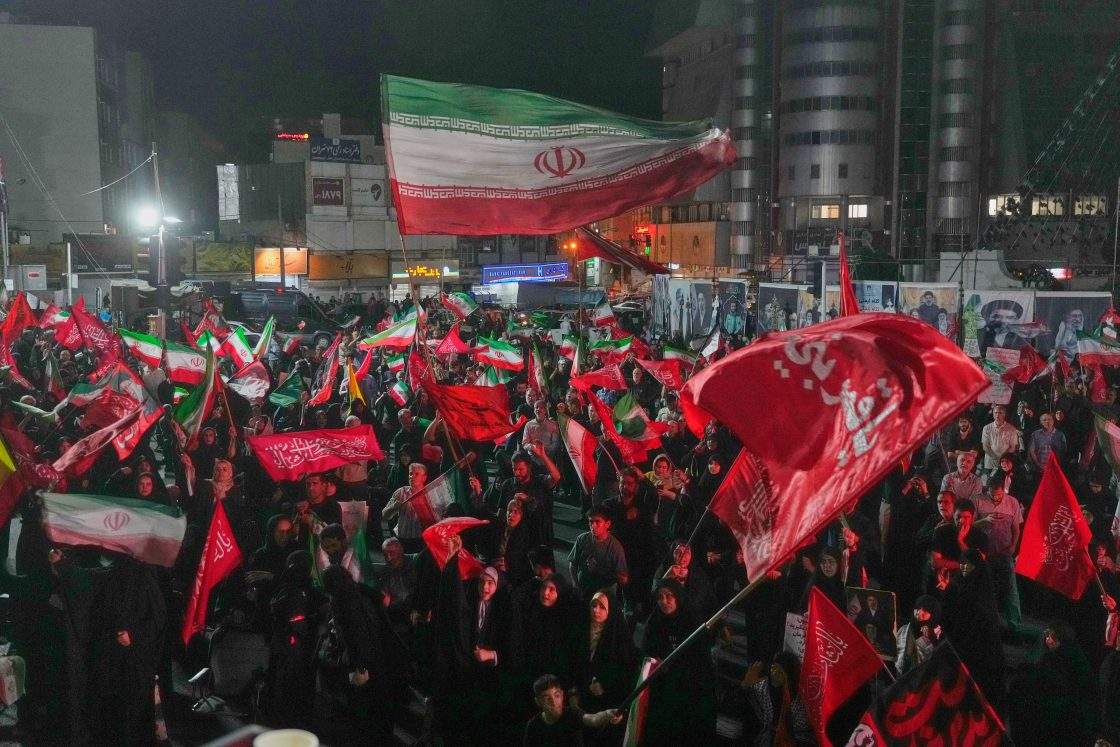
Every time military exchanges spike between Washington and Tehran, the media machinery defaults to a predictable narrative: endless expansion, impending regional collapse, and unchecked escalation. Headlines talk about conflict widening as if it behaves like a wildfire in dry brush, moving inexorably outward according to some unstoppable law of nature.
That framing isn't just tired. It's completely blind to how state survival, deterrence economics, and military power actually function.
What conventional reporting calls "uncontrolled expansion" is usually something far more calculated: controlled friction within strict parameters. Both sides are playing a high-stakes game of calibrated risk, using strategic strikes to manage internal political pressure while actively avoiding the open-ended commitment of full-scale warfare.
The Flawed Premise of Unstoppable Escalation
Mainstream coverage treats each strike as a domino falling toward regional disaster. The implicit assumption is that military leaders are operating purely on emotion, revenge, or miscalculation.
They aren't.
Modern conflict between major state actors and network-based proxies relies on strict signaling. When military assets trade fire, the target selection, timing, and weapon choices are engineered to send specific messages to both foreign capitals and domestic constituencies.
- The Proxy Buffer: Regional networks serve as insulation. They allow states to project power and project cost without forcing direct, existential state-on-state confrontation.
- The Cost-Benefit Reality: Direct conflict is economically and militarily ruinous for all involved parties. Neither nation can afford an unconstrained theater-wide war without risking severe internal instability.
- Calculated Thresholds: Intelligence apparatuses spend decades mapping the exact threshold of what constitutes an acceptable response versus what triggers a general mobilization.
When observers focus entirely on the kinetic output—the explosions, the casualty counts, the press releases—they miss the structural constraints that keep the perimeter intact.
The Economic Math Nobody Wants to Talk About
War costs money, but more importantly, modern military containment runs on a precise balance of supply chains and fiscal endurance.
I've evaluated geopolitical risk models for years, and the biggest error analysts make is treating military capability as a fixed, endless resource. Long-range precision munitions, missile defense interceptors, and carrier strike group deployments are finite assets subject to intense operational burn rates.
Interceptors used to neutralize incoming threats often cost significantly more than the incoming projectiles themselves. That asymmetrical cost curve creates a strict operational ceiling. Neither party can sustain high-tempo kinetic exchanges indefinitely without exhausting critical stockpiles needed for long-term strategic posture elsewhere.
The idea that two sophisticated actors will casually slide into an accidental global conflict ignores the sheer logistical friction involved in sustaining high-intensity combat operations. The economics actively enforce a ceiling, even when the rhetoric suggests otherwise.
Dismantling the "What Happens Next" Panic
People constantly ask when the situation will finally boil over into an all-out, unchecked conflict. The premise of the question is fundamentally flawed.
It assumes that status-quo friction is a prelude to total war, rather than the stable (if brutal) state of affairs itself. Low-intensity conflict, localized strikes, and gray-zone maneuvers aren't a failure of diplomacy leading toward a wider war; they are often the active alternative to it.
"A state of perpetual, managed tension is not a sign that containment has failed. It is often evidence that containment is the only mechanism working."
Admitting this reality comes with uncomfortable truths:
- No Neat Resolution: This dynamic does not end with a decisive surrender or a sweeping peace treaty signed on a stage.
- Persistent Volatility: Tactical surprises will happen, and localized casualties will continue to occur.
- Miscalculation Risks: While structural incentives prevent intentional total war, the margin for operational error remains razor-thin.
Acknowledging that the situation is managed doesn't mean it's safe. It means the nature of the risk is fundamentally different from what mainstream commentators report.
Stop looking for the spark that sets off the entire continent. Start analyzing the explicit containment mechanisms, economic ceilings, and supply chain realities that force both sides back from the edge every single time the headlines scream otherwise.