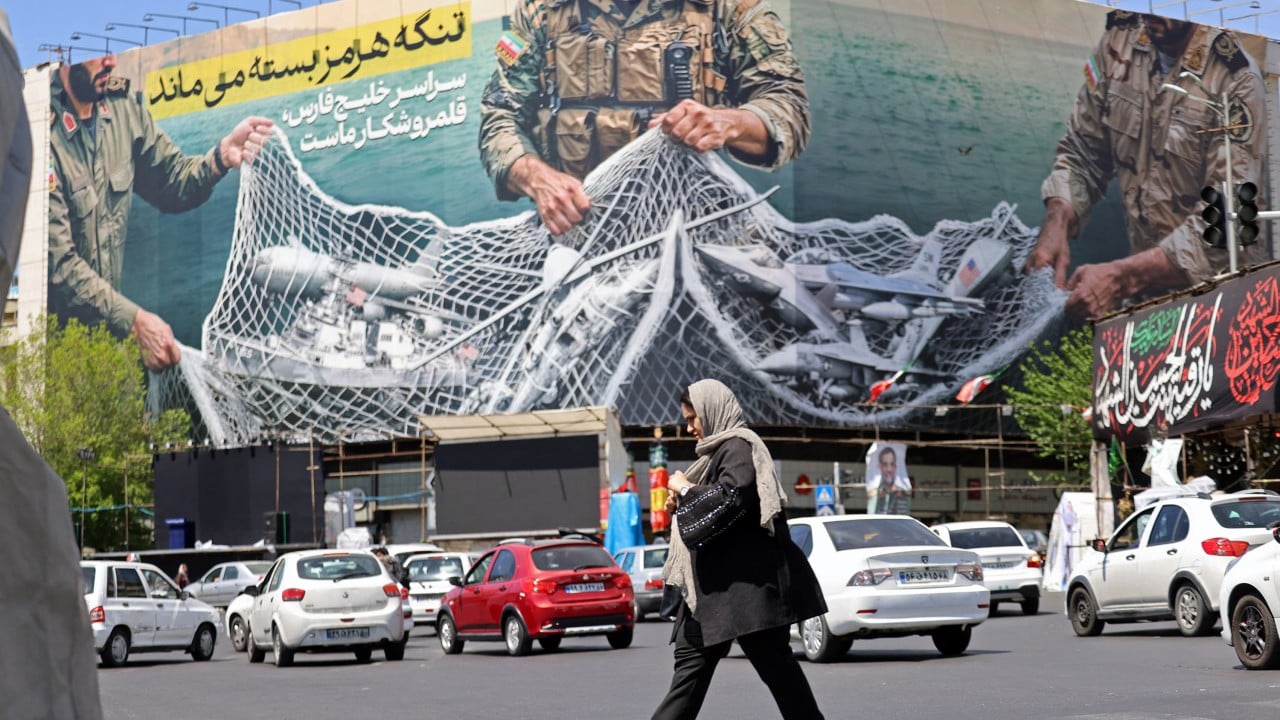
The United States military has launched another round of targeted air strikes against Iranian-backed militia infrastructure. This kinetic response follows a predictable pattern of deterrence that, by almost every measurable metric, is failing to deter. While the Pentagon frames these operations as necessary defensive measures to degrade the capabilities of groups targeting American personnel, the broader strategic reality tells a different story. Each strike series serves less as a stop sign and more as an accelerant in an ongoing war of attrition that Washington seems unequipped to end through military might alone.
The underlying mechanics of this conflict reveal a stark asymmetry. The United States is utilizing multi-million-dollar precision munitions and deploying high-readiness carrier strike groups to counter decentralized networks operating low-cost, expendable weaponry. By focusing heavily on the immediate tactical objective—destroying a command center here, an ammunition depot there—policymakers frequently overlook the political and structural realities that keep these proxy forces supplied and motivated.
The Mechanics of asymmetric attrition
To understand why localized air strikes yield diminishing returns, one must examine the supply chains feeding these regional networks. The infrastructure backing these militias is built for resilience. It relies heavily on decentralized manufacturing, hidden smuggling routes, and dual-use technologies that are easily replaced.
When a precision missile strikes a storage facility, the immediate capability is disrupted. However, the intellectual capital, the local recruitment pipelines, and the core logistical corridors remain entirely intact.
[Iran-Backed Network] ---> [Decentralized Local Production] ---> [Low-Cost Drone/Missile]
                                                                        |
[US Military Response] <--- [High-Cost Precision Strike] <--------------+
The financial calculus heavily favors the proxies. A single loitering munition or one-way attack drone can cost as little as a few thousand dollars to manufacture. Intercepting that same drone requires air-defense missiles costing upwards of two million dollars per shot, supplemented by the immense hourly operational costs of keeping fighter jets in the sky. This economic reality means the U.S. military is burning through specialized readiness and expensive inventory at a rate that is structurally unsustainable over a multi-year timeline.
The Mirage of Deterrence
Military strategy dictates that deterrence functions by convincing an adversary that the costs of an action will vastly outweigh the benefits. In the geopolitical landscape of the Middle East, this logic breaks down because the entities involved operate on fundamentally different risk-reward calculations.
For local militia commanders, drawing an American military response is often viewed not as a failure, but as a validation. It enhances their domestic political standing, reinforces their narrative of resistance against foreign intervention, and ensures a steady stream of funding and prestige from external sponsors.
Furthermore, the centralized command structure of the Western military apparatus operates at a distinct disadvantage against a highly fractured adversary. The Pentagon requires rigorous legal reviews, collateral damage assessments, and high-level executive authorization before striking. Conversely, a local cell requires little more than a pickup truck, a makeshift launch rail, and a commercial GPS coordinate to execute an attack. This agility allows proxies to dictate the tempo of engagements, choosing exactly when and where to probe Western defenses.
The Problem of the Target List
Intelligence agencies spend years compiling target lists, categorizing warehouses, training camps, and underground bunkers. Yet, the physical infrastructure is rarely the true center of gravity.
- Redundant facilities: For every active depot struck, several decoy or secondary sites are already operational.
- Civilian integration: Warehouses are routinely placed in close proximity to civilian infrastructure, turning any kinetic strike into a high-stakes gamble with international public opinion.
- Mobile platforms: The reliance on truck-mounted rocket launchers means the hardware responsible for an attack is often miles away by the time a retaliatory strike is approved and executed.
The Overlooked Factor of Local Legitimacy
A glaring blind spot in Western analysis is the assumption that these militias exist in a vacuum, operating entirely as mindless instruments of foreign state policy. The reality is far more complex. Many of these groups have deeply integrated themselves into the social, economic, and political fabric of their host nations.
They run schools, provide local security, manage social welfare programs, and hold seats in national parliaments. When foreign bombs fall, the narrative shifts away from the militia’s corruption or mismanagement and focuses squarely on foreign violation of national sovereignty. This political shield makes it incredibly difficult for local governments to cooperate openly with Western counter-terrorism initiatives without facing severe domestic backlash.
The Diplomatic Vacuum
Kinetic action without a parallel, realistic diplomatic strategy is simply noise. Currently, the diplomatic tracks intended to address the root causes of these regional flashpoints are stagnant or broken. Air strikes are being utilized as a substitute for policy, a visible sign of "doing something" when systemic solutions are deemed too politically costly at home.
Relying on the military to solve what is fundamentally a political and ideological alignment issue ensures that the deployment cycles will continue indefinitely. True stabilization requires addressing the governance vacuums that allow non-state actors to thrive, establishing verifiable regional security frameworks, and creating economic alternatives for the populations currently being recruited into these proxy forces. Until the strategic calculus shifts from counting destroyed targets to altering the political incentives of the region, the cycle will remain unbroken. The bombs will continue to fall, the sirens will continue to sound, and the map will remain fundamentally unchanged.