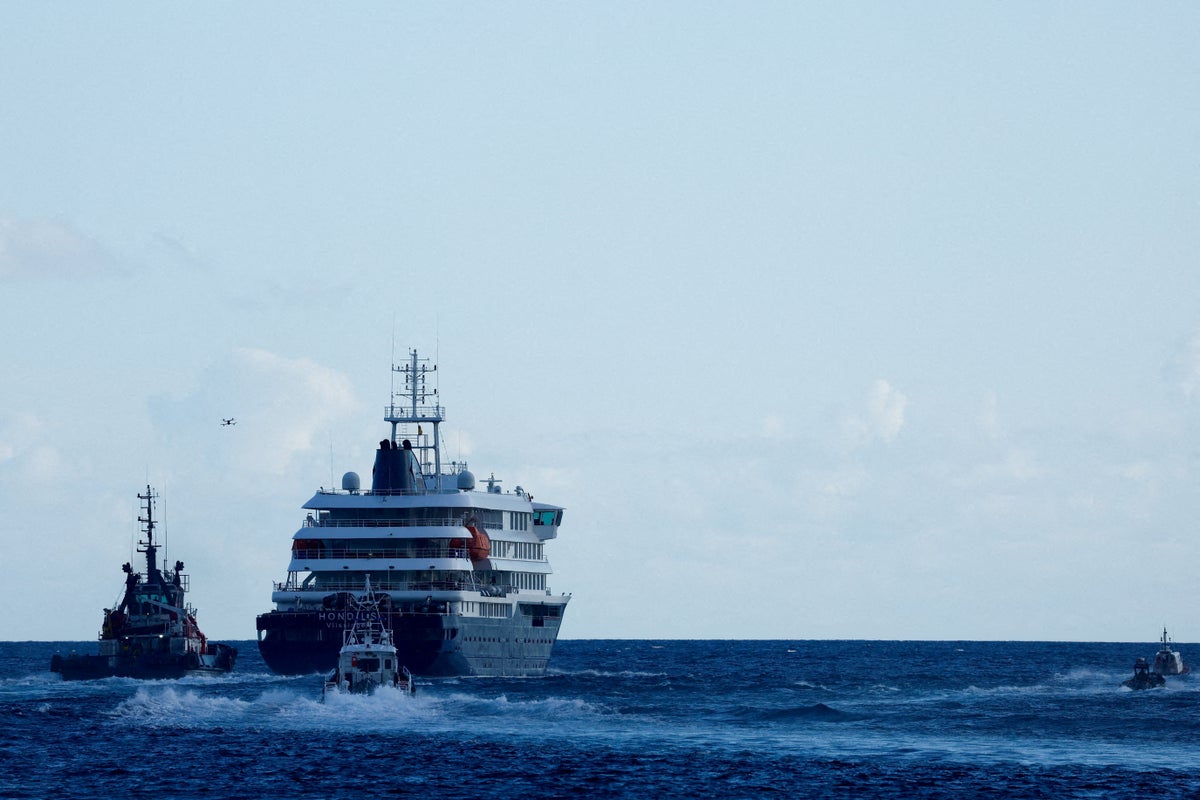
The confirmation of hantavirus in a Canadian tourist following disembarkation from a luxury cruise ship exposes a critical failure mode in maritime biosafety protocols. Standard operating procedures for cruise ship sanitization focus almost exclusively on norovirus and respiratory pathogens like influenza or coronaviruses. By auditing security through this narrow lens, cruise operators leave a systemic blind spot for zoonotic vectors. This case forces a re-examination of how high-density, closed-loop transit environments manage atypical biological risks.
To understand how a pathogen traditionally associated with rural, terrestrial environments infiltrates a luxury vessel, we must map the intersection of vector biology, vessel supply chains, and passenger density.
The Vector Infiltration Framework
Hantaviruses are not transmitted person-to-person in the vast majority of strains; the classic exception is the Andes virus. Instead, transmission relies on the aerosolization of viral particles from the excreta, saliva, or urine of infected rodents. For a luxury cruise ship to become an exposure point, the pathogen must bypass multiple structural layers of defense. This infiltration occurs across three distinct vectors.
1. The Supply Chain Gateway
Cruise ships operate as floating cities requiring massive, rapid provisioning at various international ports of call. Dry goods, fresh produce, and palletized storage materials are frequently held in portside warehouses prior to loading. If these warehouses lack rigorous rodent-exclusion standards, pallets become transport mechanisms for pests. Infested materials transferred directly to the ship’s sub-deck storage areas introduce the vector into the vessel's primary envelope.
2. The Port Infrastructure Interface
Vessels docked at urban or industrial piers are physically connected to land via mooring lines, gangways, and utility conduits. Rodents possess the physical capability to traverse standard mooring lines. While rat guards are theoretically mandatory on hawser lines, improper deployment, physical degradation of the guards, or structural gaps at the gangway interface allow physical boarding.
3. Structural Micro-Environments
Modern cruise ships feature complex architectural matrices containing miles of utility chases, HVAC ductwork, false ceilings, and interstitial wall spaces. Once a rodent vector breaches the outer hull, these unmonitored voids provide ideal nesting conditions with stable temperatures and decoupled access to food waste management systems.
Transmission Dynamics in Closed HVAC Systems
The primary transmission mechanism for hantavirus is inhalation. When dried rodent excreta is disturbed, microscopic viral particles enter the air. In a residential setting, this risk is localized to spaces like sheds or cabins. In a maritime environment, the risk profile changes exponentially due to the architecture of forced-air ventilation.
[Rodent Excreta in Interstitial Space]
               │
               ▼
   [Mechanical Disturbance] (Maintenance/Vibration)
               │
               ▼
    [Aerosolization of Fomites]
               │
               ▼
[HVAC Intake / Recirculation Loop]
               │
               ▼
 [Multi-Cabin Distribution Network]
Standard cruise ship HVAC architecture relies on a mix of fresh air intake and recirculated air to optimize thermal efficiency and reduce fuel consumption. If rodent contamination occurs within a primary air handling unit or a shared supply duct, the mechanical velocity of the air stream aerosolizes the viral fomites.
This creates a distribution loop where the pathogen bypasses traditional localized containment measures. A single point of contamination in a sub-deck utility space can theoretically distribute viable viral particles to multiple passenger cabins connected to that specific ventilation zone. The risk is compounded by the fact that standard shipboard cabin filters are designed for dust and particulate capture, not viral filtration.
Clinical Ambiguity and Diagnostics Delayed
The Canadian passenger tested positive after leaving the vessel, a timeline dictated by the intrinsic incubation period of hantavirus. This delay introduces a major challenge for epidemiological tracking and containment.
Hantavirus Pulmonary Syndrome (HPS) and Hemorrhagic Fever with Renal Syndrome (HFRS) feature incubation periods ranging from one to eight weeks. During this window, an infected passenger remains completely asymptomatic, clears customs, boards commercial flights, and returns to their home community.
When symptoms finally manifest, the initial presentation is highly non-specific:
- Acute pyrexia (fever)
- Myalgia (muscle aches) focusing on large muscle groups
- Cephalea (headache)
- Gastrointestinal distress
Because these symptoms mimic common influenza strains, norovirus, or COVID-19, initial clinical assessments frequently misdiagnose the root cause. For a patient presenting to a community clinic in Canada, a history of recent luxury cruise travel typically steers a physician’s differential diagnosis toward tropical diseases or common respiratory viruses, not a rodent-borne pathogen. This diagnostic friction delays the administration of supportive care and prevents rapid reporting to international maritime health authorities, allowing the vessel to continue operating and exposing new cohorts of passengers.
The Operational Failure of Current Bio-Sanitization Protocols
The cruise industry relies on Vessel Sanitation Programs (VSP) that are heavily optimized for bacterial and viral pathogens spread via fomites or droplets. The standard response to a disease outbreak on board involves wiping down high-touch surfaces with chemical disinfectants, increasing hand sanitizer deployment, and isolating symptomatic passengers in their cabins.
Against hantavirus, this protocol is fundamentally ineffective.
First, surface disinfection in passenger areas does nothing to neutralize the source of the virus if it resides within the structural voids or ventilation system. Second, isolating a passenger in a cabin that shares ventilation with an active rodent run may perpetuate exposure rather than mitigate it.
The structural failure lies in the reactive nature of these protocols. Cruise lines monitor passenger health metrics (such as the percentage of passengers presenting to the infirmary with gastrointestinal symptoms) to trigger outbreak interventions. Because hantavirus has a long incubation period and does not spread person-to-person, the ship’s infirmary will register zero spike in cases while active transmission is occurring via the ventilation system. The vessel remains an active vector incubator while maintaining a clean bill of health on paper.
Quantitative Risk Assessment Paradigms for Maritime Operators
To mitigate this specific class of biological risk, maritime operators must transition from reactive passenger monitoring to a proactive structural risk function. The probability of an outbreak ($P_{outbreak}$) can be modeled as a function of vector entry probability ($P_{entry}$), viral prevalence within the local vector population ($V_{prev}$), and the mechanical distribution efficiency of the vessel's HVAC systems ($E_{dist}$).
$$P_{outbreak} = f(P_{entry} \times V_{prev} \times E_{dist})$$
While $V_{prev}$ is an environmental variable dictated by regional ecology at ports of call, operators possess total control over $P_{entry}$ and $E_{dist}$.
Reducing $P_{entry}$ requires transitioning from visual inspections of mooring lines to continuous electronic pest monitoring arrays within supply bays and utility corridors. These arrays utilize thermal imaging and automated bait stations that log data in real-time, flagging vector presence long before physical signs become visible to crew members.
Addressing $E_{dist}$ demands a redesign of ventilation compartmentalization. High-risk zones—such as food storage, waste processing, and luggage holds—must operate under negative pressure relative to passenger decks, paired with dedicated, non-recirculating exhaust systems. Furthermore, integrating Ultraviolet Germicidal Irradiation (UVGI) fields within primary air handling units offers a method to neutralize aerosolized viral particles without requiring the complete retrofitting of high-efficiency particulate air (HEPA) filters, which often restrict airflow beyond the capacity of older shipboard HVAC systems.
Strategic Reconfiguration of Maritime Biosafety
The occurrences of atypical pathogen outbreaks on luxury vessels demonstrate that current maritime biosecurity frameworks are calibrated to past crises rather than systemic vulnerabilities. To insulate operations against non-traditional biological disruptions, cruise lines must execute an immediate shift in engineering and supply chain management.
Immediate implementation of mandatory, audited off-site pallet sanitization or plastic-tote transferring protocols for all dry stores eliminates the primary supply chain entry point for pests. Ships must be structurally zoned with physical barriers within utility runs to prevent cross-vessel rodent transit, transforming the interior from a continuous highway into isolated, containable sectors.
Finally, maritime medical protocols must expand their screening intake to include geographic tracking of supply origin points, not just passenger travel histories. When an atypical pathogen enters a closed system, the vessel itself must be treated as an interconnected biological ecosystem requiring structural remediation, rather than a mere hotel requiring surface cleaning.