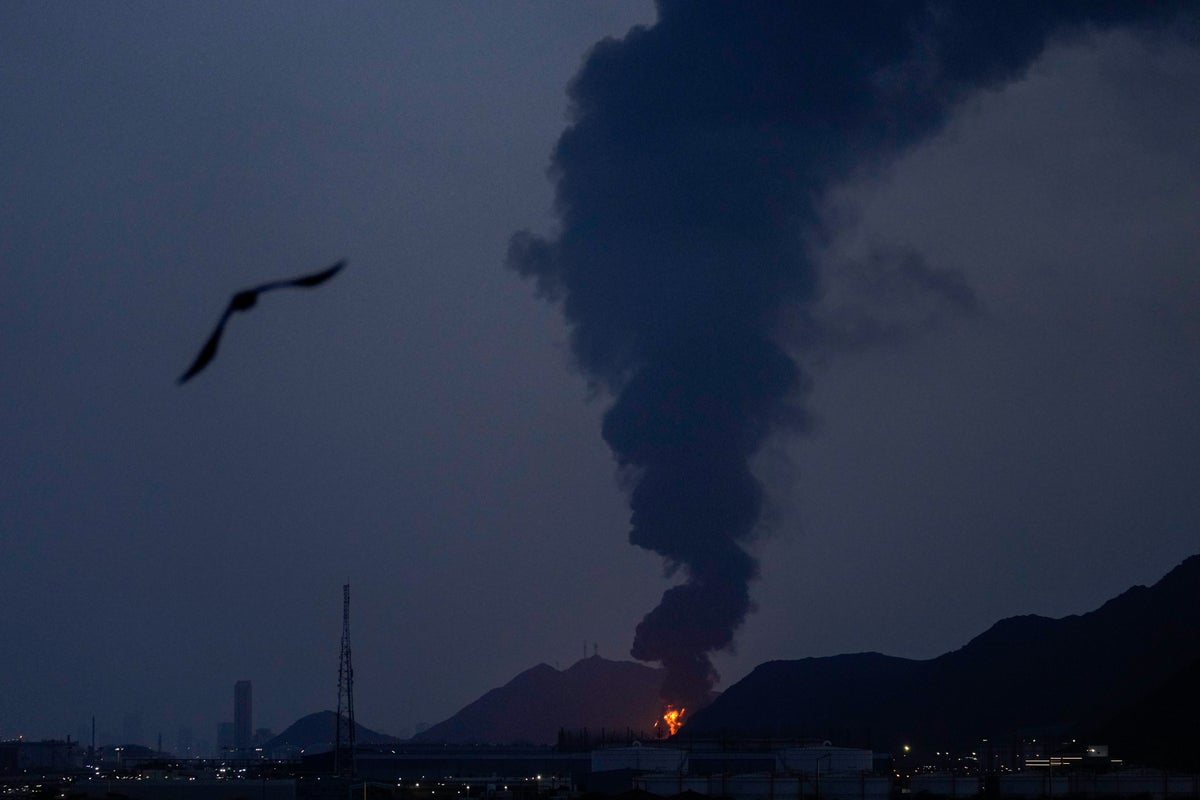
The historical correlation between Middle Eastern kinetic conflict and global energy price shocks remains the most significant systemic risk to industrial economies. While traditional analysis views the transition to renewable energy primarily through a climate lens, an objective assessment of the current Iran-Israel escalation reveals that the true value proposition of renewables is geographic decoupling. Current energy markets operate under a vulnerability architecture where localized physical disruptions—specifically at the Strait of Hormuz—dictate the internal inflation rates of distant nations.
The Fragility of the Hydrocarbon Supply Chain
The global energy system is currently tethered to a linear, high-friction supply chain. Crude oil and Liquified Natural Gas (LNG) must pass through a series of "choke points" that serve as force multipliers for regional instability.
- The Hormuz Bottleneck: Approximately 20-30% of global oil consumption passes through the Strait of Hormuz. In a conflict involving Iran, this represents a single point of failure that can be manipulated through asymmetric naval warfare or simple mining operations.
- Price Elasticity and Social Stability: Because energy is a foundational input for almost all goods and services, a 20% spike in Brent Crude does not result in a 20% increase in consumer costs; it triggers a non-linear inflationary cascade.
- The Petro-Currency Feedback Loop: Dependency on imported hydrocarbons forces nations to maintain vast foreign exchange reserves and align foreign policy with supplier stability, often at the expense of long-term strategic interests.
The Three Pillars of Renewable Strategic Autonomy
Transitioning to a decentralized, renewable-heavy grid alters the fundamental physics of energy security. Unlike oil, which is a commodity that must be continuously purchased and transported, renewable infrastructure is an upfront capital expenditure that yields a zero-marginal-cost fuel source.
1. Decoupling Resource from Geography
Solar and wind assets harvest energy in situ. This eliminates the "Transit Risk" inherent in the hydrocarbon model. A solar farm in the Mojave Desert or a wind array in the North Sea is immune to a blockade in the Persian Gulf. The energy is generated, converted, and consumed within a domestic or regional perimeter, effectively "onshoring" the entire value chain.
2. Resilience Through Distributed Generation
The traditional energy model relies on massive, centralized power plants—lucrative targets in a high-intensity conflict. In contrast, a modernized grid utilizes distributed energy resources (DERs).
- Microgrids: Smaller, localized grids can "island" themselves from the main network during a cyber-attack or physical strike.
- Redundancy: If one node (e.g., a single wind farm) is neutralized, the systemic impact is marginal compared to the loss of a major refinery or a primary pipeline.
3. The End of the "Fuel Premium"
In a hydrocarbon-dominant economy, the cost of electricity is a slave to the "Fuel Premium"—the fluctuating market price of the input. In a renewable-dominant economy, the cost of electricity is driven by the "Technology Premium"—the cost of the hardware and its financing. Technology costs follow learning curves (Wright’s Law), meaning they trend downward over time, whereas fuel costs are subject to geopolitical whims and scarcity.
Quantifying the Limitations: The Intermittency and Material Bottleneck
A rigorous analysis must acknowledge that "renewables" are not a frictionless solution. Replacing Iran’s role in the global energy balance with solar and wind introduces new, localized dependencies.
The Storage Deficit
Variable Renewable Energy (VRE) requires massive overcapacity and long-duration energy storage (LDES) to match the reliability of a gas-fired turbine. Current lithium-ion technology is insufficient for seasonal storage. Without a breakthrough in green hydrogen or solid-state batteries, a grid 100% dependent on wind and solar remains vulnerable to "Dunkelflaute"—extended periods of low wind and sun.
Critical Mineral Dependency
The "Geopolitics of Oil" is being replaced by the "Geopolitics of Minerals." The production of EVs, turbines, and panels requires:
- Lithium and Cobalt: Essential for storage.
- Neodymium and Dysprosium: Essential for permanent magnets in wind turbines.
- Copper: Required in quantities 4-6x higher for renewable systems than for conventional ones.
If the goal is to escape the influence of Middle Eastern petrostates, Western nations must ensure they do not simply trade that dependency for a reliance on East Asian mineral processing monopolies.
The Cost Function of the Transition
Critics often cite the high nominal cost of a total energy overhaul. However, a data-driven strategy consultant must apply a Total Cost of Ownership (TCO) framework that includes the "Insecurity Discount."
$$TCO = C_{cap} + C_{op} + C_{risk} - C_{ext}$$
Where:
- $C_{cap}$ is the initial capital investment in infrastructure.
- $C_{op}$ is the ongoing operational cost (near zero for solar/wind).
- $C_{risk}$ is the quantified cost of geopolitical disruptions (price spikes, military protection of shipping lanes).
- $C_{ext}$ is the negative externality cost of carbon and pollution.
When the $C_{risk}$ of the Middle East—currently estimated in the hundreds of billions via military spending and economic volatility—is integrated into the equation, the "expensive" renewable transition often emerges as the lower-cost long-term option.
The Strategic Pivot: Operationalizing the Shift
For a nation or a multinational corporation to mitigate the risks posed by an Iran-led energy crisis, the following structural moves are required:
I. Accelerated Grid Hardening
Physical infrastructure must be upgraded to handle bi-directional flow. This allows for the integration of residential solar and vehicle-to-grid (V2G) technology, turning every electric vehicle into a mobile battery unit for the national defense.
II. Diversified Supply Chains for Hardware
True energy security requires "friend-shoring" the manufacturing of solar cells and batteries. Relying on a single geopolitical rival for the components of your energy system is as dangerous as relying on a hostile neighbor for the fuel itself.
III. The Role of Transitional Baseload
During the build-out phase, nuclear energy and natural gas (with carbon capture) must serve as the stabilizer. Natural gas, while still a hydrocarbon, is more easily sourced from stable domestic reserves in North America or Oceania than oil, providing a medium-term bridge while storage technology matures.
The New Energy Geopolitics
The escalation in the Middle East serves as a stress test for the global economy's transition readiness. The argument for renewables has shifted from an environmental preference to a national security mandate. Nations that successfully localize their energy production via renewables will effectively remove themselves from the "Hormuz Equation," granting them a level of diplomatic and economic freedom that was previously impossible in the industrial age.
The final strategic move for any industrialized state is the aggressive decoupling of the domestic electricity price from the global oil spot price. This is achieved not through subsidies, but through the rapid deployment of high-density renewable clusters paired with high-voltage direct current (HVDC) transmission lines that can move power across time zones, neutralizing the impact of localized weather or regional war.
Investment must pivot from "securing the source" in hostile territories to "optimizing the capture" within sovereign borders.