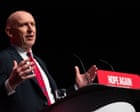
When consumer energy tariffs rise by four percent, the immediate public reaction focuses on household budgeting, but the structural challenge sits squarely within public finance and fiscal policy. Healey urged to offer energy support in budget as bills rise 4% captures a recurring friction point in modern governance: the collision between systemic market pricing mechanisms and political demands for targeted fiscal intervention. Analyzing this dynamic requires stripping away the rhetoric of relief packages to examine the underlying mechanics of energy inflation, the limitations of state-sponsored subsidies, and the downstream consequences of budgetary reallocations.
The Economic Anatomy of Tariff Escalation
A four-percent increase in household energy bills is rarely an isolated pricing anomaly. It represents the compounding effect of structural shifts in wholesale supply costs, distribution infrastructure maintenance, and regulatory compliance expenses. When energy providers face escalating procurement costs, pricing models dictate that these costs transfer down the chain to the end consumer unless absorbed by corporate margin compression or state intervention.
[Wholesale Cost Pressure]
       │
       ▼
[Retail Tariff Adjustment (+4%)]
       │
       ├─► Private Absorption (Margin Compression)
       └─► Consumer Price Transmission
              │
              ▼
       [Political Pressure for State Subsidy]
Market competition theoretically limits excessive price inflation, but utility markets operate under high regulatory oversight and fixed infrastructure constraints. Consequently, when fuel inputs or carbon pricing mechanisms shift, retail prices adjust upward. The consumer experiences this as a sudden cost-of-living shock, whereas economists view it as a lagging indicator of broader macroeconomic resource constraints.
The Fiscal Dilemma of State Intervention
When political figures demand that the government step in with targeted energy support during budget cycles, they are proposing a fiscal transfer. The mechanics of state-sponsored energy support generally manifest in three ways: direct price caps funded by the exchequer, targeted cash transfers to vulnerable demographics, or tax reductions on utility bills.
Each mechanism carries distinct structural trade-offs.
- Direct Price Caps and Subsidies: Artificially suppressing retail prices through state funds removes the price signal that encourages conservation. It places an open-ended liability on the public purse, as the state effectively underwrites the volatile gap between wholesale market prices and consumer tariffs.
- Targeted Cash Transfers: Providing direct grants to low-income households preserves price signals while mitigating the humanitarian impact of inflation. However, the administrative friction of identifying and verifying eligible recipients creates bureaucratic lag, meaning support often arrives long after the initial price shock.
- Tax Reductions on Bills: Lowering value-added tax or environmental levies on energy consumption provides immediate relief across all consumer segments, but it disproportionately benefits high-consumption households while eroding government revenue streams needed for public infrastructure.
The core tension is that fiscal budgets operate within finite revenue boundaries. Allocating capital to subsidize household utility bills requires either increasing public debt, raising alternative taxes, or cutting expenditure in other critical sectors such as healthcare, education, or transport infrastructure.
Systemic Distortion and Moral Hazard
Intervening in retail energy pricing introduces significant moral hazard into the macroeconomic ecosystem. When governments consistently step in to neutralize market price corrections, utilities and consumers alike alter their long-term planning behavior.
Suppliers may underinvest in grid modernization or diversification strategies if they anticipate regulatory rescue packages during high-price cycles. Simultaneously, consumers delay necessary efficiency upgrades—such as insulation improvements, heat pump transitions, or smart-meter optimization—because the true cost of consumption is masked by state subsidies.
Furthermore, short-term budget fixes rarely solve structural supply vulnerabilities. If the underlying drivers of the four-percent increase stem from structural supply deficits or geopolitical shifts in fuel sourcing, pouring public funds into temporary relief acts as a stopgap that drains capital without altering the trajectory of future price shocks.
Strategic Forecast and Fiscal Discipline
Managing recurring energy inflation requires moving away from reactive budgetary demands and toward structural resilience. Policymakers facing persistent upward pressure on utility bills must weigh the political expediency of immediate financial relief against the long-term health of public finances.
The most viable strategic path involves shifting public expenditure away from broad consumption subsidies and toward capital investments that permanently lower baseline energy demand. Retrofitting housing stock, accelerating domestic generation capacity, and modernizing grid efficiency address the root cause of high bills rather than merely shifting the financial burden from the consumer to the taxpayer. Until fiscal policy aligns with long-term structural reform, budget cycles will remain trapped in the cycle of managing recurring price shocks through temporary interventions.