Kyiv’s recent signaling of a conditional openness to halt strikes against Russian energy infrastructure under a mutual standstill agreement marks a stark shift in the tactical calculus of the war. For months, long-range drone campaigns targeted refineries, substations, and storage depots across western and southern Russia, designed to constrict fuel supplies and bleed state revenues. Now, facing an unrelenting winter attrition campaign that threatens domestic generation capacity, Ukrainian leadership has placed a delicate proposition on the table. The core premise hinges on reciprocity: a mutual freeze on targeting power grids and fuel processing plants.
The rationale driving this pivot is rooted in cold arithmetic. Neither grid can endure endless attrition without catastrophic systemic failure. Yet, beneath the diplomatic posturing lies a web of military contingencies, intelligence realities, and profound skepticism from commanders who have watched previous understandings collapse under the weight of tactical opportunism.
The Grinding Logic of Grid Warfare
To understand why Kyiv is contemplating a moratorium, one must look at the physical toll inflicted on both nations' power grids over consecutive heating seasons. Strategic strikes against electrical substations, transformer yards, and petroleum storage facilities are not mere tactical engagements. They are protracted efforts to degrade the adversary's economic baseline and erode civilian resilience.
For Ukraine, the campaign has meant rolling blackouts, shattered transformer capacity, and an emergency reliance on imports from European neighbors just to keep hospitals and water treatment plants functioning. Repairing ultra-high-voltage autotransformers takes months, and replacement units are scarce globally.
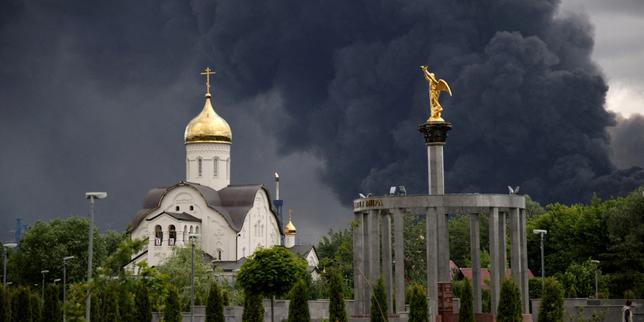
Conversely, Ukrainian long-range uncrewed aerial vehicles demonstrated an unexpected capacity to reach deep into Russian territory, hitting primary distillation units at major refineries from the Black Sea coast to the Urals. These operations disrupted domestic fuel distribution, forced regional export curbs, and inflicted visible economic friction. However, they also consumed finite stockpiles of precision munitions and triggered intensified retaliatory barrages against Ukrainian generation nodes.
A mutual halt is therefore weighed not as a gesture of de-escalation, but as a temporary preservation strategy. Both sides face diminishing returns on infrastructural devastation. When every destroyed megawatt station requires scarce capital and foreign components to restore, keeping the remaining capacity online becomes a shared, unspoken imperative.
Verification Impossibility and the Trust Deficit
Proposing a mutual freeze is straightforward. Enforcing it across a vast, active theater of war is practically impossible. Modern military doctrines do not easily accommodate selective standstills while frontline artillery duels and mechanized assaults continue unabated.
Trust between the belligerents sits at absolute zero. If a refinery six hundred miles behind the front line goes up in flames after a midnight explosion, determining the culprit involves untangling telemetry, intercepted communications, and weather anomalies. Was it a stray debris strike from an air defense interception? Was it a localized partisan cell operating independently of central command? Or was it a deliberate violation of the terms by a brigade commander looking for a tactical edge?
Without independent verification mechanisms—which neither side is currently willing to accept or host—any temporary understanding remains brittle. Treaties built on mutual deterrence require reliable means of attribution. In the fog of modern drone warfare, attribution is often delayed by days or obscured by deliberate electronic warfare and spoofing.
Intelligence agencies on both sides understand this vulnerability. A ceasefire on energy infrastructure could easily devolve into a shadow game of clandestine violations, where each party accuses the other of covertly breaching the perimeter while maintaining plausible deniability.
The Economic and Geopolitical Ripple Effects
Energy markets do not operate in a vacuum. Any formal or informal cessation of cross-border strikes against petroleum assets immediately registers on global commodities exchanges. Russian crude processing capacity dictates domestic diesel and gasoline supply security. When refineries stall, export quotas tighten, pushing regional prices upward and complicating sanctions enforcement mechanisms managed by Western capitals.
International partners watching from Berlin, Washington, and Brussels view these developments through a dual lens. On one hand, protecting civilian populations from freezing conditions during winter months reduces humanitarian strain and migration pressures. On the other hand, Western intelligence analysts worry that a localized lull in energy targeting might free up specialized air defense batteries, allowing them to redeploy closer to the frontline to counter tactical aviation.
Military assets are fungible. If a Patriot battery or a mobile anti-drone unit no longer needs to defend a major thermal power plant in a central oblast, it can be shifted to shield armored columns or logistical hubs. Consequently, an agreement framed around infrastructure protection inevitably alters the balance of forces in active combat zones.
The Logistics of Enforcement
Enforcing a moratorium requires continuous monitoring of airspace and launch vectors. Long-range systems do not launch from the frontline; they originate from concealed rear areas, moving transport trucks, or maritime platforms.
Monitoring compliance demands real-time intelligence sharing, satellite reconnaissance tracking, and rapid communication channels between opposing military headquarters. Historically, such channels exist only when both parties share an existential dread of escalation spiral—such as direct great-power confrontation. Here, the adversaries are directly engaged in an existential war of borders and sovereignty, making institutionalized restraint exceptionally difficult to sustain.
Commanders on the ground rarely favor sanctuaries. If an enemy fuel depot remains off-limits simply because it generates electricity rather than tank tracks, tactical planners view that restriction as a self-imposed handicap. War demands asymmetry. When one side possesses superior long-range strike capabilities, agreeing to tie one hand behind its back requires concrete, verifiable compensation elsewhere in the strategic ledger.
Looking Beyond the Rhetoric
Public statements regarding readiness to halt infrastructure attacks serve multiple masters. They signal to international allies that a government is rational, pragmatic, and open to negotiated limits, even while prosecuting a high-intensity defense. They also provide domestic reassurance that leadership is actively exploring avenues to mitigate civilian hardship.
Yet, public diplomacy rarely dictates battlefield realities. The underlying drivers of the conflict—territorial control, security architectures, and political survival—remain entirely unchanged by temporary sectoral moratoria.
If a standstill takes root, it will do so not through a signed accord, but through a tacit, grudging recognition by field commanders that the marginal utility of burning down another substation is eclipsed by the risk of inviting an identical, crippling response. Until that calculation shifts permanently, energy infrastructure remains merely a paused target set, waiting for the next deterioration in operational trust.