The global energy market is currently experiencing a shock three to five times larger than the 1973 oil crisis. While Western headlines focus on the tactical exchange of missiles between Washington, Jerusalem, and Tehran, a more permanent economic demolition is occurring in the shadow of the Strait of Hormuz. The primary victims are not the Americans, who remain buffered by domestic shale, but rather the industrial engines of East Asia and the fragile emerging economies of the Global South.
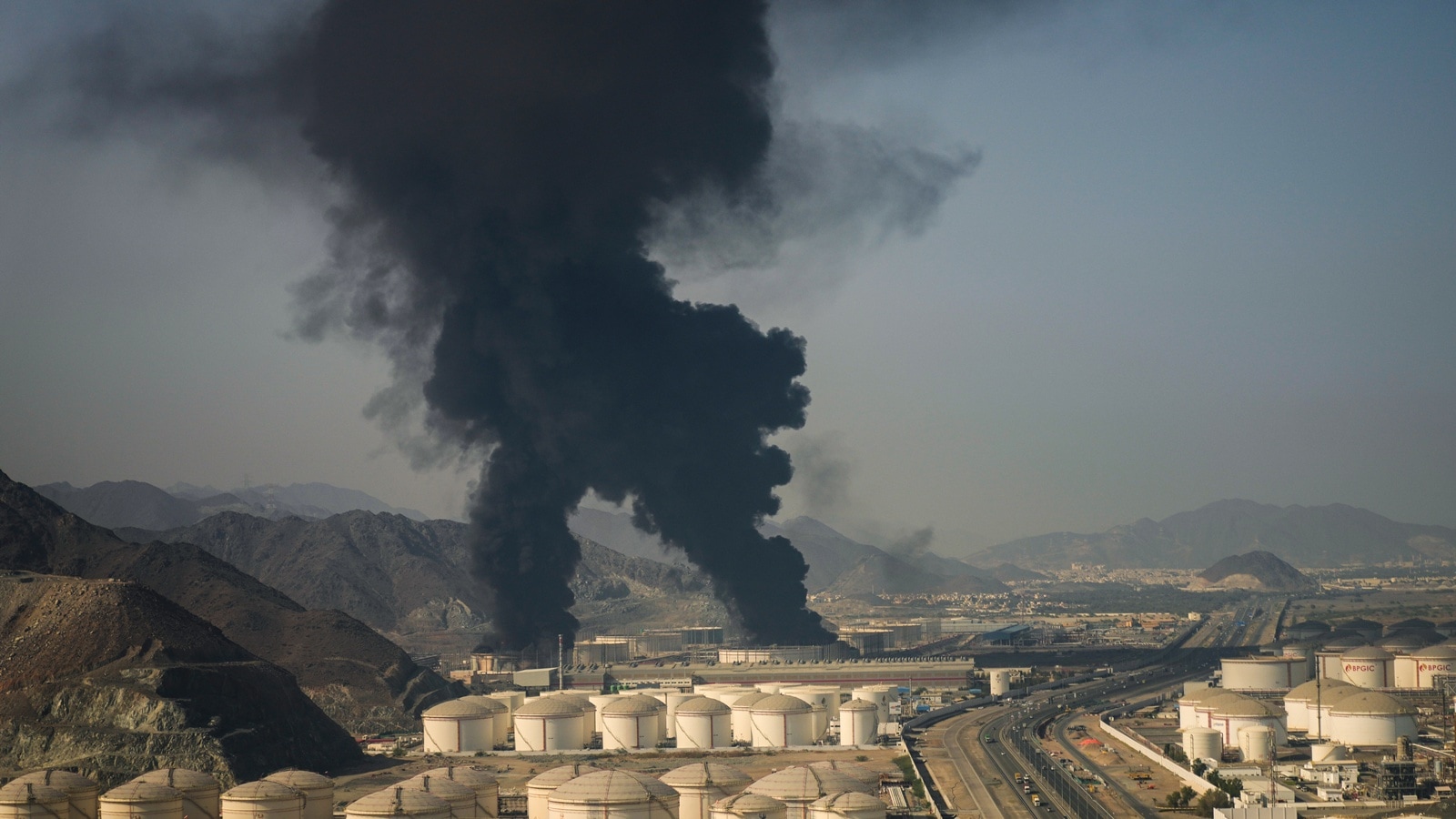
Since the effective closure of the Strait on March 2, 2026, roughly 20% of the world’s daily oil supply and 20% of its liquefied natural gas (LNG) have been trapped behind a wall of asymmetric drone threats and naval blockades. Brent crude, which hovered around $70 in late February, surged past $110 within ten days. But the price of the barrel is only the surface of the crisis. The real catastrophe lies in the "unprecedented shutdown" of Qatar’s Ras Laffan facility and the destruction of critical production "trains" that could take five years to repair.
The Asian Industrial Heartbreak
For decades, the "miracle" economies of South Korea, Japan, and Taiwan have operated on a razor-thin margin of energy security. They are the world’s largest importers of fossil fuels by a wide margin, and their dependence on the Persian Gulf is an existential vulnerability.
South Korea, in particular, has seen its stock market plunge 18% in a matter of days. This is not mere speculation; it is a mathematical reaction to the energy requirements of the semiconductor industry. Giants like Samsung and SK Hynix require massive, uninterrupted power to run their fabrication plants. With Korea importing 70% of its crude from the Middle East, the surge in kerosene and LNG prices has turned the AI chip boom into a logistical nightmare.
The situation in Japan is equally dire. Despite possessing strategic reserves, Tokyo has been forced to ask for emergency releases as it faces a 70% disruption in its crude flow. The White House has criticized Japan for its constitutional inability to send military assets to unblock the Strait, creating a diplomatic friction that threatens to undermine Pacific security alliances just as North Korea begins to capitalize on the American distraction in the Middle East.
The Death of the "Gas Bridge"
The most significant casualty of this conflict may be the global transition strategy. For the last ten years, natural gas was sold to the world as the "bridge fuel"—a cleaner alternative to coal that would power the world until renewables reached scale. That bridge just collapsed.
The Iranian strikes on Qatari gas infrastructure have removed 17% of the country's LNG export capacity. Unlike oil, which can occasionally be rerouted through pipelines like the UAE’s ADCOP or Saudi Arabia’s Petroline, LNG has no bypass. If the tankers cannot leave the Gulf, the gas does not move.
- Europe: Already reeling from the loss of Russian supplies in 2022, European nations are seeing their spring stockpiling efforts decimated.
- Emerging Markets: In countries like Pakistan and Bangladesh, the "bridge" has become a trap. They cannot compete with the deep pockets of European buyers in the spot market. As a result, we are seeing the return of "energy poverty" on a massive scale—fistfights over cooking gas in India and the total shutdown of textile factories in South Asia.
The levelized cost of electricity from gas-fired plants in these regions is now four times the cost of solar and wind. This isn't just an "emergency"; it is a forced, painful, and chaotic decoupling from the global gas market.
The Fragility of the Gulf Model
For the Gulf states themselves, the war has shattered the illusion of the "safe haven" for global capital. The narrative of Dubai and Doha as untouchable hubs for expats, tourists, and tech investment is under fire.
The UAE, Saudi Arabia, Kuwait, and Iraq have collectively dropped production by over 10 million barrels per day, largely because they are running out of storage space for oil they cannot ship. Goldman Sachs projections suggest that if the conflict persists through April, Kuwait and Qatar could see their GDP shrink by 14%. The image of the region as a stable destination for international business has been replaced by the reality of "force majeure" declarations and the buzzing of IRGC drones over refineries.
Why the IEA Release Won't Save Us
The International Energy Agency (IEA) recently announced the largest emergency oil release in history: 400 million barrels. While the number sounds impressive, it is a psychological band-aid for a physiological wound.
At a net disruption of 15 to 18 million barrels per day, the entire IEA release covers less than a month of the shortfall. Furthermore, tapping these reserves creates a future problem: the "refill risk." Every barrel pulled today is a barrel that must be bought back later, likely at higher prices, keeping the floor of the oil market artificially high for years.
The United States, meanwhile, finds itself in a paradoxical position. While domestic gasoline prices have climbed above $4 per gallon, the U.S. remains the world’s largest producer. This has led to a "decoupled" experience where the American consumer is annoyed, but the American economy remains functional. This disparity is breeding resentment among allies who feel the U.S. is prioritizing its tactical military goals in Iran over the economic survival of the global coalition.
The Fertilizer and Food Fallout
The energy emergency is rapidly morphing into a food security crisis. Natural gas is the primary feedstock for nitrogen-based fertilizers. With the Qatari shutdown and the general spike in LNG prices, fertilizer production has slowed to a crawl.
The Food Policy Institute has already warned of long-term increases in global food prices that will outlast the military conflict. When diesel for tractors and fertilizer for crops both double in price simultaneously, the harvest of 2026 is already compromised. This is the "hidden" cost of the Iran conflict—a ripple effect that moves from the Strait of Hormuz to the wheat fields of Kansas and the rice paddies of Vietnam.
The current trajectory suggests that the world is not merely navigating a temporary spike, but a fundamental reordering of how energy is valued and transported. The era of cheap, reliable Middle Eastern transit is over, and the replacement—be it Venezuelan reopening, Russian opportunistic sales, or a frantic pivot to renewables—will be anything but seamless.
If you need a detailed breakdown of the specific shipping reroutes currently being utilized around the Cape of Good Hope, I can provide a comparative analysis of the added costs and transit times for your logistics planning.