Everyone is reading the headlines backward.
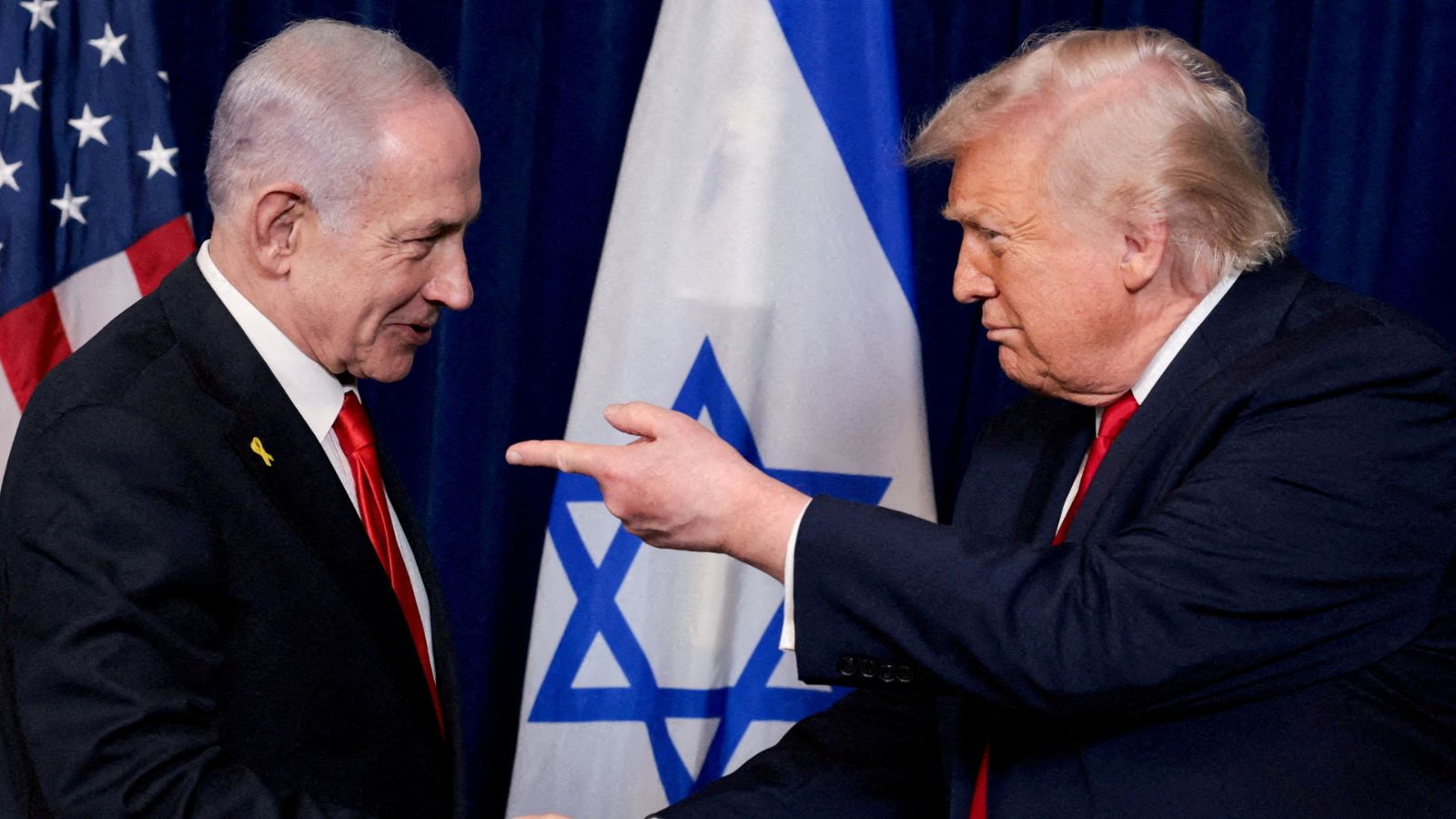
When Donald Trump floated the idea of letting the $4 billion annual U.S. aid package to Israel expire in 2027—and tossed in a trademark quip about becoming Israeli Prime Minister—the foreign policy establishment collectively lost its mind. Pundits immediately split into two predictable, lazy camps. The hawks screamed abandonment. The doves celebrated a long-overdue leash.
Both sides missed the actual mechanics of the deal. They are looking at a 20th-century subsidy through a 21st-century lens, and they are asking the wrong question entirely. The real question isn't whether Israel can survive without Washington's checkbook. It is whether Washington can survive losing the receipt.
For decades, the mainstream media has treated Foreign Military Financing (FMF) as a one-way charity lifeline keeping a vulnerable ally afloat. That is a comforting fairy tale for American policymakers who like feeling indispensable. In reality, the $3.8 billion Memorandum of Understanding (MOU) signed under the Obama administration—which runs from fiscal year 2019 through 2028—is less of a gift and more of a golden handcuff.
If you look at the actual procurement ledgers rather than cable news talking points, ending the aid in 2027 doesn't weaken Israel. It buys Jerusalem its sovereignty back.
The Golden Handcuff Myth
To understand why the pundit class is wrong, you have to follow the money. Literally.
Under the current 10-year MOU, Israel receives $3.3 billion annually in FMF and $500 million for cooperative missile defense programs like Iron Dome, David's Sling, and Arrow. Here is the catch that rarely makes the front page: Off-Shore Procurement (OSP) is being phased out completely.
Historically, Israel was allowed to convert roughly 26% of its U.S. aid into shekels to spend on its own domestic defense contractors—companies like Elbit Systems, Rafael, and Israel Aerospace Industries (IAI). Under the terms of the current agreement, that percentage drops to zero by 2028. Every single dollar of that $3.3 billion must be spent inside the United States, buying American hardware from Lockheed Martin, Boeing, and Raytheon.
I have sat in enough defense procurement briefings in Washington and Tel Aviv to know how this machine actually works. The U.S. Treasury writes a check, the money briefly touches an Israeli account at the Federal Reserve Bank of New York, and it immediately flows back into American congressional districts to fund factory jobs in Texas, Connecticut, and Missouri.
It is an industrial subsidy for the U.S. defense base disguised as foreign charity.
And what does Washington get in return for recycling its own tax dollars? Veto power.
When you take U.S. FMF money, you accept End-Use Monitoring agreements, International Traffic in Arms Regulations (ITAR) compliance, and implicit political leverage over your own military operations. You cannot export weapons systems containing certain U.S.-funded components without State Department approval. You cannot pivot your military doctrine without consulting the Pentagon. Most importantly, you hand the White House a loaded gun every time a crisis erupts—allowing an American president to threaten a pause on precision-guided munitions right in the middle of a multi-front war.
We saw this exact dynamic play out in 2024 when the Biden administration delayed shipments of 2,000-pound bombs to exert tactical pressure over operations in Rafah. That was the moment the illusion died. Israeli defense planners realized that reliance on American aid wasn't a security guarantee; it was a single point of failure.
What the $4 Billion Headline Actually Means
Let's strip away the political theater. Trump's comment about ending the aid in 2027—technically a year before the current MOU expires in September 2028, though negotiations for the next 10-year package would normally happen in 2026 and 2027—isn't an isolationist fever dream. It is a trial balloon for a massive structural shift that Israeli economists have been quietly debating since the early 2010s.
In 1985, U.S. aid accounted for roughly 10% of Israel's entire Gross Domestic Product. Losing it back then would have meant immediate economic collapse. Today, Israel has a $500+ billion high-tech economy. That $3.8 billion package represents less than 1% of Israel's GDP and roughly 15% to 20% of its total defense budget—a percentage that shrank dramatically as Jerusalem ramped up its own military spending following October 7.
Naftali Bennett, well before his brief stint as Prime Minister, argued openly that Israel should voluntarily wean itself off U.S. civilian and military aid to gain diplomatic independence. Right-wing and centrist economists at institutions like the Kohelet Policy Forum and the Institute for National Security Studies (INSS) have mapped out the exact trade-offs for years.
Here is what happens when the check stops clearing:
- The End of Forced American Procurement: Without the MOU's restrictions, Israel can redirect billions of shekels back into its domestic R&D ecosystem. Instead of being forced to buy American legacy platforms, Jerusalem can pour capital into directed-energy lasers (like Iron Beam), autonomous drone swarms, and next-generation cyber warfare—sectors where Israeli firms often outpace U.S. primes on agility and cost.
- Unrestricted Arms Exports: Free from U.S. export-control strings tied to FMF co-production, Israeli defense firms can sell high-end tech to India, European NATO allies, and Gulf states without waiting six months for a State Department compliance officer to sign off.
- Diplomatic Leverage Reversal: When you aren't asking for money, you don't have to ask for permission. A self-funded Israel shifts from a dependent client state to a pure commercial and intelligence partner.
Dismantling the "People Also Ask" Fallacies
Whenever a story like this breaks, search engines light up with the same predictable questions, all rooted in outdated assumptions. Let's break down the three biggest misconceptions dominating the conversation.
"Can Israel's economy actually absorb a $4 billion hit?"
This question assumes the $4 billion is a net cash injection into the Israeli economy. As established, it isn't. Because the money is locked into U.S. procurement, losing it doesn't leave a $4 billion hole in Israel's domestic budget; it leaves a $4 billion procurement gap that Jerusalem has to fill using its own currency and credit markets.
Could Israel float an extra $4 billion a year in sovereign bonds to cover the difference? Easily. Even after absorbing the massive fiscal shock of the Gaza and Lebanon campaigns, Israel's debt-to-GDP ratio sits around 68%—well below the United States (over 120%), France (over 110%), or the UK (around 100%). The real cost isn't bankruptcy; it's higher interest rates and slightly slower domestic infrastructure growth. It is a manageable fiscal friction, not an existential crisis.
"Would ending aid destroy the U.S.-Israel intelligence relationship?"
No, because intelligence sharing has nothing to do with FMF appropriations. The CIA, NSA, and Pentagon don't cooperate with Mossad, Aman, and Unit 8200 out of charity. They do it because Israel is the single most effective intelligence collection hub in the Middle East.
From signals intelligence on Iranian ballistic missile programs to real-time battlefield data on how Russian and Iranian air defenses perform against Western stealth fighters, Washington gets far more value out of the intelligence pipeline than it pays for in military aid. You don't stop trading gold just because you stopped subsidizing the miner's shovel.
"Was Trump's 'Israeli PM' joke just narcissism, or a signal?"
Dismissing Trump's rhetoric as mere ego is how analysts get blindsided over and over again. Whether he is joking about running for Prime Minister or floating the end of foreign aid, the underlying message is transactional: Stop expecting free rides, and start acting like an equal partner.
Trump views international alliances like real estate deals. In his worldview, a wealthy nation taking billions in U.S. taxpayer subsidies looks like a bad deal for America—and a sign of weakness for the recipient. By framing the end of aid alongside a boast about his personal popularity in Israel, he is attempting to neutralize the domestic political backlash from evangelical voters and pro-Israel donors before it even starts. He is reframing a budget cut as a vote of confidence in Israel's strength.
The Ugly Downsides Nobody Wants to Admit
If cutting the cord is so liberating for Israel, why hasn't Jerusalem already done it? Because every contrarian strategy carries real, painful risks—and pretending otherwise is dishonest.
First, supply chain priority. Money isn't just currency; it is a place in line. Right now, global defense manufacturing is bottlenecked from Poland to Taiwan. Being embedded inside the U.S. FMF system gives Israel guaranteed production slots at American munitions plants. If Israel becomes just another foreign cash buyer, it has to compete directly with Saudi Arabia, Germany, and Japan for every 155mm artillery shell and interceptor missile coming off the assembly line.
Second, the Qualitative Military Edge (QME) law. Under U.S. federal law (specifically the Naval Vessel Transfer Act of 2008), the President is legally required to ensure that any arms sales to other Middle Eastern nations do not adversely affect Israel's Qualitative Military Edge. The annual MOU is the primary administrative vehicle used to measure and maintain that balance. If the aid framework dissolves, the institutional muscle memory in Washington that enforces QME could atrophy, making it much easier for future administrations to sell top-tier F-35 variants or advanced missile systems to regional rivals without compensating Jerusalem.
Third, the psychological shock to adversaries. Deterrence in the Middle East relies heavily on perception. Tehran, Hezbollah, and the Houthis watch Washington closely. Even if Israel replaces every single American dollar with its own capital, the optics of the United States terminating its flagship aid package would be weaponized by Iranian propaganda as proof that the American umbrella is folding. Perception in geopolitics often matters more than balance sheets.
How Smart Strategists Should Play the 2027 Shift
Whether Trump follows through on ending the package in 2027 or uses the threat as leverage to negotiate a radically different agreement, the era of unconditional, multi-billion-dollar blank checks is over. Both Washington and Jerusalem need to stop defending a 1970s framework and start building a 2030s alliance.
If you are watching this space—whether as an investor, a policy analyst, or an industry operator—stop tracking congressional aid votes and start watching three specific indicators:
- Joint R&D Co-Investment Treaties: Watch for a pivot away from one-way grants toward 50/50 joint venture funding. Instead of the U.S. giving Israel money to buy American planes, expect deals where the Pentagon co-funds Israeli directed-energy and AI defense startups in exchange for shared intellectual property and U.S. manufacturing rights.
- Israeli Sovereign Debt Yields: Keep an eye on 10-year Israeli government bond spreads. If Jerusalem signals it is preparing to self-fund its procurement post-2027, bond markets will price in the increased issuance long before any politician signs a treaty.
- Second-Tier Defense Contractor Mergers: If OSP restrictions vanish, mid-sized Israeli defense tech firms will suddenly become prime acquisition targets—or aggressive acquirers—in Europe and Asia. Watch for cross-border joint ventures between Tel Aviv and New Delhi or Warsaw, bypassing Washington's regulatory bottlenecks entirely.
The pundits are mourning the end of a $4 billion safety net. They haven't realized that safety nets also double as cages. Once the check stops coming, Washington loses its leash—and the Middle East will have to deal with an Israel that no longer has to ask permission before it pulls the trigger.