Silence.
In the cavernous, fluorescent-lit assembly bays of Everett, Washington, silence is never a good sign. Normally, the air vibrates with the low, metallic thrum of rivet guns, the hiss of pneumatic wrenches, and the rhythmic clatter of overhead cranes hoisting fuselage sections into place—a symphony of American industrial muscle that has echoed across Puget Sound for generations.
If you have ever stood on the factory floor during a shift change, you know the smell: hydraulic fluid, fresh aluminum shavings, and burnt coffee. You also know the unspoken math that every machinist carries in the back of their mind. A commercial jetliner isn't just a marvel of aerodynamics. It is a rolling ledger of mortgage payments, college funds, and regional survival. And for the past several years, the biggest column on that ledger has been glaringly blank.
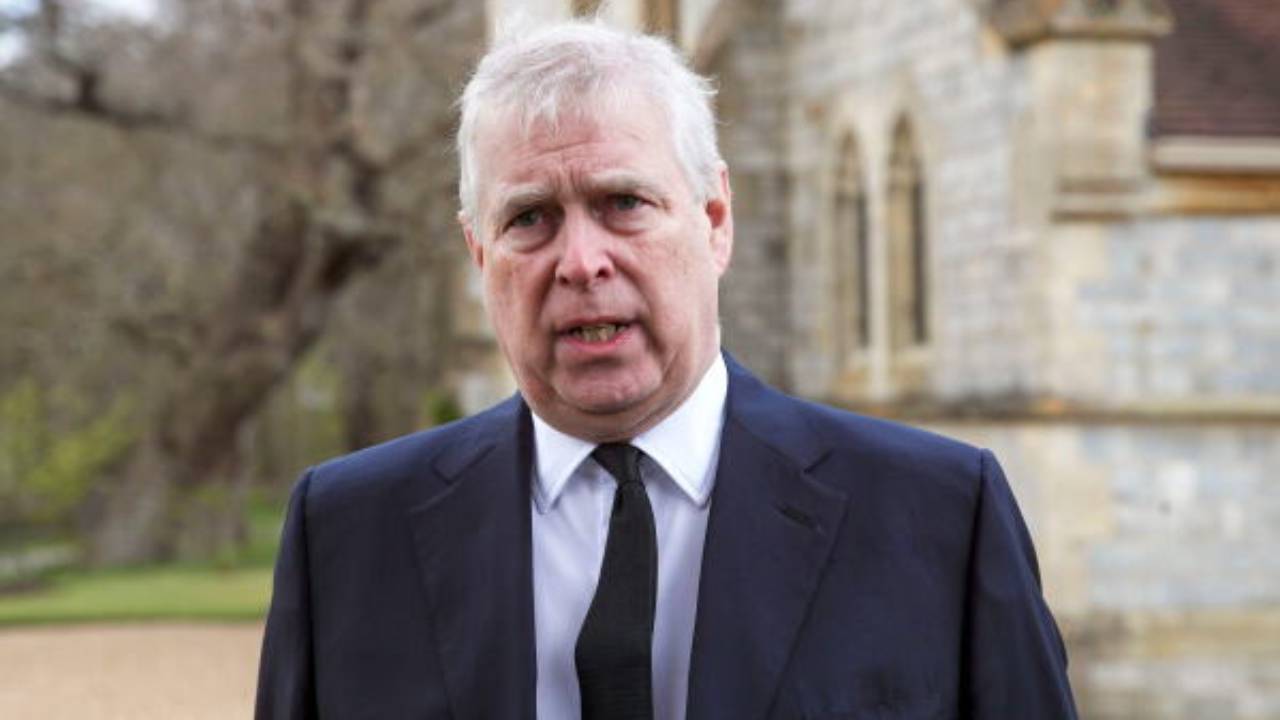
When President Donald Trump touched down in Shenzhen, expectations inside those Washington hangars—and across Wall Street trading desks—hummed at a familiar frequency. Presidential trips to China have historically served as stagecraft for blockbuster aviation announcements. Handshakes on tarmac carpets. Gold-embossed pens signing letters of intent. Hundreds of jets promised in a single afternoon to soothe trade deficits and project diplomatic warmth.
Instead, the summit came and went without a single firm Boeing order.
"Nothing came through," industry insiders murmured as the diplomatic entourage packed its bags. To the casual observer scrolling past financial headlines, it looked like a routine diplomatic stalemate—another round of geopolitical shadowboxing between Washington and Beijing. Yet beneath that dry summary lies a tectonic shift in global commerce, national security, and human ambition. Boeing didn't just miss a sales target in Shenzhen. The company ran headfirst into a new world order where airplanes are no longer mere vehicles of transit, but high-altitude chess pieces.
The Anatomy of an Unspoken No
To understand why the order books stayed shut in Shenzhen, you have to step away from the podiums and look at the mechanics of modern aviation diplomacy.
Consider a hypothetical scenario—one that mirrors the exact calculus playing out behind closed doors in Beijing and Arlington, Virginia. Imagine sitting in a mahogany-paneled conference room overlooking the Pearl River. On one side sits a senior executive from a state-backed Chinese carrier, flanked by officials from the Civil Aviation Administration of China. On the other sits a veteran Boeing dealmaker who has spent twenty years cultivating relationships across East Asia.
Ten years ago, the conversation would have been straightforward: delivery slots, engine efficiency, financing terms, and maintenance guarantees. Today, the aircraft sitting on the table isn't even mentioned for the first forty-five minutes. Instead, the room is thick with the invisible weight of semiconductor export controls, maritime disputes, tariff schedules, and the lingering shadow of domestic political cycles in Washington.
For decades, Boeing enjoyed an enviable position as America's premier export juggernaut. At its peak, roughly one in every four commercial jets rolling off Boeing’s production lines was destined for a Chinese airline. China wasn't just a customer; it was the engine of Boeing's growth forecast, projected to need more than 8,500 new aircraft over a twenty-year span as hundreds of millions of citizens entered the middle class and took to the skies for the first time.
That relationship functioned like an old, sturdy bridge built across treacherous waters. Even when political storms battered the pilings—human rights disputes, currency rows, naval standoffs—traffic kept moving across the span because both sides needed what waited on the other bank. Washington needed the manufacturing jobs and trade-balance relief; Beijing needed safe, reliable fleets to knit together an economic miracle.
Then, the bridge fractured.
The rupture didn't happen overnight, nor can it be blamed on a single summit in Shenzhen. It began with the dual tragedies of the 737 MAX crashes in 2018 and 2019, which grounded the global fleet and handed China—the first major regulator to halt MAX flights—both moral leverage and practical breathing room. Before Boeing could fully regain its footing, the U.S.-China trade war erupted into full-scale economic trench warfare, followed closely by a global pandemic that emptied airport terminals from Shanghai to Seattle.
By the time Trump arrived in Shenzhen, the old playbook had been shredded. In the past, Beijing used Boeing orders as an olive branch—a tangible, multi-billion-dollar gift wrapped in aerospace aluminum to placate an incoming or visiting American president. Buying fifty or a hundred Dreamliners was a cheap price to pay for tariff relief or diplomatic goodwill.
In Shenzhen, however, Beijing declined to offer the gift. Why? Because the structural incentives had inverted. Offering a massive Boeing contract during a high-stakes visit would have looked less like diplomacy and more like capitulation to a domestic Chinese audience increasingly steeped in economic nationalism. More importantly, Beijing no longer viewed American aircraft as indispensable.
The Shadow Behind the Curtain
While Western headlines fixated on Trump's rhetoric and Boeing’s empty-handed return, another aircraft was quietly taxing onto the runway in Shanghai.
Meet the COMAC C919. For years, Western aviation analysts treated China's state-backed Commercial Aircraft Corporation with polite skepticism—an ambitious science project decades away from threatening the comfortable duopoly shared by Boeing and Europe’s Airbus. Developing a modern narrow-body airliner from scratch is famously brutal, an enterprise requiring millions of precision parts, ruthless supply-chain choreography, and regulatory trust earned over half a century.
Yet while Boeing wrestled with quality-control crises, whistleblower testimonies, supply-chain bottlenecks, and labor strikes, COMAC kept grinding forward. By the time Trump landed in Shenzhen, the C919 was no longer a blueprint on a drawing board; it was carrying paying passengers across domestic Chinese routes for Air China, China Eastern, and China Southern.
Think of the Boeing-Airbus duopoly like two rival neighborhood bakeries that spent fifty years perfecting sourdough while assuming nobody else knew how to build an oven. Suddenly, a massive, state-subsidized culinary institute opens across the street. Its first loaves might be heavier, less refined, and reliant on imported flour, but the neighborhood government mandates that every local school and hospital buy from it anyway.
That is the reality Boeing now confronts in China. Even though the C919 still relies heavily on Western suppliers—including CFM International engines co-produced by GE Aerospace and France's Safran—its mere existence alters the negotiating table. Beijing no longer has to sign firm Boeing orders out of desperation for capacity. Whenever Washington applies trade pressure, Chinese planners can simply point toward their domestic assembly lines—or pick up the phone and call Toulouse, France.
Airbus, Boeing's European archrival, has harvested the windfall of American-Chinese friction with quiet precision. While Boeing struggled to secure even basic regulatory clearances for previously ordered 737 MAX jets to enter Chinese airspace, Airbus expanded its final assembly line in Tianjin and inked massive, multi-hundred-aircraft agreements with Chinese carriers.
To grasp the emotional sting of that divergence, imagine being a twenty-year veteran engineer in Renton, Washington. You have spent your entire career believing that superior engineering and American grit guaranteed market leadership. Now you watch on television as European rivals celebrate billion-dollar contracts in Beijing while your own company’s finished jets sit parked in desert storage yards in Moses Lake, their tails painted in the liveries of Chinese airlines that refuse to take delivery.
The Myth of the Handshake Deal
There is a persistent illusion in political journalism that trade deals happen because two powerful leaders look each other in the eye, strike a rapport, and tell their lieutenants to draw up the paperwork. It makes for cinematic television. It is also largely fiction.
Airline fleet planning operates on geological timescales compared to political news cycles. A major carrier does not buy two hundred twin-aisle jets on a whim because a presidential motorcade rolled smoothly down Shennan Boulevard. Airlines buy aircraft based on twenty-year fuel burn projections, pilot training pipelines, route density forecasts, and maintenance hangar footprints.
Even when presidents do announce splashy aviation deals during foreign trips, veteran industry watchers know to read the fine print with a magnifying glass. Historically, many summit "orders" were actually memorandums of understanding—non-binding letters of intent that recycled previously announced commitments or bundled tentative options into a single headline-grabbing number. A firm order, by contrast, requires cold, hard cash: non-refundable pre-delivery deposits wired directly to the manufacturer, locking in specific serial numbers and delivery windows years in advance.
In Shenzhen, Boeing didn't even get the window dressing of a non-binding memorandum.
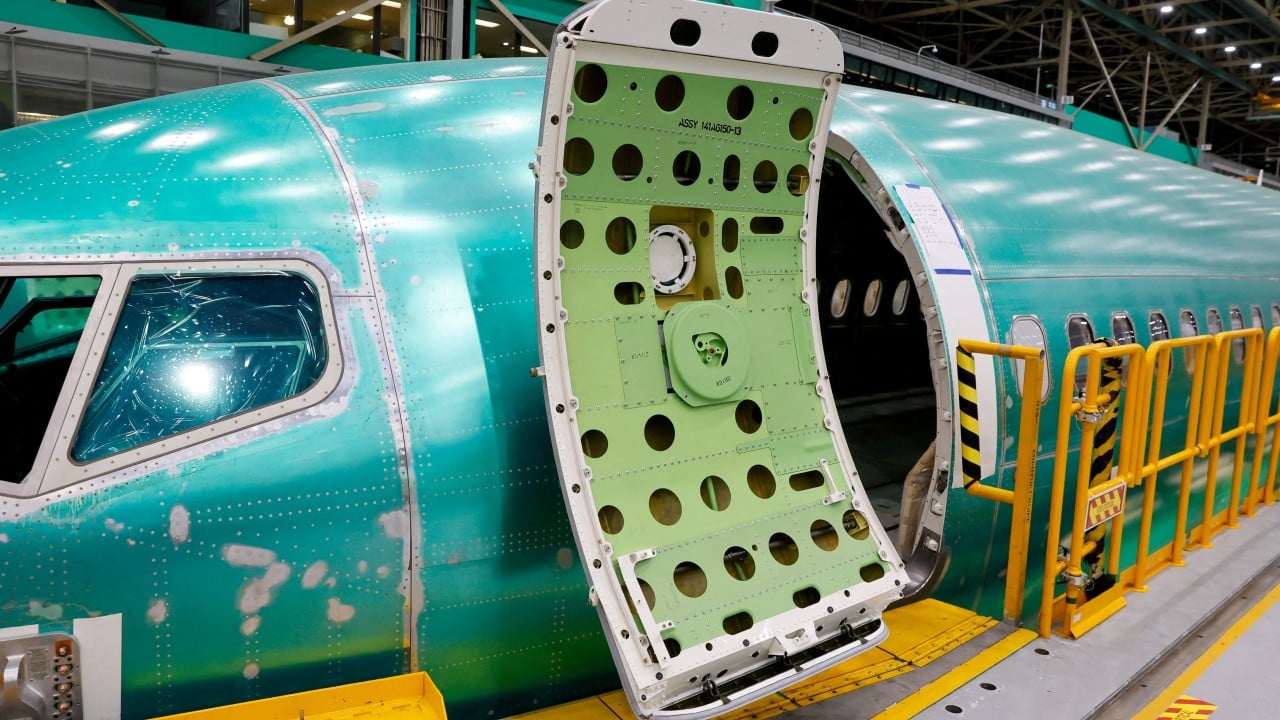
Part of the reason lies inside Boeing’s own house. Honestly, it is difficult to overstate how humbling the past few years have been for an institution once synonymous with engineering perfection. After the door-plug blowout on an Alaska Airlines 737 MAX 9 in early 2024—an incident that terrified passengers and triggered federal criminal probes and FAA production caps—Boeing’s primary crisis wasn't a lack of demand. It was an inability to build airplanes fast enough and safely enough to satisfy the orders it already had.
Walking into Shenzhen to beg for new orders while struggling to clear a multi-year backlog of existing ones placed Boeing in an awkward posture. Chinese negotiators are shrewd readers of leverage. They knew Boeing needed geopolitical validation far more than Beijing needed immediate delivery slots. By withholding firm orders, Beijing signaled to Washington that American industrial champions can no longer be decoupled from American foreign policy. If the White House wants to levy punitive tariffs on Chinese electric vehicles, solar panels, and batteries, Beijing will simply apply quiet, suffocating pressure on America's largest net exporter.
Invisible Stakes Across the Pacific
It is tempting to view this impasse as an abstract chess match between billionaires and bureaucrats. Doing so misses the human reality humming beneath every fuselage rivet.
Consider the ripple effect of a single unplaced order. A modern commercial airliner contains roughly four million parts sourced from thousands of suppliers across dozens of states. When Boeing fails to secure firm commitments from the world's fastest-growing aviation market, the shockwave doesn't stop at Seattle’s city limits. It travels to a family-owned machine shop in Wichita, Kansas, that mills titanium landing-gear brackets. It hits an electronics plant in Cedar Rapids, Iowa, assembling cockpit avionics. It touches a composite-materials facility in Salt Lake City weaving carbon-fiber wing skins.
For the machinists and technicians in those towns, geopolitics isn't an editorial page debate. It is the difference between overtime pay and a layoff notice taped to a locker door.
At the same time, look across the Pacific to an aspiring aerospace engineer in Xi'an or Chengdu. To her, the absence of a Boeing deal in Shenzhen feels like vindication—proof that decades of national investment in indigenous technology are finally paying dividends, freeing her country from reliance on foreign industrial giants. Two ordinary workers, separated by six thousand miles of ocean, bound together in a zero-sum tug-of-war neither of them started.
What makes this moment particularly unsettling—and frankly, confusing even for seasoned trade economists—is that both nations are acting rationally within their own strategic frameworks, yet the collective outcome leaves everyone poorer and less connected. Economic interdependence was supposed to be the ultimate stabilizer of the twenty-first century, a golden handcuff preventing superpowers from drifting toward conflict. Instead, interdependence itself has been weaponized. Every supply chain is now viewed as a vulnerability; every commercial contract is scrutinized as a potential hostage.
Beyond the Tarmac
As Air Force One lifted off from Shenzhen, leaving behind a humid coastline glittering with neon skyscrapers and container ports, the immediate takeaway seemed clear enough: the trip yielded no aviation trophies. No glossy press releases. No jubilant executives posing beside scale models of the 777X.
Yet the true meaning of that silence will not be measured in quarterly earnings calls this year or next. Aviation is a generational business. When an airline commits to an aircraft family, it commits to twenty-five years of spare parts, simulator software, engine overhauls, and crew certifications. Every year that Chinese carriers fill their schedules with Airbus jets and homegrown C919s instead of Boeings, the technical and institutional DNA of Chinese aviation drifts further away from Seattle.
Once an airline rebuilds its maintenance ecosystem around a competitor's architecture, winning that customer back doesn't just require a better airplane. It requires a miracle.
Back in Everett, the afternoon shift whistles blow, and thousands of workers file out toward parking lots overlooking the Cascade Mountains. Above them, the sky is clear, vast, and quiet. Somewhere out over the Pacific, hundreds of Boeing jets built in happier decades are still ferrying millions of passengers safely between Beijing, Shanghai, New York, and Los Angeles—living proof of what happens when two rival nations decide to build a bridge instead of a wall.
Whether another generation of American-built wings will ever join them in those skies remains an unanswered question hanging in the heavy coastal air.