Picture a conference room in Abu Dhabi next spring. Outside, the Persian Gulf shimmers under a white, merciless sun. Inside, the air conditioning hums at a crisp twenty degrees, the leather chairs smell faintly of cedar and new money, and three delegations sit around a polished mahogany table.
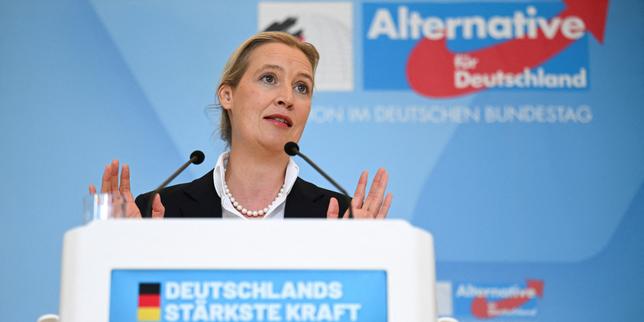
There is an American contingent. There is a Russian delegation, likely steered by Kirill Dmitriev, the Kremlin-connected financier who knows how to speak the language of Western boardrooms. And there is a group of German lawmakers from Alternative for Germany, the AfD, led by figures like Markus Frohnmaier, leaning forward with the practiced confidence of men who believe history is finally swinging their way.
Look closely at that mahogany table. Count the chairs.
There is a fourth chair, pushed neatly against the wall. Nobody is sitting in it. No name card rests on the blotter. Ukraine isn't there.
The Ghosts of Munches Past
To understand why a German opposition party is currently drafting blueprints for a trilateral summit in the United Arab Emirates—a summit designed to settle the fate of a European war without inviting the country actually bleeding in the trenches—you have to step out of the chilled air of Abu Dhabi and walk into a damp, November kitchen in eastern Germany.
Let’s introduce a hypothetical composite, a man we will call Klaus. Klaus is fifty-eight, a master machinist in a mid-sized automotive parts factory outside Dresden. He is not an extremist. He does not march with torches or quote twentieth-century fascists over his morning coffee. What Klaus does is look at his utility bill, look at the shrinking order books at his plant, and listen to the evening news report that Berlin has just approved another two hundred million euros in aid for Kyiv—on top of the 11.5 billion euros Germany has already poured into the conflict in 2026 alone.
Klaus feels a cold, gnawing fatigue. For four years, he has been told that sacrifice is the price of freedom. Yet his real wages have stagnated, the factory down the road shuttered its foundry due to energy costs, and the war in the east grinds on with no visible horizon.
When AfD politicians arrive in Klaus’s town square and promise a clean, surgical end to the madness—stop the weapons, lift the sanctions, talk directly to Moscow and Washington, and turn the Nord Stream gas taps back on—Klaus doesn't hear geopolitical treason. He hears relief.
That exhaustion is the fuel powering the AfD’s meteoric rise. By late 2026, the party has climbed to between 27 and 30 percent in national voting-intention polls, eclipsing Chancellor Friedrich Merz’s governing CDU/CSU coalition, which sits bruised between 18 and 23 percent. In the latest Forsa surveys, 53 percent of Germans now oppose sending more weapons to Ukraine, and among AfD supporters, that resistance hardens to a staggering 88 percent.
Numbers like those don't just win state elections in places like Saxony-Anhalt. They breed audacity. They convince an opposition party that it no longer needs to wait for the Chancellery keys to conduct its own foreign policy.
Shadow Diplomacy
Shadow diplomacy is an old, seductive game. It works like a parallel set of train tracks laid quietly beside the official line, waiting for a switchman to divert the locomotive.
According to reports first broken by Le Monde in November 2026, AfD foreign policy hands have been quietly sketching out a spring 2027 gathering in Abu Dhabi. The guest list is deliberate: representatives from the United States, Russia, and Germany’s ascendant right. The agenda is equally blunt. They want to discuss halting Western military aid, dismantling economic sanctions, reviving energy trade, and using Kyiv’s financial lifeline as a vise to force Ukraine into permanently surrendering its pre-war borders, Crimea included.
Does an opposition party actually have the legal authority to sign treaties or lift European Union sanctions? No. In constitutional terms, Frohnmaier and his colleagues speak only for themselves.
Wait. Think about what happens when the front-running party in Europe’s largest economy flies to the Gulf to shake hands with Kremlin envoys like Dmitriev—who already hinted in Istanbul back in October that he intended to meet AfD figures in December ahead of a broader spring forum.
Perception becomes leverage. The mere spectacle of German lawmakers negotiating over Ukraine’s head sends an unmistakable signal to Moscow: Hold out. Winter is coming, Berlin is cracking, and the next government in Germany will give you what you couldn't take on the battlefield.
I still remember the smell of damp plaster and diesel exhaust in Kharkiv two winters ago, watching an elderly woman sweep shattered window glass off her linoleum floor with a stiff straw broom after an overnight drone strike. She didn't have a geopolitical theory. She had a roll of heavy plastic sheeting and a staple gun, trying to seal out a minus-ten-degree wind before dark. When politicians in comfortable capitals talk casually about "territorial concessions" or "normalizing relations," that woman’s apartment is the currency they are spending.
The Illusion of the Neat Partition
There is a comforting myth embedded in the AfD’s Abu Dhabi blueprint. It is the belief that wars are like badly wired circuits—that if the three biggest guys in the room simply snip the wires to Kyiv, the sparks will stop flying and everyone can go back to selling cars and buying cheap natural gas.
History laughs at that kind of arithmetic.
Europe has seen great powers gather in plush rooms to redraw borders without inviting the nation on the chopping block. In September 1938, British, French, Italian, and German leaders sat down in Munich to carve up Czechoslovakia while Czech diplomats waited in a hotel lobby down the street, barred from the room. The ink on that agreement bought Europe less than twelve months of trembling quiet before the entire continent burned.
Today, the names and latitudes have changed, yet the psychology remains stubbornly familiar. During a fierce budget debate in the Bundestag in November 2026, Chancellor Friedrich Merz stood at the podium and warned lawmakers that Moscow’s appetite doesn't end at the Dnieper River. "Russia knows exactly what it wants, and Russia wants more than Ukraine," Merz said, aiming his words straight at the AfD benches.
Even among ordinary Germans weary of the financial strain, a quiet dread lingers beneath the fatigue. In the very same polls showing declining enthusiasm for weapons shipments, a clear majority—64 percent—still believe Germany must not normalize relations with Moscow while Russian troops remain on the offensive. Nearly half fear Moscow could eventually test NATO itself.
People are conflicted. I am conflicted, too, whenever I look at the sheer human and economic toll stretching across the continent. Nobody with a functioning conscience wants an endless war. The desire for peace isn't a character flaw; it is the most natural human instinct on earth.
The trap lies in confusing a ceasefire dictated by the aggressor with actual peace.
What Happens When the Door Closes
Let’s trace the logic of the Abu Dhabi proposal to its real-world conclusion.
Suppose Washington, swayed by its own domestic isolationism, and a future German coalition, reshaped by AfD pressure, actually sat down with Moscow and agreed to freeze the lines. Aid stops. Sanctions evaporate. Pipelines reopen.
What happens the morning after?
First, Ukraine does not simply vanish into polite compliance. A nation of forty million people that has buried tens of thousands of its sons and daughters does not lay down its arms because three foreign delegations signed a communiqué in a luxury hotel in the Emirates. Without Western air defenses—the very Patriot batteries and interceptors Germany and Britain have been scrambling to source—Ukrainian cities don't become peaceful. They become defenseless. The war doesn't end; it mutates into a brutal, asymmetrical slaughter on Europe’s eastern doorstep, sending millions more refugees westward into the very German municipalities already straining at the seams.
Second, look at what happens to Klaus’s factory outside Dresden. The AfD promises an economic renaissance powered by cheap Russian energy. Yet Europe’s entire security architecture would shatter overnight. Poland, the Baltic states, and Scandinavia—nations watching Russian hybrid provocations and border tensions escalate by the week—would realize that Berlin and Washington are willing to trade away sovereign allies for discounted hydrocarbons. Trust inside the European Union would curdle into paranoia. Capital flees instability faster than it chases cheap gas, and Germany’s export-driven economy cannot thrive inside a fractured, hostile neighborhood.
Third, and most dangerous of all, every nuclear-capable autocracy on earth takes notes. If invading a neighbor, leveling its power grid, and waiting out Western electoral cycles results in a VIP summit where your territorial gains are ratified without the victim in the room, then borders cease to be laws. They become mere suggestions.
The Architecture of a Real Settlement
So if an exclusive deal over Kyiv’s head is a mirage, what does a serious path out of this trench look like?
It starts by abandoning the fantasy that peace can be engineered around the people fighting for their survival. Diplomacy is not a three-way corporate merger where majority shareholders buy out a minority partner. In international conflict, exclusion doesn't produce stability; it guarantees sabotage.
Real leverage works in the opposite direction. Moscow only negotiates seriously when the cost of continuing the war exceeds the political price of stopping it. That requires European capitals—led by Berlin, Paris, and London—to close ranks rather than splinter into rival diplomatic backchannels. It means keeping Ukraine’s air defenses intact so Russian missiles cannot blackmail civilians into submission, while simultaneously using unified economic pressure to remind the Kremlin that a permanent war economy is a slow-motion suicide pact.
At home, it demands radical honesty from leaders like Merz. Politicians cannot simply lecture frustrated workers like Klaus about abstract liberal values while ignoring his electricity bill. Supporting Ukraine and protecting European industry cannot be framed as mortal enemies. Berlin has to pair its external resolve with aggressive domestic relief—reforming energy taxes, accelerating grid modernization, and proving to ordinary voters that standing up to aggression abroad doesn't mean abandoning citizens at home.
When Ukrainians sit at the negotiating table—not as supplicants waiting in an adjoining hallway, but as sovereign equals backed by an unbreakable European-American front—then talks in Abu Dhabi, Geneva, or anywhere else actually mean something.
Until that day, any summit built on an empty chair isn't a peace conference.
It is just a rehearsal for the next war, conducted in air-conditioned comfort while someone else’s roof caves in.