Social media loves a five-second diplomatic cringe clip. Give the internet a slightly mistimed handshake or an unexpected embrace between two heads of state, and within an hour, millions of armchair body-language experts are writing entire psychological profiles from a cropped video frame.
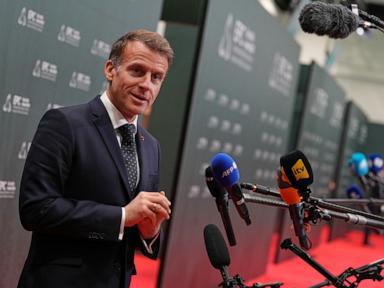
That's exactly what happened when footage of French President Emmanuel Macron greeting Iceland's Prime Minister began circulating online. On the surface, the clip looked like classic diplomatic awkwardness—a surprise hug, a split-second hesitation, and cameras catching every millimeter of the exchange. News outlets like News18 jumped on the viral momentum, framing it around the immediate visual of an embarrassing moment on an international stage.
Look closer at what actually happens at high-level European summits, though, and the story changes completely.
What Actually Happened in the Viral Clip
International summits move at a relentless pace. Leaders step out of armored vehicles, hit a designated red-carpet mark, pause for three seconds of shutter clicks, and move straight into bilateral meetings. There is no rehearsal.
In the clip involving Macron and Iceland's Prime Minister, the friction comes down to a classic greeting mismatch. Macron is notoriously tactile in his diplomacy—often reaching for a shoulder, pulling counterparts in for a close handshake, or going straight for a cheek kiss (la bise) or embrace depending on his rapport with the other leader. Nordic political culture operates on a very different default setting. Handshakes are crisp, personal space is respected, and spontaneous hugs on an official welcome line aren't standard protocol.
When one leader leans in for warmth and the other prepares for a formal handshake, your brain gets about half a second to recalibrate. That micro-delay is what cameras freeze. In real time, the interaction lasted barely two seconds before both leaders smiled and moved on. Slowed down, looped on X and Instagram, and paired with dramatic captions, it suddenly looked like a major diplomatic snub.
Why Diplomatic Greetings Go Wrong So Often
If you've ever watched arrival lines at a European Political Community summit, a NATO gathering, or a G7 meeting, you know this happens constantly. Protocol teams brief leaders on names, titles, and flag order, yet they rarely script the exact physical choreography of a greeting.
Three things collide on those welcome carpets:
- Cultural muscle memory. French, Italian, and Spanish leaders default to proximity and physical warmth. Scandinavian and Baltic leaders tend to favor clean, polite distance until rapport is established behind closed doors.
- Camera angles and compression. Telephoto lenses flatten depth perception. A normal step back to adjust footing looks like someone recoiling in horror when shot from forty feet away with a 400mm lens.
- Exhaustion and sensory overload. By the time a prime minister reaches the fourth bilateral greeting of the morning, jet lag and back-to-back briefings have already dulled their reflexes.
Macron himself has a long track record of viral greeting moments. Think back to his famous white-knuckle handshake marathon with Donald Trump in Brussels in 2017, or his overly familiar shoulder-patting with European Union counterparts in Brussels corridors. Sometimes his physical diplomacy projects camaraderie. Other times, it catches a counterpart completely off guard.
The Internet's Obsession With Micro-Expressions
Why do clips like this outperform actual policy announcements by ten to one? Because policy is abstract and human awkwardness is universal.
Everyone knows the sting of going in for a hug when the other person extends a hand, or vice versa. Seeing a president and a prime minister experience that exact same split-second panic humanizes them instantly. Viewers project their own social anxiety onto the screen, share the clip with a laughing emoji, and move on.
The problem starts when commentary channels treat a reflex as a geopolitical statement. An awkward greeting between Paris and Reykjavik doesn't signal fractured Franco-Icelandic relations, trade disputes, or diplomatic tension. France and Iceland maintain steady cooperation across North Atlantic security, Arctic environmental research, and European Economic Area frameworks. Nobody in either foreign ministry lost a minute of sleep over a clumsy two-second embrace on a welcome mat.
How Media Framing Turns a Reflex Into a Headline
Watch how fast a non-story becomes a trending news cycle. First, a broadcast pool feed captures the arrival line. Second, a social media account clips the three seconds where the posture looks stiffest, stripping away the ten seconds before and after where both leaders are chatting comfortably. Third, digital news desks pick up the trending embed, slap on words like "embarrassing," "awkward," and "viral," and publish before the summit's opening plenary has even finished.
Honestly, it's predictable, and it works because curiosity clicks are cheap. Yet if you want to read international politics accurately, you have to separate genuine diplomatic friction from simple human choreography.
Real diplomatic tension looks very different. It shows up in cancelled bilateral meetings, stiff joint press conferences where leaders refuse to make eye contact, or pointed omissions in official readouts—not in whether two politicians synchronized their elbows on a windy tarmac.
How to Spot Real Diplomatic Friction vs. Viral Noise
Next time a video of two world leaders having an "awkward" moment floods your feed, run it through a quick mental filter before buying the narrative:
- Watch the full 30-second arrival clip. Almost every viral diplomatic blunder disappears the moment you see the uncropped footage with audio.
- Check the bilateral readout afterward. If the two leaders held a scheduled 45-minute meeting and issued cooperative statements on energy, defense, or trade, the greeting meant nothing.
- Account for cultural norms. Compare how each leader greets other counterparts at the exact same event—you'll usually see that their "awkward" posture is just how they greet everyone.
Treat viral summit clips for what they actually are: brief, relatable reminders that even people running countries still fumble a simple hello when the cameras are rolling.