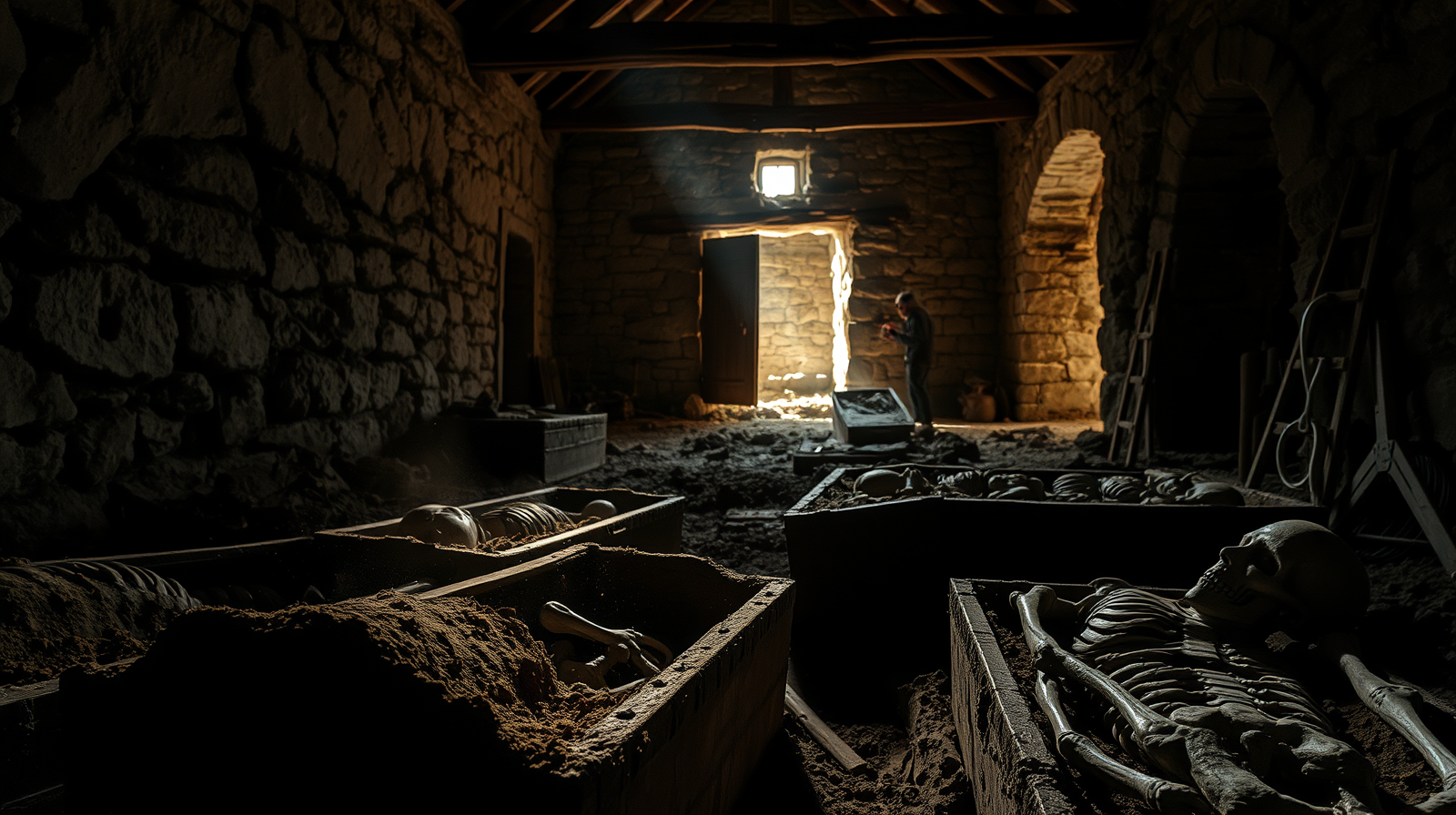
The mainstream media loves a neat, heartwarming narrative about historical redemption. When archaeogeneticists published data on an eight-year-old boy of African ancestry buried in a 1700s cemetery in Maryland, the press immediately defaulted to its favorite lazy consensus. Headlines trumpeted the discovery of a Black child "buried among Colonial America's elite," hinting at an untold story of status, acceptance, or unique privilege in an otherwise brutal era.
It is a comforting thought. It is also a complete misreading of colonial history and a misuse of bioarchaeological data.
By projecting modern ideas of "elite status" onto a patch of consecrated dirt, commentators are missing the far more complex, transactional, and occasionally dark realities of early American life. We do not need to invent an anomalous, wealthy Black aristocracy in 18th-century Maryland to make this boy’s story significant. The obsession with proving he was "one of the elite" actually obscures how power, religion, and labor intersected in the colonial Chesapeake.
The Churchyard Fallacy
The core argument of the popular coverage rests on geography. The boy was buried at Holdcraft, a historic property in Annapolis, alongside members of the prominent, wealthy Carroll family. Because the Carrolls were elite, the assumption goes, anyone buried near them must have shared or been granted a slice of that status.
This is a fundamental misunderstanding of colonial spatial dynamics.
In the 18th century, proximity did not equal equality. Elite estates were dense, integrated ecosystems where enslaved laborers, indentured servants, and aristocratic owners lived in suffocatingly close quarters. The presence of an African child in a family burial ground does not mean he was viewed as a peer. It frequently meant the exact opposite: total ownership that extended beyond the grave.
Consider the work of historians like Lorena Walsh, who spent decades analyzing the structural realities of Chesapeake plantations. Enslaved domestics—particularly children—were often kept close to the main house and, by extension, the family burial plots. To view his burial location as a sign of high social standing is to ignore the paternalistic, coercive nature of colonial servitude.
What the DNA Actually Tells Us
The genetic data, retrieved through advanced paleogenomic sequencing, confirms the boy had West African ancestry and suffered from profound health struggles, including a severe case of congenital syphilis.
Mainstream articles use this data to paint a tragic picture of a cherished, fragile child cared for by an elite household. But look closer at the bioarchaeological markers. Congenital syphilis causes systemic, agonizing bone lesions, dental deformities, and neurological issues. In the 1700s, managing a child with these symptoms required immense labor.
Who did that labor? Not the elite plantation owners.
If this boy survived to age eight with a debilitating chronic disease, it testifies to the intensive, community-driven care provided by other enslaved or lower-class women on the estate. The "elite" did not sustain this child; an exploited network of kinship did. Crediting the wealthy family for his survival or burial is a profound distortion of historical labor.
Dismantling the "People Also Ask" Assumptions
When people look at this discovery, they inevitably ask flawed questions driven by modern sentimentality.
Was there a Black upper class in colonial Maryland?
The short answer is no, not in the way modern readers imagine. While there were free people of color who owned property, the legal and social structures of 18th-century Maryland were systematically tightening to codify racial hierarchy. Pretending a buried child represents a hidden tier of Black colonial billionaires is wishful thinking that sanitizes the grim reality of the Black Code laws.
Why would a wealthy white family bury an enslaved boy with them?
Because intimacy and exploitation coexisted. Enslaved children were frequently gifted to white children as living toys or personal attendants. When they died, emotions ran high, but those emotions were rooted in a framework of property and paternalism, not social equity. A burial in the family plot was an exercise of the master's prerogative, a visual statement of total possession.
The Danger of Romanticizing Bioarchaeology
Science gives us raw data: mitochondrial DNA haplogroups, isotopic ratios indicating where a person grew up, and skeletal pathologies. It does not give us social context.
When we rely on superficial interpretations of genetic studies, we commit what I call the "archaeological savior complex." We desperately want to find stories of ancient rule-breakers to make ourselves feel better about the past.
I have spent years analyzing how historical data gets sanitized for public consumption. The pattern is always the same: find a skeleton that defies the baseline expectation, ignore the systemic forces that governed the era, and write a headline about a progressive, inclusive past that never existed.
The truth is messier. The truth is that this eight-year-old boy was caught between worlds—valued enough by his immediate community to be kept alive through a devastating illness, and owned completely enough by an elite family to be deposited in their soil when he died.
Stop looking for kings in the servant quarters. The real history of early America isn't found in pretending the elite were more inclusive; it is found in understanding how total their control really was.