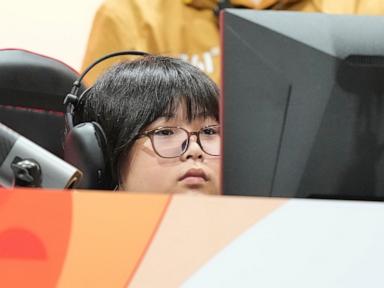
The headlines poured in with breathless reverence. Eleven-year-old Yuki Kurihara dominated the competition, securing an esports gold medal at the Asian Games, and the mainstream sports commentariat lost its collective mind. They framed it as a triumph of modern youth, a democratization of digital athletics, and proof that virtual arenas require nothing more than fast twitch muscles and a screen.
They are completely, fundamentally wrong.
An eleven-year-old child standing on the highest podium of an international sporting event does not validate esports as a legitimate athletic discipline. It exposes the structural bankruptcy of competitive gaming.
When physical sports crown a champion, they crown an adult who has endured years of physiological maturation, tactical seasoning, and systemic physical attrition. A gymnast, a sprinter, or a footballer wins because their body and mind have survived a Darwinian gauntlet of peak human capability. When an esports tournament hands a gold medal to a pre-teen who legally cannot stay in a cybercafé past eight o'clock without a guardian, the industry proves that its competitive hierarchy is broken.
I have watched venture capital pour billions into franchise slots, stadium builds, and bloated broadcast deals over the past decade, only to see organizations hemorrhage money because they misunderstand the very product they sell. They want to be taken seriously as traditional sports, yet they celebrate a competitive ecosystem where biological maturity, bone density, and long-term physical endurance are completely irrelevant.
The Myth of Universal Access
The lazy consensus surrounding Kurihara's victory is that video games are the ultimate meritocracy. The argument goes that a kid in a bedroom has the same shot at a gold medal as a player backed by a multi-million-dollar franchise, simply because the digital playing field is flat.
It is a comforting fairy tale, and it collapses under the weight of basic physics and economics.
The hardware divide in competitive gaming is wider than the economic gap in most traditional sports. A child playing on a throttled home laptop with a sixty-hertz monitor is not competing in the same sport as someone training on a three-hundred-hertz rig with sub-millisecond input latency and custom peripherals. Worse, the cognitive development required to master complex tactical shooters or real-time strategy titles depends on neuroplasticity that peaks during adolescence, but the emotional maturity required to handle high-stakes professional pressure does not exist in an eleven-year-old.
When you build a competitive ecosystem where prepubescent reflexes can bypass strategic wisdom and psychological resilience, you do not have a sport. You have an arcade high-score board with a marketing budget.
Consider the physical reality of traditional athletic training. When a young athlete enters a developmental academy, coaches monitor load management, bone growth, and nutritional intake to ensure longevity. In esports, we celebrate children pulling twelve-hour grind sessions in ergonomic chairs that destroy lumbar support, trading their posture and sleep hygiene for APM (actions per minute) metrics.
By turning professional competition into a sprint for the youngest possible reflexes, the industry burns through talent faster than a Silicon Valley startup burns through seed rounds. Careers are effectively over by the time players hit twenty-five, not because their minds fail, but because their wrists, backs, and mental states are utterly fried from a decade of unregulated abuse.
The Structural Failure of Publisher-Owned Leagues
To understand why an eleven-year-old can conquer an international multi-sport event, you have to look past the stage lights and examine the publishers pulling the strings.
Traditional sports leagues are governed by independent bodies, federations, and unions that balance the interests of athletes, owners, and fans over generations. Esports, by contrast, is a collection of corporate-owned intellectual properties. Riot Games, Valve, and Tencent do not run sports leagues; they run marketing campaigns for their software.
When a game publisher owns the entire ecosystem, the competitive meta is subject to arbitrary patch notes rather than enduring rules of play. Imagine if FIFA could randomly decide to change the size of the soccer ball or the width of the goalposts three weeks before the World Cup because they wanted to shift the meta for casual viewers. That is the daily reality of competitive gaming.
This corporate fiefdom creates a perverse incentive structure. Publishers do not care about the longevity of the athlete. They care about concurrent user engagement and microtransaction velocity. Pushing younger players into the spotlight serves a specific narrative: anyone can be a star, so keep playing, keep buying battle passes, and keep watching the streams.
The Asian Games adoption of esports was heralded as mainstream validation. In reality, it was a desperate bid by traditional sports organizers to capture Gen Z eyeballs before they stopped watching television entirely. They traded competitive integrity for demographic relevance, handing out medals for playing commercial software owned by foreign conglomerates.
What Actually Needs to Fix
If competitive gaming wants to shed its arcade-room reputation and earn a permanent place alongside physical athletics, it has to undergo a radical restructuring.
First, age floors must be legally and structurally enforced. No minor should be subjected to the grinding, contractually binding pressure of professional tournament circuits. If tennis protects its minors with strict limits on professional tournament appearances, esports can certainly stop exploiting children for viral headlines.
Second, the industry must decouple competition from commercial product promotion. As long as tournaments exist primarily to sell downloadable content and skin packs, the rules will bend to commercial whims rather than competitive fairness.
Third, player unions need teeth. Right now, teenage phenoms sign predatory multi-year contracts with esports organizations that take eighty percent of their winnings and lock them into non-compete clauses before they even understand tax law.
Yuki Kurihara's gold medal is an impressive display of hand-eye coordination and tactical execution within the rules provided. But praising it as the pinnacle of modern competition is an indictment of our standards.
Stop pretending that playing video games professionally is the same as standing in a boxing ring or running a marathon. It is something else entirely—a hyper-accelerated, corporate-sponsored digital gladiatorial pit where we burn out children for our weekend entertainment.
Until the industry grows up, stops exploiting kids, and builds a sustainable, athlete-first framework, every gold medal handed out on an esports stage comes with an asterisk.