Every few months, a glossy tech blog publishes another breathless love letter to "the hidden power of electricity." They treat electrons like fairy dust. Flip a switch, plug in a server rack, charge a fleet of delivery vans, and watch the modern world hum effortlessly behind drywall and buried conduit.
That narrative is comfortable. It is also dangerously wrong.
Calling electricity "hidden" is the exact mental trap causing corporate boards to burn millions on unbuildable data centers, stranded green energy projects, and catastrophic grid bottlenecks. There is nothing hidden about a 500-kilovolt transmission tower, a transformer shortage stretching past 120 weeks, or the brutal thermodynamic tax you pay every single time you convert energy from one form to another. When executives buy into the fairy-tale version of power, they treat the electrical grid like an infinite, frictionless software API. Then reality hits them with a multi-year interconnection queue and a nine-figure substation bill.
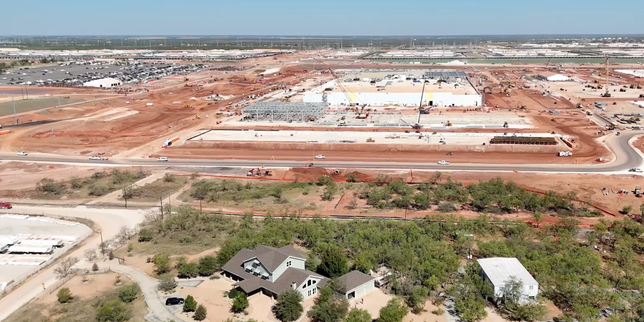
I have sat in strategy rooms where brilliant software founders assumed they could drop a 50-megawatt AI cluster into a rural county simply because the real estate was cheap and a power line ran down the highway. They looked at electricity as an invisible utility rather than a heavy, stubborn, physical supply chain. Six months and four million dollars in wasted engineering retainers later, they learned that high-voltage switchgear does not care about your venture backing.
The Lie of the Frictionless Electron
The lazy consensus in energy journalism goes like this: electricity is clean, silent, instantaneous, and infinitely scalable. Once you generate it, the hard part is over.
That is pure fantasy.
Electricity is the most unforgiving commodity on earth because supply and demand must balance to the exact fraction of a second, every second of the year, across thousands of miles of copper and aluminum. Unlike oil, natural gas, or coal, electricity cannot sit patiently in a tank waiting for a buyer without massive capital expenditure. When you flick on a kettle, a turbine miles away physically slows down by a microscopic fraction, and a governor valve has to open immediately to keep grid frequency locked at 60 Hertz in North America or 50 Hertz in Europe. If frequency drifts too far, protective relays trip, generators disconnect to save themselves from shredding their own bearings, and entire regions go dark.
You cannot cheat physics with clever marketing. Every step of moving power carries an unavoidable tax:
- Step-up transformation: Boosting voltage at a power plant so it can travel long distances loses energy as heat inside iron cores and copper windings.
- Transmission losses: Even at ultra-high voltages, resistance turns roughly 5 to 6 percent of all generated electricity in the United States into warm air before it ever reaches a customer meter, according to U.S. Energy Information Administration data.
- Step-down distribution: Stepping that voltage back down for neighborhood lines and residential panels shaves off another slice of efficiency.
- Conversion penalties: Your laptop charger, electric vehicle inverter, and data center power supply all convert alternating current (AC) to direct current (DC), shedding still more heat into the room.
When writers romanticize the "hidden" nature of electricity, they erase the massive industrial machinery required to keep that voltage stable. They ignore reactive power—the invisible, non-working current required just to sustain the electromagnetic fields in motors and transformers. Without reactive power support, voltage collapses even when plenty of megawatts are technically available on paper. Ask any grid operator at ERCOT or PJM; keeping the lights on is less like streaming a movie and more like balancing a broomstick on your chin during a windstorm.
Why Electrons Do Not Actually Flow Through Your Walls
Let us fix a foundational technical blunder that shows up in almost every mainstream explainer on this subject. Most people—and far too many engineers who should know better—picture electricity as little billiard balls called electrons racing down a copper wire from a power plant straight into their toaster.
They do not.
In an alternating current system, electrons barely move at all. They vibrate back and forth in place by a fraction of a millimeter, sixty times a second. Even in a direct current circuit, the actual drift velocity of electrons through a copper conductor is slower than a garden snail—often fractions of a millimeter per second.
What actually delivers energy at nearly the speed of light is the electromagnetic field surrounding the wire, governed by Maxwell's equations and quantified by the Poynting vector. The copper wire is not a pipe carrying water; it is a waveguide steering energy through the empty space right outside the metal.
Why does this distinction matter outside a university physics lecture? Because once you understand that electrical power travels via fields around conductors rather than fluid inside pipes, the physical limits of our infrastructure make immediate sense:
- Insulation is everything. If energy moves through the field surrounding the conductor, the material wrapping that wire is under constant electrical stress. Push the voltage too high without massive air gaps or specialized dielectrics, and the air itself ionizes into plasma, creating an arc flash that vaporizes copper in milliseconds.
- Heat is the real speed limit. You do not overload a power line by "running out of space" for electrons. You overload it because resistance turns current into heat, causing the metal cable to expand and sag closer to the ground. When a sagging transmission line touches a tree branch, you get a cascading blackout like the 2003 Northeast outage that left 55 million people without power.
- Proximity breeds interference. Because fields extend outward, high-power cables sitting too close together induce unwanted currents in neighboring lines. Designing a modern circuit board or a high-voltage substation is an exercise in managing invisible spatial geometry, not plumbing.
Treating electricity like water in a pipe leads decision-makers to think they can simply "pump harder" through existing infrastructure. In reality, doubling the current quadruples the resistive heat losses ($I^2R$). Physics punishes brute force exponentially.
The Copper and Transformer Wall Nobody Wants to Talk About
If you want to see the real face of electricity, stop looking at sleek solar panels and start looking at grain-oriented electrical steel.
Every single kilowatt-hour generated by a wind turbine, nuclear reactor, or gas plant has to pass through multiple transformers before it powers anything useful. Inside those steel boxes sit cores wound from razor-thin sheets of specialized silicon steel, wrapped in miles of insulated copper wire, submerged in thousands of gallons of mineral oil.
Right now, the global supply chain for large power transformers is broken. Lead times that used to take 30 to 40 weeks have ballooned to two, three, and sometimes four years. Prices have surged by 60 to 80 percent since 2020. Why? Because for decades, utilities treated transformers as boring, low-margin commodities, starving domestic manufacturing capacity while aging grids across North America and Europe drifted past their 40-year design lifespans.
Now, everyone wants to electrify everything simultaneously. Data center developers want gigawatts for AI training clusters. Automakers want fast-charging corridors along every interstate. Heavy industry wants electric arc furnaces and heat pumps.
They are all standing in the same line waiting for the exact same factories to wind the exact same copper coils.
This is the fatal flaw in the "electrify everything overnight" dogma. You cannot software-update a transformer. You cannot 3D-print a 345-kilovolt circuit breaker on a weekend. And you cannot mine, refine, and draw millions of tons of new copper cathode out of thin air when permitting a new copper mine takes an average of 15 to 29 years globally, according to S&P Global research.
Dismantling the Worst Questions People Ask About Power
When mainstream articles hype the "hidden power of electricity," they send readers down rabbit holes built on broken assumptions. Let us tear down the questions people actually search for—and expose why the premises themselves are flawed.
"How can we make electricity completely lossless?"
You cannot, unless you plan to cool the entire national power grid down to liquid nitrogen temperatures using high-temperature superconductors. Even then, running the cryogenic cooling plants consumes massive amounts of energy, erasing much of your theoretical savings over long distances.
Stop obsessing over zero loss. Start obsessing over locational efficiency. Generating power three states away and shipping it across five substations is an infrastructure nightmare. Generating and consuming power close to the load—through behind-the-meter industrial microgrids, combined heat and power systems, and local storage—sidesteps transmission bottlenecks entirely.
"Why hasn't wireless electricity replaced cables yet?"
Because the inverse-square law is undefeated. Nikola Tesla dreamed of broadcasting power through the earth and atmosphere, and modern startups still raise venture capital promising room-scale wireless charging. What they conveniently leave out of the pitch deck is efficiency and safety.
Inductive charging works fine across two millimeters between a phone and a charging pad, though you still throw away 15 to 30 percent of the energy as waste heat. Stretch that gap to ten feet using radio frequencies or focused beams, and efficiency plummets into the single digits while you flood the room with electromagnetic radiation. Cables exist because guiding electromagnetic fields along copper is 99 percent efficient over short runs. Wires are not an outdated relic; they are an engineering triumph.
"Is electricity actually cleaner than fossil fuels?"
Electricity is not an energy source. It is an energy carrier.
Calling electricity "clean" without looking at the generation mix behind the outlet is pure accounting fraud. Plugging an electric vehicle into a grid running 70 percent on sub-bituminous coal simply moves the tailpipe from the highway to a smokestack fifty miles upwind—and adds generation, transmission, and battery-charging losses along the way. Electricity only becomes cleaner than direct combustion when the primary generation stack shifts decisively toward nuclear, hydro, geothermal, wind, or solar, and when the lifecycle mineral footprint of the hardware is accounted for honestly.
What Smart Operators Do Instead of Chasing Grid Miracles
If you are building a factory, scaling a compute facility, or managing industrial energy costs, waiting for the public grid to magically modernize on your timeline is corporate malpractice. The winners over the next decade are treating power as a core engineering asset rather than a monthly utility bill.
- Buy long-lead electrical gear before you pour concrete. The smartest data center and industrial developers are ordering transformers, switchgear, and backup generators 24 months before finalizing site leases. If you wait until permitting finishes to call an equipment vendor, your project is already delayed by two years.
- Co-locate with stranded generation. Stop fighting for interconnection slots in congested metro hubs. Go directly to the power source. Build behind the meter next to underutilized nuclear plants, curtailed wind farms in West Texas, or hydro facilities with excess seasonal spill. Bypassing the transmission queue cuts years off deployment.
- Design for flexible load, not rigid baseload. Utilities charge punitive demand fees based on your single highest 15-minute power spike of the month. Operations that can throttle non-urgent compute, shift thermal storage chilling to off-peak hours, or shed load during grid emergencies command massive tariff discounts—and get interconnected faster because grid operators view them as shock absorbers rather than liabilities.
- Invest in power factor correction. Most industrial facilities quietly bleed money paying utility penalties because inductive motor loads throw current and voltage out of phase. Installing capacitor banks on-site cleans up your power factor, frees up existing transformer capacity without trenching a single new cable, and pays for itself inside 18 months.
The Honest Downside of Going Off-Script
Taking control of your own power architecture is not a free lunch. Walking away from standard utility reliance forces you to absorb operational risks that utilities used to hide from you.
When you build behind-the-meter generation or private microgrids, you become a power company whether you wanted to be one or not. You own the maintenance liability on high-voltage switchgear. You carry the spare parts inventory for custom breakers. You deal with air-quality permits if you run natural gas turbines for firming, and you absorb the capital depreciation on battery banks that lose capacity every year they cycle.
Worse, if your private engineering team miscalculates harmonic distortion or fault-current protection, you do not just trip a breaker—you destroy millions of dollars of capital equipment in a fraction of a second. The public grid is slow, bureaucratic, and increasingly fragile, but socializing risk across millions of ratepayers has kept corporate balance sheets insulated from catastrophic electrical failure for a century. Stepping outside that umbrella requires real engineering discipline, not slide-deck optimism.
Stop Worshiping the Switch
Electricity is not an invisible force waiting to be unlocked by better storytelling. It is heavy metal, boiling water, spinning turbines, high-voltage fields, and brutal thermodynamic trade-offs operating on a razor-thin margin of stability.
The organizations that thrive in an electrified economy will not be the ones romanticizing the magic behind the wall. They will be the ones who respect the copper, lock down the transformers, master the physics, and build for the grid that actually exists—not the fairy tale printed in tech magazines.