The stability of Keir Starmer’s parliamentary majority rests on an unstable coalition of "Red Wall" pragmatists and "Progressive Citadel" ideologues. While the primary narrative of British politics often focuses on the right-wing challenge from Reform UK, the Green Party of England and Wales has established a persistent, structural drain on the Labour vote share that operates through a predictable mathematical formula. This is not a "knockout blow" in the sense of an immediate collapse of government; it is a systemic degradation of the Labour base in high-density urban centers and university towns, creating a multi-front defensive requirement that thins Labour’s resources in swing seats.
The Mechanics of Voter Migration: The Three-Pillar Displacement
To understand the Green surge, one must move beyond the vague notion of "protest voting" and look at the specific policy and demographic gaps Starmer’s "securonomics" strategy has created. The migration of voters from Labour to Green follows three distinct logical paths: In other developments, take a look at: The Sabotage of the Sultans.
- The Policy Vacuum of the Center-Ground: As Labour moves toward the fiscal center to reassure markets and "middle England," it creates a vacant radical space. The Green Party has successfully occupied this space not just on environmental issues, but as a general repository for wealth redistribution, rent control, and anti-interventionist foreign policy.
- The Demographic Divergence: Labour’s path to power required regaining older, socially conservative voters. In doing so, they have alienated a younger, high-education demographic that views the Greens as the only party reflecting their views on social justice and internationalism.
- The Tactical Decoupling: In previous cycles, "tactical voting" meant progressives coalescing around Labour to stop the Conservatives. With the Conservative Party’s current polling floor, the "fear factor" has diminished. This allows voters to support the Greens without the perceived risk of a Tory victory, breaking the duopoly’s psychological hold.
The Spatial Concentration of Green Power
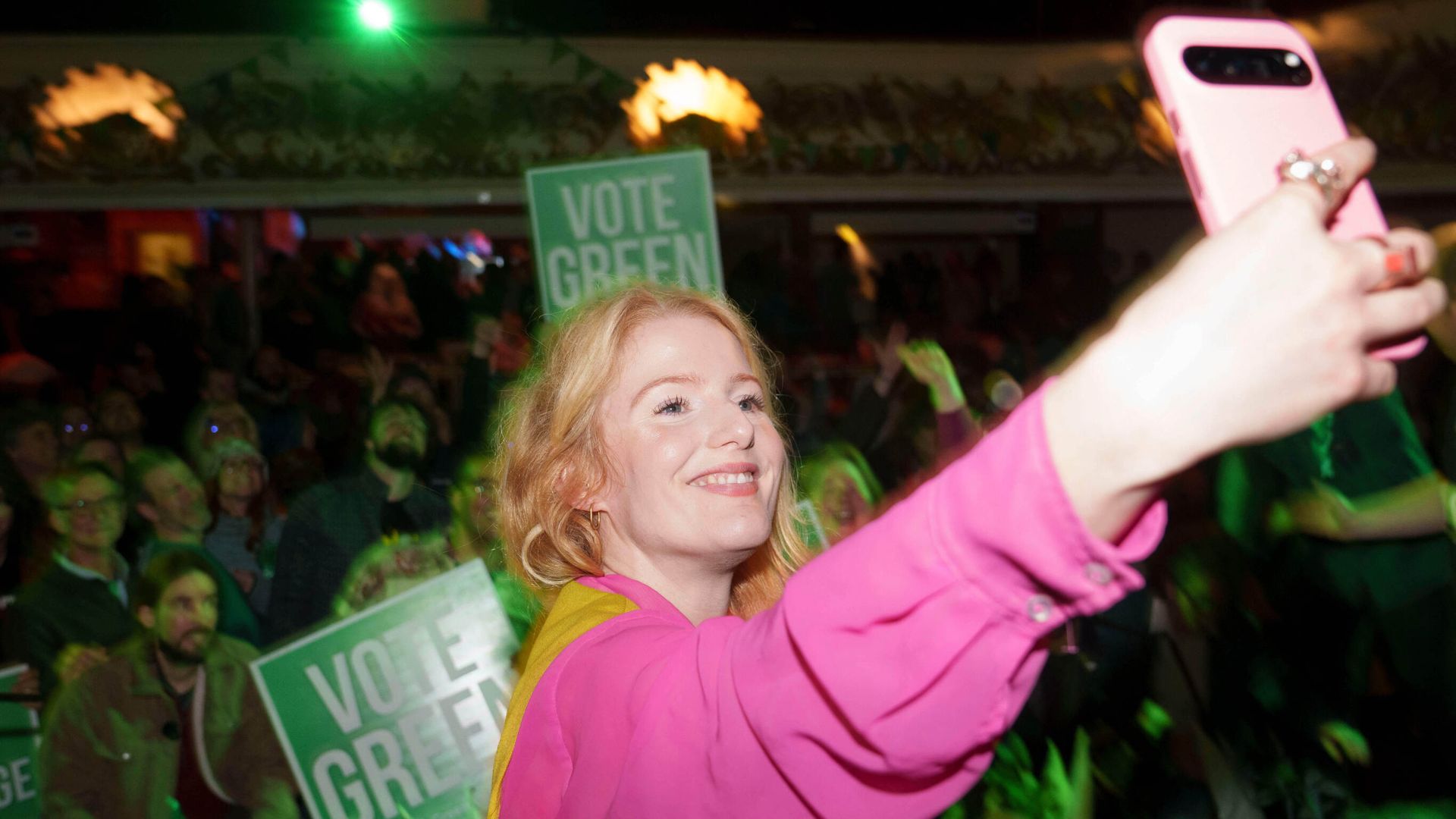
The Green Party’s strategy has shifted from a "broadcast" model—seeking small percentages everywhere—to a "narrowcast" model of hyper-local concentration. By focusing on specific wards and council seats, they build a "credibility ladder." Voters see Green councilors delivering local results, which removes the "wasted vote" stigma for general elections.
This creates a Geographic Lock-In Effect. In seats like Bristol Central or Brighton Pavilion, the Greens have inverted the traditional tactical voting logic. They are now the "default" progressive choice, forcing Labour into the uncomfortable position of the insurgent. This concentration is particularly lethal in the First-Past-The-Post system when a party crosses the 30% threshold in a specific locality, regardless of their national polling. Associated Press has provided coverage on this important issue in great detail.
The Cost Function of Labour’s "Big Tent"
Starmer’s strategy is a high-stakes balancing act between two irreconcilable voter blocks. We can define this via a Political Trade-off Matrix:
- Action: Adopting strict immigration controls or fiscal restraint.
- Gain: Retaining "Red Wall" seats and winning over disaffected Tories.
- Cost: Hemorrhaging youth and urban votes to the Greens.
The fundamental problem for Labour is that the "Cost" side of this equation is becoming increasingly expensive. In a 400-seat majority scenario, losing 10-15 seats to the Greens or Independent left-wing candidates seems marginal. However, the true danger lies in the Margin of Victory Compression. If the Greens take 5-8% of the vote in a swing seat where Labour leads the Conservatives by only 3%, the Green Party acts as a spoiler, effectively handing the seat to the right.
Quantifying the "Green Squeeze"
The Green Party’s growth can be measured through three primary metrics:
- Deposit Retention: In 2024, the Greens retained their deposits in a record number of seats. This indicates a baseline level of support that is no longer fringe but foundational.
- The Urban-University Correlation: There is a near-perfect linear correlation between the percentage of residents with a degree and the Green Party’s vote share increase.
- Second-Place Finishes: The most significant leading indicator of a "knockout" is not winning a seat, but moving from fourth or fifth place to a strong second. This sets the stage for the "next cycle" victory, creating a permanent defensive drain on Labour’s regional budgets.
Structural Vulnerabilities in Starmer’s Platform
The Green Party’s success is a symptom of specific friction points in the Labour platform. These are not merely PR issues; they are deep-seated structural contradictions:
- The Investment Gap: By adhering to strict fiscal rules, Labour limits its ability to fund the "Green Prosperity Plan" at the scale demanded by climate activists. The Greens capitalize on this by offering an unconstrained (though often uncosted) investment alternative.
- Housing and Rent: In urban centers, the cost of living is driven by rent. Labour’s focus on "building" (supply-side) takes years to manifest. The Greens’ focus on "rent controls" (demand-side/regulatory) offers immediate, albeit controversial, appeal to a generation of renters.
- Foreign Policy Alignment: The divergence on international conflicts has created a moral cleavage. For a segment of the electorate, this is a binary issue where compromise is viewed as complicity, making the Greens the only "moral" choice.
The Feedback Loop of Local Governance
The most under-analyzed aspect of the Green threat is the "Bottom-Up Pipeline." The Green Party now holds significant blocks of councilors across England. Local government presence provides:
- Direct Mail Access: Constant contact with voters outside of election windows.
- Case Work History: Proof of competence that counteracts the "fringe party" narrative.
- Data Harvesting: A sophisticated understanding of local voter motivations that national parties often miss.
When the Greens control a local council, they use it as a laboratory for policies that Labour is too cautious to adopt, such as Universal Basic Income trials or aggressive low-traffic neighborhoods. Whether these policies are successful is secondary to the fact that they signal a distinct identity that contrasts sharply with Starmer’s perceived "managerialism."
The Strategic Constraints of the Labour Response
Labour cannot simply "swing left" to neutralize the Greens without risking their flank to the right. This is the Double-Bind Constraint. To attack the Greens, Labour must:
- Characterize Green policies as "unfunded" or "unrealistic," which risks sounding like the Conservative Party.
- Focus on "competence" over "ideology," which further alienates voters looking for a vision of systemic change.
This leaves Labour with a singular, flawed defensive strategy: the "Vote Green, Get Tory" scare tactic. As the Conservative Party fragments and its path to power narrows, this argument loses its potency. If the threat of a Tory government is no longer credible, the primary mechanism keeping the left-wing coalition together dissolves.
The Forecast: Institutionalization of the Multi-Polar Left
The Green Party is transitioning from a movement to an institution. They are professionalizing their candidate selection, centralizing their messaging, and focusing their limited capital on high-yield targets. The "knockout blow" is not a single event but a process of Electoral Decoupling.
Over the next parliamentary term, expect the Greens to function as a "Shadow Opposition" from the left. In every instance where Labour chooses fiscal pragmatism over social spending, the Greens will be there to capture the resulting disillusionment. This will force Labour to spend disproportionate time and energy defending "safe" urban seats, leaving them vulnerable in the volatile suburbs and small towns where elections are truly won and lost.
The strategic play for any analyst is to ignore the national polling averages and look exclusively at the concentrated vote share in the top 40 urban-university clusters. This is where the real erosion occurs. If Labour fails to develop a narrative that offers more than just "stability" and "competence," they will find their urban foundations replaced by a Green bedrock, turning a historic majority into a precarious, single-term anomaly.
The immediate requirement for the Labour leadership is a "Two-Track Communication" model. Track one must continue to reassure the fiscal center, but track one-B must provide a specific, high-visibility "progressive win" (e.g., massive social housing reform or radical energy nationalization) to stem the flow of the urban youth vote. Without this, the Green Party will continue to cannibalize the Labour base from the inside out, seat by seat, council by council.