When drones and missiles started hitting Saudi soil again in the autumn of 2026, Cairo faced an old dilemma in a much hotter neighborhood. President Abdel-Fattah el-Sissi pushed Egypt's parliament to deliberate authorizing military support to defend Saudi Arabia from Houthi attacks. Lawmakers didn't rubber-stamp it overnight. They argued behind closed doors, postponed the vote after sessions on October 18 and 19, and finally approved defensive authorization on October 26, 2026.
Here's the blunt truth about what's happening. Egypt isn't eager to fight another war in Yemen. Cairo remembers the 2015 intervention, when it sent naval ships to the Red Sea and Bab al-Mandab Strait alongside the Saudi-led coalition without committing ground troops, and watched how quickly a limited campaign can turn into a quagmire. Yet Riyadh is a vital economic lifeline for Egypt, sending billions in aid and investment while hosting hundreds of thousands of Egyptian workers whose remittances keep foreign currency flowing into Cairo.
What Egypt Parliament Deliberated and Why It Matters
Article 152 of Egypt's constitution sets a high bar for sending armed forces on combat missions abroad. It requires consultation with the National Defense Council and approval from a two-thirds supermajority in parliament—398 out of 596 seats. Even in a legislature overwhelmingly dominated by pro-government lawmakers, putting that authorization on the floor was a big deal.
Deliberations stretched across two days before lawmakers paused to hash out more questions. Why the hesitation if the vote was virtually guaranteed to pass? Because wariness runs deep among ordinary Egyptians whenever talk of military action near Yemen surfaces. The opposition Egyptian Social Democratic Party—an 11-member bloc—announced it would abstain, arguing there wasn't enough clarity on the mission's scope, duration, costs, or risks to Egyptian troops, and urging Cairo to prioritize diplomacy.
Let's be honest. Most coverage treats a supermajority vote in Cairo as a formality. That misses the political theater and real friction inside the room. Lawmakers pressed for answers on what "defensive support" actually means on the ground, while Sissi and the National Defense Council tried to frame the step as a shield for Saudi territory, critical infrastructure, and Islamic holy sites rather than a blank check for offensive war.
Why Houthi Attacks Escalated Now
The parliamentary push didn't happen in a vacuum. Fighting between the Saudi-led coalition supporting Yemen's internationally recognized government and the Iran-backed Houthi movement—which controls Sanaa—had reignited amid a wider regional confrontation involving the United States, Israel, and Iran.
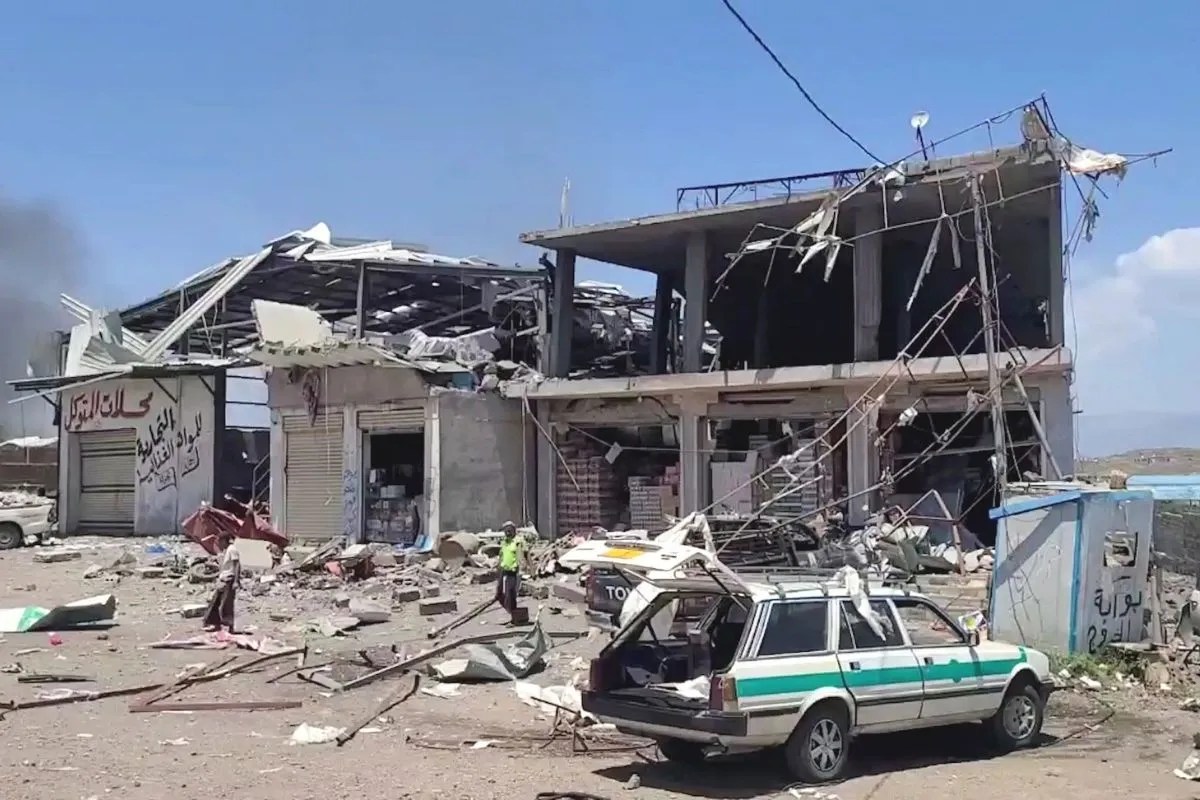
Strikes against Saudi cities and energy infrastructure rattled nerves across the Gulf. Reports pointed to attacks hitting near Riyadh's international airport—with casualties reported there—as well as strikes affecting Saudi energy facilities, including damage to Aramco's Dhahran headquarters in October. When energy hubs and capital-adjacent transport links get hit, Saudi leadership naturally looks for air defense depth, maritime security, and regional backing.
Meanwhile, the Houthis warned Egypt against entering the fray. That warning carries teeth because commercial shipping through the Red Sea and Bab al-Mandab is already fragile, and Egypt's own economy feels every shockwave in Red Sea transit and regional energy markets.
Defense Versus Offense: What Cairo Is Actually Offering
Sissi has gone out of his way to draw a sharp line between defending Saudi Arabia and attacking Yemen. "I'm not speaking about fighting anyone or attacking anyone. I'm speaking only for defense," he said earlier in October, later adding that Egypt hasn't engaged in cooperation aimed at conducting combat operations beyond partner borders.
What does defensive support look like in practice? According to reporting from the Associated Press and regional officials, the emphasis is on air defense systems, aircraft to help intercept drones and missiles, intelligence sharing, logistics, and naval protection along Saudi coasts and shipping lanes—not sending Egyptian ground troops into Yemen. Furthermore, parliamentary approval authorizes support if requested by Saudi Arabia; it doesn't automatically trigger a deployment on its own.
Still, military lines blur fast once missiles start flying. Intercepting incoming threats requires radar integration, rules of engagement, and rapid decision-making. Even strictly defensive deployments can draw retaliatory rhetoric or escalation risks if a drone or missile goes astray.
The Balancing Act Behind Cairo's Move
If you want to understand why Egypt acted when it did, follow the money and the diplomacy together. Saudi Arabia has been one of Cairo's most consequential financial backers, especially since 2013, providing billions in aid and investments alongside vital worker remittances. When a key financial partner faces direct attacks on its airports and oil infrastructure, standing completely aloof carries a steep diplomatic price.
At the same time, Cairo isn't locking itself into every regional bloc. Despite close security ties with Gulf states, Egypt had not joined the Mecca mutual defense pact signed in August by Saudi Arabia, Turkey, and Pakistan—with Foreign Minister Badr Abdelatty saying membership remained under serious consideration while Cairo kept diplomatic channels open, including talking regularly with Iranian officials to push for de-escalation.
That two-track approach—backing Saudi defense while talking to Tehran and stressing diplomacy—is classic Egyptian statecraft. Whether it holds if attacks intensify is an open question, and honestly, skeptics have every right to watch closely.
Practical Ways to Track What Happens Next
If you're following this crisis for policy, markets, or regional security, don't rely on vague headlines about "troop movements." Watch specific signals instead:
- Check for a formal Saudi request and public deployment details. Authorization alone doesn't put hardware in position. Look for concrete confirmation of air defense batteries, naval patrols, or aviation support rather than broad diplomatic pledges.
- Track Red Sea shipping and insurance advisories. Escalation near Bab al-Mandab and Saudi ports shows up quickly in maritime routing and war-risk premiums before official communiqués catch up.
- Watch Cairo's diplomatic channels alongside defense moves. Pay attention to statements from Egypt's foreign ministry regarding talks with Tehran, Riyadh, and regional partners, since diplomatic de-escalation remains a stated pillar alongside defensive readiness.
- Separate defensive posture from offensive escalation. Look for any shift in official rhetoric away from border and infrastructure defense—that would be the real inflection point.
Egypt Approves Military Support for Saudi Arabia as Houthi Attacks Escalate provides brief visual context on Cairo's parliamentary vote and the regional escalation driving Egypt's defensive posture.