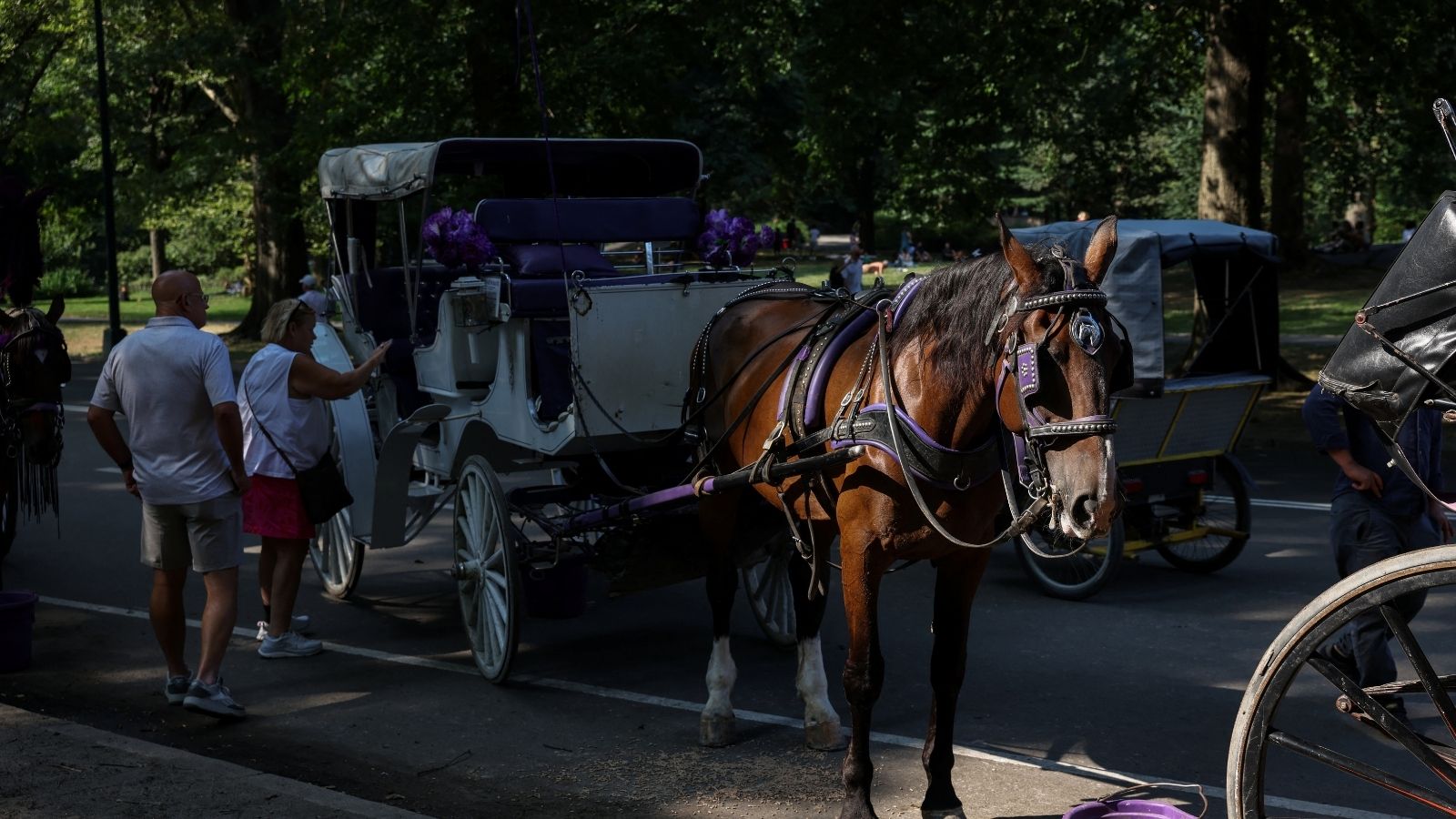
Urban governance often requires balancing historical continuity with modern operational efficiency, public safety standards, and animal welfare considerations. The discussion surrounding the operation of horse-drawn carriages in major metropolitan parks involves a multi-variable equation spanning real estate opportunity costs, municipal labor rights, animal husbandry regulations, and traffic engineering.
The Cost Function of Urban Animal Labor
Operating large working animals within a high-density, motorized traffic environment introduces specific risk variables and overhead costs. From an operational perspective, stable space in high-density urban cores represents a significant real estate footprint. The alternative use of these parcels—ranging from green space restoration to commercial development—creates an opportunity cost that municipal planners must evaluate.
Furthermore, veterinary oversight, feed, and regulatory compliance demand ongoing capital expenditure from operators. As urban traffic density increases, the friction between slow-moving carriage transport and high-speed vehicular or pedestrian flow creates localized bottlenecks. Traffic management frameworks increasingly prioritize throughput and safety predictability, rendering legacy transport modes subject to stricter regulatory scrutiny.
Labor Transition and Municipal Licensing
A significant constraint in altering municipal transport policy is the structure of existing labor agreements and medallion or licensing systems. Carriage operators hold specific operational rights that are often tied to municipal permits. Phasing out such operations necessitates a structured economic transition model for drivers, stable hands, and affiliated support staff.
Municipal intervention in private transport sectors typically follows one of three structural approaches:
- Direct buyouts or permit retirement schemes
- Vocational retraining and transition grants for displaced workers
- Redeployment of infrastructure assets toward zero-emission alternative transport, such as electric replica vintage vehicles
Each approach carries distinct fiscal impacts for city budgets and requires balancing taxpayer interests against the protection of legacy business models.
Traffic Engineering and Public Space Optimization
Reallocating space currently dedicated to carriage staging and routes opens new possibilities for urban mobility design. Centralized urban parks operate under continuous carrying capacity constraints. Removing animal-drawn vehicles alters the velocity and safety metrics of surrounding perimeter roads.
From a spatial planning perspective, reclaiming carriage lanes allows for expanded bicycle infrastructure, wider pedestrian pathways, or dedicated micro-mobility corridors. This shift aligns with broader municipal trends toward Vision Zero safety initiatives, which seek to eliminate traffic-related fatalities and severe injuries through physical infrastructure redesign.
Strategic Outlook
The long-term viability of traditional urban transport modes depends on their alignment with contemporary municipal priorities: emissions reduction, spatial efficiency, and risk minimization. Regulatory timelines that establish multi-year phase-out windows function primarily as risk mitigation strategies, allowing municipal authorities to absorb the legal and economic friction of license retirement while providing operators a defined horizon for capital reallocation.