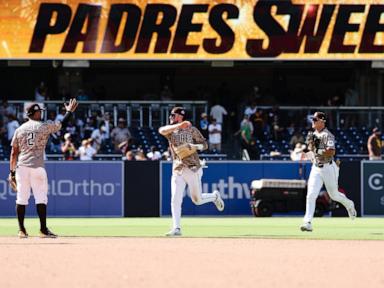
Capital reallocation in professional sports follows strict financial imperatives, moving away from legacy family ownership models toward institutionalized private equity structures. The acquisition of an approximate five percent equity stake in the San Diego Padres by Joey and Jesse Buss via Buss Sports Capital, executed alongside a record-setting three-point-nine billion dollar franchise valuation led by José E. Feliciano and Kwanza Jones, illustrates this structural shift. Dissecting this transaction requires looking past the superficial headlines of basketball executives crossing sports boundaries and examining the underlying asset mechanics, liquidity events, and portfolio diversification strategies driving modern sports syndicates.
The Liquidity Event Mechanics
The capital deployed by the Buss brothers into the San Diego Padres originates directly from a multi-tiered liquidity cycle. Following the family’s sale of their majority interest in the Los Angeles Lakers to Mark Walter, the subsequent secondary transactions involving remaining minority shares created concentrated cash positions for the individual heirs. Maintaining passive generational wealth in a single, non-liquid sporting asset exposes ownership groups to severe concentration risk, particularly when estate taxes, asset splits, and operational disagreements arise—exemplified by internal family disputes over remaining legacy stakes.
Forming Buss Sports Capital allowed the brothers to transform dormant heritage equity into active, diversified sports property holdings. Purchasing a five percent minority slice of a nearly four-billion-dollar baseball asset serves two distinct financial functions:
- Capital Preservation: Shielding liquid proceeds within asset classes historically decoupled from broader public equity volatility.
- Yield Generation: Participating in the explosive growth of Major League Baseball media rights, national revenue sharing, and escalating franchise valuation multiples.
Cross-Sport Operational Transferability
A central claim from the incoming minority stakeholders involves applying basketball operations experience to a baseball franchise. While the physical mechanics of hitting a curveball share little with running a half-court offense, the structural frameworks of organizational management, payroll optimization, and talent acquisition pipeline construction exhibit high degrees of universality.
Modern front offices operate as high-throughput analytics corporations. The principles governing player development-to-value ratios, luxury tax threshold management, and scouting system integration apply equally across the National Basketball Association and Major League Baseball.
[Capital Liquidity Event] ---> [Buss Sports Capitalization] ---> [Minority Equity Acquisition (~5%)] ---> [Advisory & Governance Integration]
By securing a seat on the advisory board and ownership tier rather than day-to-day managerial control, the brothers position themselves to influence high-level capital allocation. Their value proposition centers on asset governance, institutional memory regarding championship-caliber organizational culture, and auditing talent evaluation processes rather than selecting draft prospects.
The Valuation Ceiling and Private Equity Influence
The transition of the San Diego Padres to a control group spearheaded by private equity investors introduces a radically different operational velocity. Historically, Major League Baseball teams operated as lifestyle assets for wealthy individuals. The Feliciano and Jones valuation benchmark of three-point-nine billion dollars redefines the return-on-investment expectations for incoming partners.
At these capital scales, minority owners function less as sentimental fans with checkbooks and more as strategic institutional investors. The cost of capital requires optimizing non-baseball revenue streams, including real estate developments surrounding Petco Park, global brand expansion, and digital media monetization. Minority partners like Buss Sports Capital must evaluate their positions against internal hurdle rates, anticipating that future liquidity events will rely on the continued inflation of national sports broadcasting rights and international market penetration.
Strategic Governance Alignment
Integrating former legacy operators into a private-equity-backed baseball franchise creates a distinct governance matrix. Traditional family-owned sports businesses often suffered from insular decision-making and informal reporting lines. Conversely, institutional ownership groups demand strict key performance indicators, data-backed roster construction models, and clear separation between operational execution and capital oversight.
The inclusion of the Buss brothers provides the majority owners with a tactical hedge: personnel who understand the psychological and operational pressures of high-stakes sports management, operating within a modern corporate governance structure. This alignment aims to bridge the gap between traditional athletic intuition and contemporary quantitative asset management.
Optimize portfolio allocation by treating minority sports equity not as a static generational trophy, but as a liquidatable, high-yield financial instrument requiring active governance oversight and strict alignment with institutional equity partners.