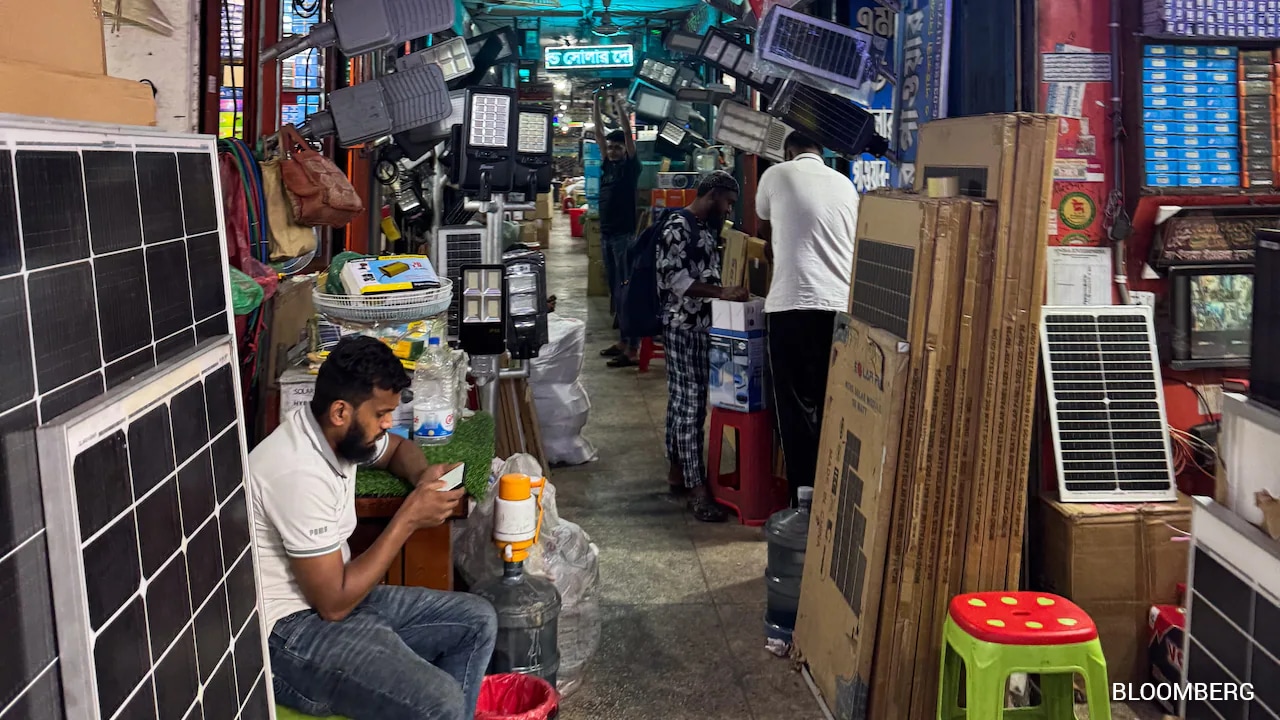
Bangladesh is experiencing a rapid, decentralized shift toward photovoltaic (PV) energy adoption, driven not by environmental policy targets, but by acute economic survival amid a structural power crisis. When grid reliability drops below a critical threshold and imported fossil fuel costs destabilize national foreign exchange reserves, distributed solar generation transitions from an alternative energy experiment into mandatory industrial insurance. Understanding this market surge requires dissecting the intersecting mechanics of imported fuel deficits, tariff restructuring, industrial load-shedding economics, and the capital expenditure bottlenecks currently constraining full-scale adoption.
The Structural Anatomy of the Power Deficit
Most surface-level coverage attributes the spike in Bangladeshi solar demand simply to "power shortages." That characterization misses the underlying thermodynamic and macroeconomic traps governing the Bangladesh Power Development Board (BPDB) and the national grid. Over the past decade, Bangladesh expanded its generation capacity significantly, yet the primary energy mix remained heavily tethered to domestic natural gas and imported liquid fuels—specifically Heavy Fuel Oil (HFO) and High-Speed Diesel (HSD)—alongside imported coal and Liquefied Natural Gas (LNG). Don't miss our previous post on this related article.
This generation architecture created a vulnerability to two simultaneous shocks:
- Domestic Gas Depletion: Domestic gas fields have faced declining wellhead pressure, reducing the baseload fuel supply available to state-owned and independent power producers (IPPs).
- Foreign Exchange Compression: Following global commodity price spikes and currency depreciation of the Bangladeshi Taka (BDT) against the US Dollar, the state's ability to clear dollar-denominated letters of credit (LCs) for fuel imports deteriorated.
The result is a persistent gap between installed generation capacity and actual dispatchable power. Power plants sit idle not for lack of turbines, but for lack of molecules to burn. To manage the resulting deficit without triggering total grid collapse, utility operators enforce systematic load-shedding across residential, commercial, and industrial feeders. For continuous-process industries—most notably the Ready-Made Garment (RMG) sector, textiles, steel re-rolling, and pharmaceuticals—an unscheduled grid outage is not a minor operational inconvenience. It is an immediate destruction of gross margin. To read more about the background here, Business Insider offers an informative summary.
The True Cost Function of Unreliable Power
To quantify why factory owners and commercial real estate operators are accelerating solar procurement, one must evaluate the true cost function of energy in a volatile grid environment. Traditional energy economics compares the Levelized Cost of Electricity (LCOE) of solar against the subsidized retail grid tariff. Under historical conditions where grid power was cheap and reliable, solar struggled to compete purely on unit price.
That math has inverted because the actual cost of grid electricity in Bangladesh now includes a massive reliability penalty:
$$\text{Effective Power Cost} = (C_{\text{grid}} \times U_{\text{grid}}) + (C_{\text{backup}} \times U_{\text{backup}}) + L_{\text{downtime}}$$
Where $C_{\text{grid}}$ is the utility tariff, $C_{\text{backup}}$ is the marginal cost of captive diesel or gas generation, $U$ represents utilization shares, and $L_{\text{downtime}}$ captures the economic loss of production halts during transfer switches or generator failures.
When grid outages stretch to several hours daily, backup diesel generators shift from emergency standby assets to primary baseload workhorses. Generating electricity via captive diesel in Bangladesh costs multiples of the standard industrial grid tariff. Every kilowatt-hour generated by a rooftop solar array during peak daylight hours directly displaces a kilowatt-hour of expensive captive diesel generation, rather than merely offsetting a subsidized grid unit.
At the same time, the government has systematically adjusted retail electricity tariffs upward to reduce the fiscal burden of BPDB subsidies. This dual compression—rising grid tariffs from above and punitive diesel backup costs from below—has compressed the payback period for commercial and industrial (C&I) rooftop solar installations to roughly three to five years, depending on system size and financing terms.
The Three Tiers of Market Demand
The surge in solar panel demand is not uniform across the Bangladeshi economy. It breaks down into three distinct operational segments, each governed by different technical constraints and financial incentives.
1. Commercial and Industrial (C&I) Rooftop Systems
This is the primary engine of high-volume panel procurement. Export-oriented manufacturers, particularly in the textile and RMG sectors, face dual pressure: domestic energy volatility and international buyer mandates. Global apparel brands increasingly enforce strict Scope 2 emissions reductions across their supply chains. Factories in Gazipur, Narayanganj, Savar, and Chattogram are converting massive, flat concrete factory roofs into captive power plants.
These installations typically operate as grid-tied systems without battery storage, designed purely for daytime peak shaving. Because industrial shift hours align closely with the solar insolation curve (roughly 8:00 AM to 4:00 PM), self-consumption ratios regularly exceed 85% to 90% without requiring expensive electrochemical storage.
2. Net Metering Arbitrageurs
Bangladesh's Net Metering Guidelines allow three-phase consumers to export excess solar generation back to the national grid, receiving energy credits against their monthly utility bills. This policy mechanism unlocked demand among businesses with high weekend or holiday downtime, such as educational institutions, cold storage facilities, and single-shift manufacturing plants.
However, net metering introduces a specific operational friction: when the local distribution feeder experiences load-shedding, a standard grid-tied inverter automatically shuts down due to anti-islanding safety protocols. Unless the facility integrates a complex fuel-save controller that synchronizes the solar inverters with the facility's captive diesel generators, the solar array produces zero power precisely when the grid fails. Sophisticated buyers are now mandating diesel-PV synchronization hardware, while less informed buyers suffer unexpected yield losses during blackouts.
3. Residential Hybrid and Off-Grid Micro-Systems
While Bangladesh previously pioneered the world's largest rural off-grid Solar Home System (SHS) program via IDCOL (Infrastructure Development Company Limited), urban residential demand has shifted toward hybrid inverter-battery setups. Urban households in Dhaka and secondary cities traditionally relied on Instant Power Supply (IPS) units—lead-acid battery banks charged by the grid.
During prolonged blackouts, grid power is unavailable long enough to fully recharge IPS batteries, rendering them useless. Adding monocrystalline solar panels to charge existing or upgraded lithium-iron-phosphate (LiFePO4) battery banks converts a failing backup system into an autonomous microgrid. This segment is highly fragmented, price-sensitive, and heavily reliant on retail hardware distributors.
Supply Chain Friction and Technical Bottlenecks
Despite overwhelming demand, the deployment velocity of solar infrastructure in Bangladesh faces severe friction points that prevent immediate market saturation.
The Letter of Credit (LC) and Import Duty Trap
Bangladesh does not manufacture Tier-1 solar photovoltaic cells or high-capacity string inverters domestically; virtually all core components are imported, predominantly from China. The exact same foreign exchange reserve shortage causing the fossil fuel crisis also restricts banks from opening LCs for solar equipment importers. Importers face delayed shipments, working capital lockups, and exchange rate losses between LC opening and settlement.
While the government has offered certain duty exemptions on solar panels, auxiliary Balance of System (BoS) components—such as DC cables, mounting structures, surge protection devices, and hybrid inverters—frequently encounter classification disputes at customs, inflating landed capital costs by 15% to 30%.
Counterfeit Hardware and Degradation Risks
High demand combined with import bottlenecks creates an immediate arbitrage opportunity for low-grade hardware. Markets in Dhaka's Nawabpur and other regional electrical hubs have seen an influx of uncertified, B-grade, or relabeled solar modules alongside substandard inverters.
In a high-temperature, high-humidity tropical climate like Bangladesh, cheap encapsulants (EVA) and backsheets degrade rapidly. Modules lacking proper Potential Induced Degradation (PID) resistance or authentic Tier-1 cell sorting lose 5% to 10% of their output within the first 24 months, destroying the financial model of the installation. Furthermore, dust accumulation— exacerbated by dense urban construction and industrial particulates—reduces actual energy yield by 15% to 25% if automated or manual water-cleaning protocols are not strictly institutionalized.
Roof Structural Integrity and Shading
Many older industrial buildings in Bangladesh were engineered without accounting for the dead load and wind-uplift forces of ballasted or anchored solar mounting structures. Retrofitting these roofs requires structural reinforcement, adding unexpected civil engineering costs. In dense industrial zones, adjacent multi-story buildings also cast dynamic shadows across neighboring rooftops, making central inverters inefficient and forcing the use of more expensive string inverters with multiple Maximum Power Point Trackers (MPPTs) or module-level power electronics.
The Strategic Reality of Grid Integration
A critical blind spot in current market enthusiasm is the physical limit of Bangladesh's distribution infrastructure. While rooftop C&I systems largely consume power behind the meter, rapid growth in utility-scale solar parks and heavy net-metering exports introduces reverse power flow into distribution transformers designed strictly for one-way radial distribution.
Solar generation is inherently intermittent; passing monsoon cloud cover can drop PV output by 70% within seconds. Without automated grid-scale battery energy storage systems (BESS) or fast-ramping spinning reserves, high solar penetration on weak local feeders causes voltage fluctuations and frequency instability. The national grid cannot absorb unlimited intermittent daytime power without structural upgrades to substations and transmission corridors.
Operational Execution for Market Participants
Navigating this market requires moving beyond opportunistic hardware trading and adopting disciplined engineering and financial frameworks.
For Industrial Energy Buyers:
- Audit Load Profiles Before Sizing: Do not size a rooftop system solely based on available square footage. Map 15-minute interval load data against local solar irradiance curves to ensure minimum daytime baseload exceeds peak solar output, avoiding uncompensated export losses if net metering approvals are delayed.
- Mandate Diesel-PV Synchronization: Require Engineering, Procurement, and Construction (EPC) contractors to install verified PV-genset controllers. Without this, daytime blackouts will force inverters offline, leaving capital assets idle during peak sun hours.
- Enforce Pre-Shipment Inspection: Contract independent third-party testing (such as electroluminescence imaging and flash testing) at the port of origin before releasing LC payments to eliminate B-grade module substitution.
For Solar Developers and EPC Contractors:
- Shift to OPEX and PPA Models: High upfront capital costs and corporate borrowing rates deter mid-sized factories from cash purchases. Developers who secure international climate finance or blended debt facilities to offer zero-CAPEX Power Purchase Agreements (PPAs)—selling solar electricity at a fixed 15% to 25% discount to the prevailing grid tariff—will capture the largest share of creditworthy industrial rooftops.
- Standardize Operations and Maintenance (O&M): Build recurring revenue by locking clients into strict O&M contracts featuring scheduled bi-weekly module washing, thermal drone inspections for hotspots, and inverter telemetry monitoring.
For Policy Makers and Grid Operators:
- Streamline Customs Classification: Consolidate import tariff codes for complete solar Balance of System kits to eliminate arbitrary customs delays and reduce working capital friction for legitimate EPCs.
- Mandate Grid-Forming Inverter Standards: Update technical interconnection codes to require smart inverters capable of reactive power control and low-voltage ride-through, preparing distribution feeders for higher distributed generation density without destabilizing local transformers.