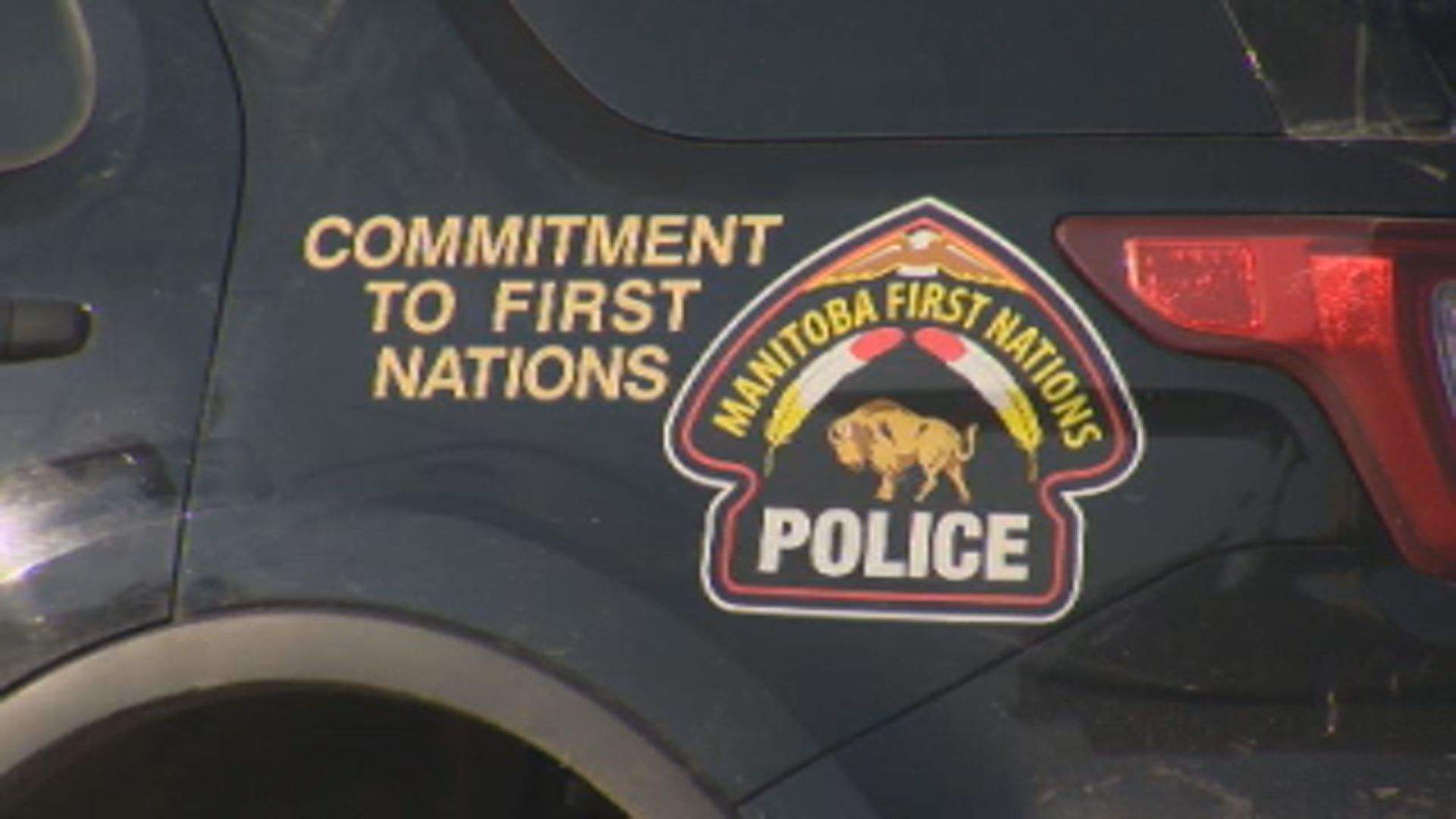
Headline funding announcements rarely resolve structural deficits in public safety—especially when multi-year allocations are divided across complex territorial mandates and rising operational costs. The October 2026 federal and provincial commitment of $163.5 million toward Manitoba First Nations policing and safety initiatives—comprising roughly $121 million for the Manitoba First Nations Police Service (MFNPS) and $42.5 million for the Manitoba First Nations Safety Officer Program—signals a major fiscal injection. Yet a raw dollar figure obscures the mechanics that determine whether communities actually experience safer streets, faster response times, and stable staffing.
Standard news coverage treats government funding announcements as complete solutions: a total sum is stated, officials offer optimistic quotes, and Indigenous leaders note that more work remains. That framing misses the operational realities underneath. Public safety delivery on First Nations is not a single line item. It operates as a two-tier enforcement model governed by statutory boundaries, intergovernmental cost-sharing rules, multi-year amortization windows, and recruitment-retention bottlenecks.
Evaluating whether $163.5 million moves the needle requires replacing headline arithmetic with a structured analytical framework. Below is a breakdown of the mechanisms driving this investment, the cause-and-effect chains linking dollars to frontline outcomes, and the execution risks that could blunt its impact.
The Two-Tier Architecture of First Nations Public Safety
Public safety in Manitoba First Nations communities does not rely on a single uniform force. Instead, it splits operational responsibilities between full sworn police officers and community safety officers, each carrying distinct legal powers, training requirements, and fiscal footprints.
Under Manitoba's statutory framework for First Nation safety officers (introduced through amendments to The Police Services Act), safety officers are appointed by an operator—such as a First Nation or an entity representing a group of First Nations—and hold peace officer powers and protections while enforcing prescribed provincial enactments or authorized First Nation by-laws. Their statutory mandate centers on crime prevention, maintaining a visible community presence, sharing emerging safety information with local policing authorities, and connecting residents in need with social service providers.
Sworn police officers in the Manitoba First Nations Police Service carry full policing authority, criminal investigation mandates, and emergency response obligations comparable to other police services in the province. In practice, First Nation leaders have emphasized that communities hold MFNPS to the same expectations as any other Manitoba police service, even when structural capacity has historically lagged behind.
How the Two Roles Interact in Practice
Treating sworn officers and safety officers as interchangeable creates role confusion and misallocated budgets. Treating them as isolated silos wastes preventative leverage. When operating properly, they form a tiered system:
- Prevention and triage: Safety officers provide visible presence, early intelligence on community friction, by-law and prescribed enactment enforcement, and referrals to social or health supports before minor issues escalate into criminal offenses.
- Access and perimeter awareness: Community leaders have pointed to safety officers as a frontline presence monitoring movement into and out of communities, helping flag contraband, unauthorized entry, or acute safety risks early.
- Criminal enforcement and crisis response: Sworn MFNPS officers handle urgent calls for service, complex investigations, arrests, and high-risk interventions that exceed peace officer or community safety mandates.
When sworn police numbers are thin, safety officers face informal pressure to absorb frontline enforcement demand beyond their design or training. Conversely, when safety officer programs are underfunded or unevenly deployed across regions, sworn police spend disproportionate time on routine disorder, by-law friction, and social crises that preventative personnel could help intercept earlier.
Deconstructing the $163.5 Million Allocation
A headline number of $163.5 million sounds massive until it is broken down by program split, time horizon, and cost structure. Public reporting on the October 2026 announcement identifies roughly $121 million directed to MFNPS—described as spanning roughly four years—and $42.5 million directed to the Manitoba First Nations Safety Officer Program.
Exact multi-year annual schedules, per-community distribution formulas, and capital versus operating splits have not been fully detailed in summary media reports, so any unit-cost calculation across individual communities remains an educated estimate rather than a verified accounting fact. Even without granular ledger lines, the underlying cost function of policing is clear.
The Cost Function of Frontline Policing
Running a police service or safety officer program is heavily weighted toward fixed and semi-fixed recurring expenses rather than one-off purchases:
- Personnel compensation: Salaries, benefits, pension obligations, and shift differentials for 24/7 coverage typically consume the largest share of any policing budget.
- Training and onboarding: Initial academy or specialized safety officer instruction, field training, recertification, and backfill costs during training periods all precede full operational deployment.
- Equipment and fleet: Vehicles (often operating over long distances, rural highways, or seasonal roads in Manitoba), duty gear, communications hardware, protective equipment, and maintenance scale directly with headcount and geographic spread.
- Facilities and administration: Detachment space, dispatch and records systems, compliance, civilian support staff, and governance oversight create baseline overhead that does not disappear when officer counts fluctuate.
Dividing $121 million over four years averages roughly $30.25 million per year across the MFNPS envelope—before accounting for wage inflation, fleet replacement, or any uneven multi-year ramp-up. Meanwhile, $42.5 million for the safety officer program is intended to expand reach across Manitoba and fund training and resources. Stretching fixed operating dollars across multiple years means multi-year announcements buy stability and incremental capacity, not an instant permanent surge in baseline budgets unless ongoing funding keeps pace with cost growth.
Cause-and-Effect Chains Most Coverage Misses
Simple reporting often assumes a direct line from "more money announced" to "more officers on patrol and lower crime." In real-world public safety operations, several intervening variables govern that chain.
From Funding Announcement to Frontline Hours
The first bottleneck is time-to-deployment. Hiring and training sworn officers or safety officers takes months, not days. Even when positions are funded on paper, vacancies persist until candidates apply, pass background and suitability checks, complete required training, and finish field coaching. Until new personnel clear those gates, existing staff carry the workload—and overtime rises to cover shifts.
The second bottleneck is unspent or delayed funds. Reporting around the October 2026 announcement noted budget watchdog scrutiny over millions in Indigenous policing funding having previously gone unspent. Money left unspent does not generate patrol hours. Delays can stem from administrative approvals, tripartite or multi-party agreement mechanics, capital readiness, or hiring lag. A funding commitment only converts into public safety when funds flow smoothly into active payroll, training seats, and operational assets.
Why "Not Enough" and "Progress" Can Both Be True
Indigenous leaders responding to the announcement welcomed the investment while arguing that it falls short of full need. That tension is structural rather than rhetorical.
On one side, federal and provincial officials point to substantial multi-year commitments—building on earlier multi-hundred-million-dollar First Nations and Inuit Policing Program investments—as evidence of sustained policy focus and expanded reach. On the other side, First Nation leaders measure adequacy against demand and parity: remote and northern geographies, complex social needs, high call volumes in certain communities, and the expectation that First Nations receive policing capacity comparable to non-Indigenous municipalities.
In economics, this is a gap between marginal improvement and structural equilibrium. Increasing a budget can improve conditions at the margin—adding positions, upgrading gear, or stabilizing a program—while still leaving total capacity below what demand requires. Both observations can be accurate at the same time.
Common Questions Behind the Headlines
Does this funding create permanent baseline capacity or temporary relief?
Multi-year funding improves predictability compared with short-term grants, which helps leadership plan hiring and operations over several years. However, multi-year envelopes have defined horizons. Long-term stability depends on whether recurring funding formulas adjust for rising wages, inflation, and community growth after the initial window closes.
How do safety officers differ from sworn police in day-to-day work?
Safety officers operate as peace officers under provincial statutory rules and community agreements, focusing on prevention, visibility, by-law or prescribed enactment enforcement, intelligence sharing with police, and social service connections. Sworn police officers carry full criminal enforcement and investigative powers. Pairing both roles works best when clear protocols define handoffs so safety officers support community stability without being pushed into unequipped emergency enforcement.
Why do Indigenous policing budgets face recurring strain even after major announcements?
Three structural pressures recur across remote and First Nations policing: high per-officer and per-community logistics costs, intense competition for qualified recruits and experienced officers, and underlying social and economic stressors that generate high demand for police and crisis response. Funding addresses the enforcement and safety layer, but cannot by itself resolve housing, addiction, mental health, or economic root causes.
Operational Risks and Limitations of a Funding-First Strategy
Even well-intentioned public safety funding runs into hard operational limits. A realistic assessment has to account for what money alone cannot fix.
- Labor market constraints: Funding authorizes positions, but cannot manufacture qualified candidates overnight. Recruitment, retention, burnout prevention, and housing or family support in rural or fly-in/drive-in communities remain decisive operational constraints.
- Governance and coordination friction: Multi-jurisdictional programs involve federal ministries, provincial justice authorities, police leadership, safety program operators, and individual First Nations. Unclear lines of authority, reporting burdens, or slow administrative sign-offs can stall frontline execution.
- Over-reliance on enforcement: Policing and safety officers manage disorder, enforce law, and connect residents to services, yet they sit downstream of broader social determinants. Without parallel investments in community health, youth supports, and local infrastructure, enforcement agencies face repeat calls on the same underlying crises.
- Measurement blind spots: Counting dollars allocated or positions posted is easy; measuring genuine community safety is harder. Crude crime or call counts can rise simply because better-staffed officers are present to take reports and respond, rather than because conditions worsened.
Strategic Play for Decision-Makers
To turn the $163.5 million commitment into durable operational capacity rather than a short-term fiscal spike, policymakers, police leadership, and First Nation program operators should lock in four concrete execution moves over the next 12 to 24 months:
- Publish transparent deployment and spend-rate milestones: Pair multi-year allocations with clear quarterly or semi-annual tracking of funds drawn down, training cohorts completed, and active frontline headcount—directly addressing past concerns over unspent allocations before bottlenecks compound.
- Codify operational protocols between MFNPS and safety officers: Define exact dispatch boundaries, referral pathways to social services, and information-sharing rules so safety officers act as a true preventative and community-liaison force while sworn officers focus on criminal investigations and high-acuity calls.
- Target retention and local pipelines simultaneously: Tie recruitment dollars to local candidate pathways, mentorship, rotation and wellness supports, and practical local living/deployment logistics so newly trained officers stay past their first two years.
- Tie future funding renewals to a baseline cost escalator: Establish objective cost-indexation and community-need criteria ahead of the multi-year window's expiration so First Nations leadership and policing services do not face a cliff or repeat negotiations every budget cycle.