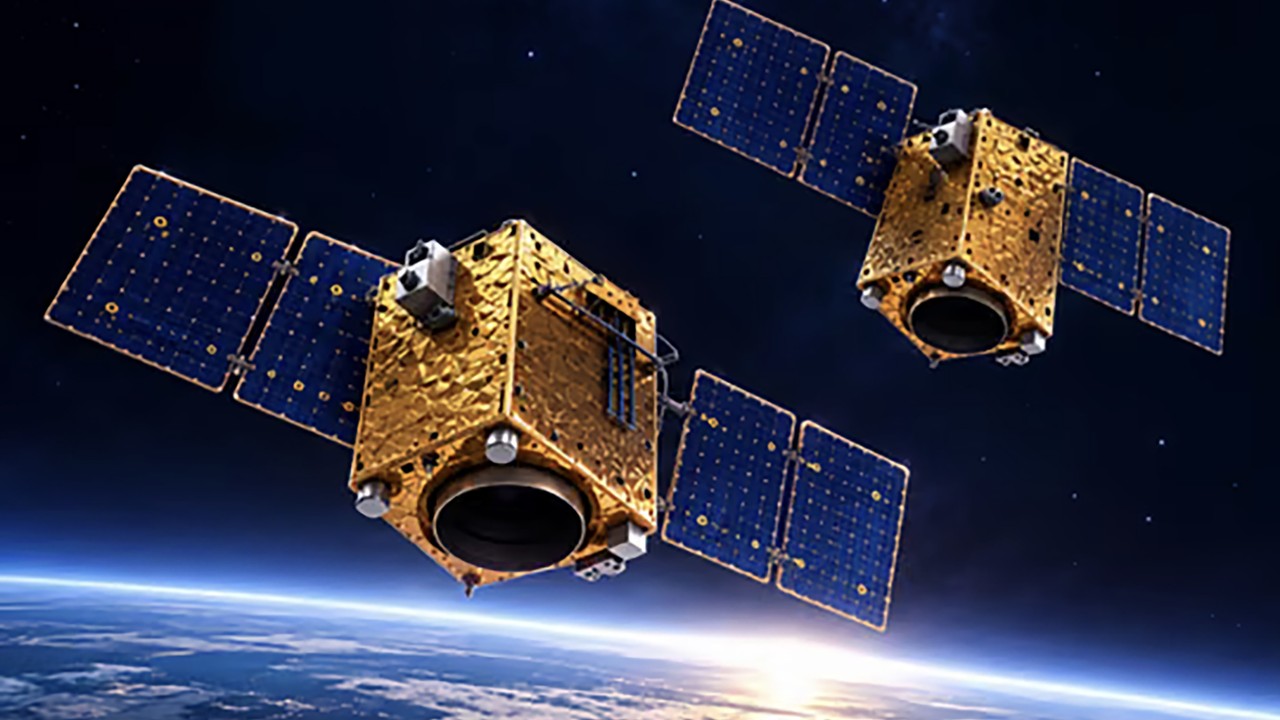
The decision by an established radio-frequency (RF) counter-drone manufacturer to recruit former U.S. Army directed-energy leadership signals a structural shift in low-altitude air defense: the commercial saturation of electronic warfare (EW) and the mandatory transition to hard-kill photonics. When a company built on handheld RF jammers—often colloquially termed anti-drone guns—establishes a dedicated laser division by hiring the exact program managers who oversaw military high-energy laser (HEL) prototyping, it is not merely expanding its product catalog. It is executing a defensive survival strategy against rapid tactical obsolescence.
To understand this executive maneuver, one must look past standard corporate press releases and analyze the underlying physics, procurement bottlenecks, and cost-exchange ratios governing modern unmanned aerial systems (UAS). The counter-UAS (C-UAS) sector is bifurcating. Soft-kill kinetic disruption via electromagnetic spectrum denial has hit a ceiling of effectiveness against autonomous, fiber-optic, and frequency-hopping threats. Consequently, mid-tier defense contractors are attempting to leapfrog traditional prime contractors by importing institutional knowledge directly from the Pentagon's directed-energy acquisition pipeline. Recently making news lately: The Leather Jacket, the Whisper, and the Chill Returning to Silicon Valley.
The Technological Ceiling of Radio-Frequency Disruption
For the past decade, the entry-level C-UAS market was dominated by directional RF jammers. These systems operate on a straightforward principle: flood the target drone's command-and-control (C2) link or Global Navigation Satellite System (GNSS) receiver with high-power noise, severing the connection between the operator and the airframe. When successful, the drone enters a pre-programmed fail-safe mode, typically hovering in place or executing a controlled descent.
This mechanism relies on three fragile assumptions that modern drone warfare has systematically dismantled: Additional insights into this topic are detailed by TechCrunch.
- Continuous RF Link Dependency: Traditional commercial and modified tactical drones require an active electromagnetic tether to receive flight instructions. However, the proliferation of onboard edge computing and computer-vision terminal guidance allows unmanned systems to lock onto a target visually and complete their attack run in complete radio silence. An RF gun cannot jam a sensor that is not transmitting or receiving external signals.
- Predictable Frequency Bands: Early C-UAS jammers targeted standard industrial, scientific, and medical (ISM) bands—specifically 2.4 GHz and 5.8 GHz. Modern adversaries now utilize software-defined radios (SDRs) capable of rapid frequency hopping across non-standard spectrum allocations, rendering fixed-band directional jammers ineffective.
- Physical Tether Immunity: The resurgence of fiber-optic-guided first-person-view (FPV) drones completely bypasses the electromagnetic spectrum. Because control signals and video telemetry travel through a physical glass filament spooling behind the aircraft, RF disruption achieves zero effect.
When an anti-drone gun maker pivots to directed energy, it is acknowledging that spectrum denial is no longer a standalone solution. The company is moving up the lethality curve from temporary electromagnetic interdiction to permanent physical destruction.
The Cost-Exchange Asymmetry Driving Laser Adoption
The primary economic driver behind high-energy lasers in counter-drone operations is the restoration of a favorable cost-exchange ratio. In modern asymmetric conflict, defending forces face an unsustainable financial bleed when using traditional kinetic interceptors against low-cost threats.
Consider the unit economics of air defense:
- The Threat: A commercial quadcopter modified to carry a munition costs between $500 and $2,000. A long-range one-way attack drone costs between $20,000 and $50,000.
- The Kinetic Interceptor: A man-portable air-defense system (MANPADS) missile costs upwards of $100,000. Short-range surface-to-air missiles used by standard military batteries range from $500,000 to over $2 million per shot.
- The Directed-Energy Shot: Once the capital expenditure of the laser weapon system is amortized, the marginal cost per engagement is limited to the diesel fuel or electrical grid power required to charge the capacitor banks—typically estimated between $1 and $10 per shot.
By hiring former U.S. Army laser chiefs, an RF C-UAS manufacturer is attempting to capture the massive procurement budgets allocated to solving this exact economic imbalance. Kinetic missiles cannot scale to defeat drone swarms without bankrupting the defender. Autocannons and programmable airburst munitions offer a middle ground, yet they introduce severe collateral damage risks in urban or littoral environments where falling tungsten fragments endanger friendly forces and civilian infrastructure. High-energy lasers offer a deep magazine—limited only by power generation and thermal management—with zero ballistic drop and minimal collateral footprint.
Deconstructing the Talent Acquisition Strategy
In the defense industrial base, hiring senior military acquisition officials—specifically those who led U.S. Army directed-energy initiatives—serves a dual operational purpose. It is simultaneously an engineering shortcut and a procurement translation layer.
1. Bypassing the "Valley of Death" in Hardware Prototyping
Developing a viable tactical laser is fundamentally a systems-engineering and thermal-management problem, not a pure physics problem. The physics of solid-state fiber lasers are well-established. The difficulty lies in ruggedizing fragile optical components to survive the shock, vibration, dust, and temperature extremes of tactical deployment while maintaining beam quality over multi-kilometer slant ranges.
Former military program chiefs possess empirical data on why previous defense contractor prototypes failed during field testing. They understand the specific failure modes of beam directors, adaptive optics, and power-conditioning units. By installing these leaders at the helm of a new division, the hiring company avoids spending tens of millions of dollars on dead-end research and development paths that the U.S. Army has already tested and discarded.
2. Navigating the Defense Acquisition Ecosystem
Mid-tier agile manufacturers often struggle to cross the chasm from selling commercial-off-the-shelf (COTS) gear to winning formal Programs of Record (PoRs) within the Department of Defense. RF anti-drone guns were largely purchased through rapid-fielding mechanisms and urgent operational needs statements—processes with lower bureaucratic barriers.
High-energy lasers, however, are treated as major weapon systems. They require compliance with strict military standards, safety certifications (particularly regarding eye-hazard zones and airspace deconfliction), and integration into broader battle-management networks such as the Forward Area Air Defense Command and Control (FAAD C2) system. Former Army laser chiefs understand the exact requirements generation process, the test-and-evaluation protocols at ranges like White Sands Missile Range, and the specific congressional funding lines that sustain directed-energy programs.
The Four Engineering Bottlenecks of Tactical Lasers
While the strategic logic of pivoting from RF jammers to lasers is sound, execution carries severe technical risk. A company accustomed to assembling handheld RF emitters faces an order-of-magnitude increase in engineering complexity. Any new laser division must solve four primary bottlenecks to field a commercially viable product:
Size, Weight, and Power (SWaP) Constraints
An RF jammer can operate off a handheld lithium-ion battery pack drawing a few hundred watts. A tactical high-energy laser capable of burning through a drone's airframe or detonating its warhead at a distance of two to three kilometers requires between 10 kilowatts (kW) and 50 kW of continuous optical output. Because solid-state lasers typically operate at wall-plug efficiencies of 25% to 35%, generating a 20 kW laser beam requires roughly 60 kW to 80 kW of raw electrical input. This necessitates heavy-duty generators, specialized battery buffers, and vehicle-mounted platforms, completely removing the system from the dismounted infantryman's backpack.
Thermal Management
The remaining 65% to 75% of input electrical energy that does not exit the aperture as coherent light is converted directly into waste heat. If this heat is not rapidly extracted from the gain medium and optical elements, thermal lensing occurs—distorting the laser beam, degrading its focus on the target, and potentially destroying the internal optics. Designing compact, ruggedized liquid-cooling loops capable of shedding tens of kilowatts of heat in high-ambient-temperature environments is one of the primary failure points for new market entrants.
Atmospheric Attenuation and Turbulence
Unlike RF waves, which penetrate fog, rain, and dust with relatively predictable attenuation, high-energy optical beams are heavily degraded by atmospheric conditions. Water vapor absorbs infrared wavelengths, while airborne particulates scatter the beam, reducing the power density delivered to the target. Furthermore, atmospheric turbulence—caused by temperature gradients in the air—causes the beam to shimmer and wander. Overcoming this requires sophisticated fast-steering mirrors and adaptive optics systems that measure atmospheric distortion in real time and pre-distort the outgoing beam to compensate.
Dwell Time and Target Acquisition
A missile destroys a target instantaneously upon impact. A laser is a thermal weapon; it must hold a tightly focused spot on a specific vulnerable point of the drone—such as the battery pack, a motor mount, or the optical seeker—for several seconds to achieve structural failure. This duration is known as dwell time. Achieving a two-to-four-second dwell time on a small, agile FPV drone maneuvering at 80 miles per hour requires sub-microradian tracking precision. The target acquisition and tracking gimbal must be vastly more accurate than the directional antennas used in RF C-UAS systems.
Integration into Layered Defense Architectures
The strategic value of an RF manufacturer building a laser division lies not in replacing RF with lasers, but in fusing both modalities into a single sensor-to-shooter architecture. In operational reality, neither technology functions as a standalone shield.
A mature, layered counter-drone architecture executes engagements sequentially based on range, target profile, and rules of engagement:
- Long-Range Detection (5+ km): Passive RF sensors detect the drone's telemetry emissions, while active X-band or Ku-band micro-Doppler radars track non-emitting airframes.
- Mid-Range Soft-Kill (1–3 km): Directional RF jamming is applied first. It consumes minimal power, requires less precise tracking than a laser, and can simultaneously disrupt multiple unshielded drones within its cone of fire. If the drone is vulnerable to spectrum denial, the engagement ends here at negligible cost.
- Close-Range Hard-Kill (0.5–2 km): If the target continues its trajectory despite full-spectrum RF jamming—identifying it as either autonomous, frequency-agile, or fiber-optic-guided—the battle-management system hands off the track to the high-energy laser. The laser engages the confirmed threat sequentially, burning through critical components before the drone reaches its terminal release point.
By controlling both the RF detection/jamming layer and the directed-energy hard-kill layer, a manufacturer eliminates the integration friction that plagues multi-vendor defense systems. They own the proprietary interfaces between the radar, the RF sensor, the jammer, and the laser beam director.
Market Dynamics and Competitive Positioning
The C-UAS market is currently consolidating around companies that can deliver end-to-end kill chains rather than point solutions. Traditional defense primes—such as Lockheed Martin, RTX, and Northrop Grumman—dominate the high-power (100 kW to 300+ kW) laser market aimed at defeating cruise missiles, rockets, artillery, and mortars (C-RAM). However, these prime contractors carry massive overhead structures, resulting in multi-year development cycles and unit costs that price their systems out of widespread tactical deployment at the brigade or battalion level.
This creates a lucrative middle tier in the 10 kW to 50 kW power class. Agile mid-tier defense firms are competing to build attritable, modular, and rapidly producible laser systems that can be mounted on light tactical vehicles (such as the JLTV or Stryker) or deployed as semi-fixed base defense nodes.
Hiring former Army laser chiefs signals an aggressive bid to dominate this 10–50 kW bracket. It provides the hiring firm with immediate credibility among defense investors and military buyers, compressing the trust-building phase that normally takes a non-traditional defense contractor years to navigate. However, credibility does not bend light. The market will judge the venture entirely on its ability to transition from low-margin, high-volume RF assembly to high-precision optical manufacturing without succumbing to supply-chain bottlenecks in specialized laser diodes and high-reflectivity coatings.
Strategic Execution for Mid-Tier C-UAS Entrants
To convert high-profile military talent into fielded hardware and sustained revenue, the company must avoid the trap of bespoke, custom-engineered defense contracting. The strategic path forward requires strict adherence to commercial manufacturing discipline applied to military specifications:
- Standardize on Commercial Fiber Laser Modules: Rather than developing proprietary chemical or solid-state slab lasers from scratch, the division must leverage commercially available industrial fiber-laser modules—originally developed for automotive welding and cutting—and combine their beams spectrally or incoherently. This taps into an established, high-volume commercial supply chain and drastically lowers unit production costs.
- Decouple the Beam Director from the Laser Source: Design the laser generation and power-conditioning units as modular, rack-mounted line-replaceable units (LRUs) connected via armored fiber-optic cables to a lightweight, roof-mounted gimbal. This allows the heavy thermal and electrical components to sit low in the vehicle chassis, preserving vehicle center-of-gravity and simplifying field maintenance.
- Prioritize Software-Defined Fire Control: The true intellectual property of the system will reside in the automated target-recognition algorithms that identify the exact aimpoint on a drone's silhouette. Automating aimpoint selection—such as targeting the lithium-polymer battery bay rather than the structural frame—cuts required dwell time in half, effectively doubling the magazine depth and engagement rate of a 20 kW system without increasing optical power.
- Target Allied Export Markets Simultaneously: U.S. Department of Defense Programs of Record move slowly. The division should immediately align its export-control compliance (ITAR) to sell early production units to allied nations in Europe and the Middle East facing immediate drone threats, using foreign military sales to fund iterative hardware refinements prior to major Pentagon down-selects.