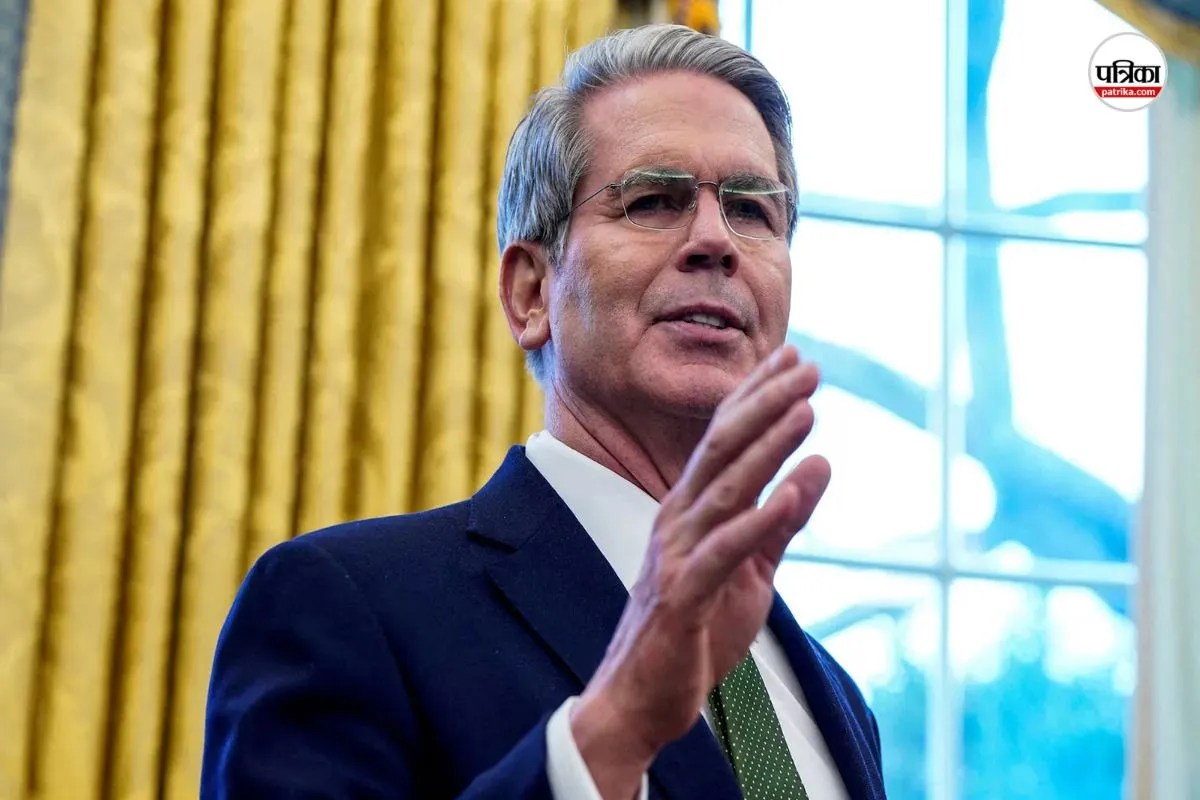
U.S. Treasury Secretary Scott Bessent has framed Washington's campaign against Tehran—anchored by Operation Economic Outcast, launched in late August 2026—as a decisive turning point in which Iranian leaders are cornered and economic pressure is forcing compliance. Headlines echoing his assertion that he is unafraid of Iranian threats while economic pressure bites rely on a simple cause-and-effect story: choke oil exports and shadow finance, starve the state of hard currency, and force political concession.
That narrative captures real financial strain inside Iran, yet it leaves out the structural friction between financial strangulation and regime survival. Sanctions and maritime interdiction can compress foreign-exchange inflows and push the rial down on informal markets, but they do not automatically translate fiscal distress into strategic surrender. A rigorous assessment separates verified administrative and market facts from official rhetoric, maps the actual transmission channels of economic coercion, and identifies where the strategy can stall or backfire. You might also find this related coverage useful: The Strategic Architecture of the Belarus-India Intergovernmental Commission.
Deconstructing the Pressure Narrative
Public reporting around Bessent's statements combines three distinct elements: personal security escalation following reported threats against U.S. officials, enforcement actions targeting oil intermediaries and shadow banking networks, and claims that Iran's seaborne oil trade and domestic resilience are breaking down. Standard news coverage often treats those claims as proof that the campaign is already achieving its end state.
Separating the underlying logic reveals three core claims inside that coverage: As discussed in latest reports by The Guardian, the implications are significant.
- The Deterrence Resolve Claim: Threatening U.S. officials or targeting specific figures signals regime desperation rather than policy vulnerability, justifying continued pressure without retreat.
- The Chokepoint Effectiveness Claim: Restricting tanker movement, port access, and intermediary oil trustees cuts off export revenue and strands previously sold cargoes.
- The Fiscal Squeeze Claim: Tightening financial designations and secondary sanctions drains foreign currency, weakens the rial, and pressures domestic living standards.
Known Facts Versus Educated Hypotheses
A disciplined analysis must draw a hard line between documented actions and contested outcomes.
Known facts include the U.S. Treasury's rollout of Operation Economic Outcast in August 2026, subsequent designations targeting oil trustees and financial networks under authorities such as Executive Order 13902 and Executive Order 13224, and FinCEN's identification of roughly $14.7 billion in potentially Iran-linked shadow banking activity between January 2025 and August 2026. It is also documented that Bessent relocated from his Washington residence to a military base in November 2026 amid reported threat warnings, while Tehran denied plotting attacks against U.S. officials on U.S. soil. On the market side, reporting indicates informal-market rial weakness around late November 2026 alongside broader Persian Gulf tanker traffic resuming toward prewar volumes even as Iran's own crude shipments face severe blockage.
Educated hypotheses include whether these measures will force Tehran into a binding agreement rather than prolonged standoff or asymmetric escalation. Treasury officials assert that Iranian leaders are panicking, that seaborne oil supply is exhausted, and that the regime may never recover revenue held by intermediaries. Independent verification of internal regime decision-making, exact net export proceeds, and the threshold at which economic hardship triggers decisive political change remains limited.
The Four Transmission Channels of Economic Coercion
Economic pressure against a sanctioned commodity exporter operates through distinct mechanical links rather than a single lever. When one link tightens, other parts of the system adjust through price shifts, routing changes, or domestic rationing.
Revenue Interdiction and Trustee Friction
Crude oil exports traditionally supply a major share of Iran's hard-currency inflows. When maritime enforcement and secondary sanctions impede loading, vessel tracking, or buyer settlement, the immediate impact is a liquidity timing shock rather than an instant disappearance of all past trade. Cargoes already sold or held through third-party intermediaries face payment delays, discounts, or disputes between the state and its brokers.
The second bottleneck appears inside the principal-agent chain between Tehran and its overseas facilitators. When intermediaries face heightened legal and financial exposure, transaction costs rise, counterparties demand steeper price concessions, and the risk increases that funds stall or get diverted outside state control.
Shadow Banking and Currency Pass-Through
Even when some trade continues through opaque channels, correspondent banking friction limits how easily export proceeds convert into usable foreign exchange. Enforcement against exchange houses, shell structures, and regional financial conduits forces transactions through smaller, slower, and higher-fee intermediaries.
Lower net foreign-currency supply feeds directly into the exchange-rate pass-through mechanism. In an import-sensitive economy, a weaker currency on informal markets raises the domestic cost of intermediate inputs, food, and consumer goods, eroding real household purchasing power and complicating central bank price stability.
Internal Resource Allocation and Coercive Insulation
Standard commentary often assumes that macro-level currency stress automatically starves state security programs. In practice, sanctioned states practice budgetary ring-fencing, prioritizing core security apparatus, missile and defense production, and internal control mechanisms ahead of general public subsidies or broad economic modernization.
Consider a stylized budget allocation shift: if total state external liquidity drops by 40%, a government does not cut every line item by 40%. Instead, it may protect core security and strategic projects at 85% to 90% of prior priority while pushing the adjustment onto public infrastructure, real wages, and import availability. That asymmetry explains why severe economic strain can coexist with continued military and technical activity.
External Alignment and Diplomatic Leverage
Sanctions rarely operate in a diplomatic vacuum. Their leverage depends partly on how third powers—especially major energy buyers and geopolitical rivals—weigh their own commercial and strategic interests against secondary-sanctions risk.
When major powers prioritize broader bilateral stability or regional transit security over underwriting a sanctioned partner's demands, Tehran's external room to maneuver narrows. Conversely, if third parties keep absorbing discounted barrels or alternative trade routes remain open at scale, the pressure campaign takes longer to bite and carries higher enforcement costs for the sanctioning state.
Why Hardship Does Not Guarantee Concession
A common analytical error in sanctions debates is equating economic pain with political compliance. History across sanctioned economies shows that severe inflation, currency depreciation, and supply bottlenecks frequently produce survival adaptation, black-market enrichment, and coercive consolidation rather than immediate policy capitulation.
The third limitation of a pressure-first approach is negotiation asymmetry. A government facing domestic economic strain may conclude that conceding under overt threat signals weakness and invites further demands, whereas holding out—or calibrating regional friction—preserves bargaining leverage or raises the perceived cost of military escalation for adversaries.
At the same time, escalation carries spillover risk for global markets and regional security. Even when wider Persian Gulf tanker flows stabilize, maritime friction, threats to shipping lanes, or miscalculation around interdiction can inject volatility into freight rates, insurance premiums, and energy risk premia.
Operational Playbook for Analysts and Decision-Makers
To evaluate whether economic pressure is moving toward a durable settlement or a prolonged stalemate, analysts and strategists should track concrete operational indicators rather than rhetorical escalations:
- Audit Verified Trade and Transit Flows: Cross-check vessel-tracking anomalies, port loading intervals, and independent commodity estimates against official claims of total export stoppage or supply exhaustion.
- Monitor Exchange-Rate Spreads and Liquidity: Track informal versus official exchange rates, spreads on currency swaps, and cross-border payment delays to measure real foreign-exchange scarcity inside the domestic economy.
- Separate Fiscal Stress from Security Output: Watch whether procurement, defense manufacturing, and internal security operations show measurable input constraints, or whether civilian households absorb the brunt of the adjustment.
- Assess Third-Party Compliance Drift: Observe whether major trading partners and regional intermediaries tighten compliance or develop workarounds as enforcement matures.
- Map Escalation Thresholds Against Diplomatic Off-Ramps: Identify the specific economic and security milestones that could create credible incentives for verifiable negotiation without triggering wider regional conflict.
Strategic Recommendation
Washington and allied policymakers should pair financial and maritime enforcement with explicit, verifiable negotiation off-ramps rather than treating economic pressure as a standalone substitute for a defined end state. Maximum financial coercion creates leverage only if paired with clear terms that link incremental sanctions relief or maritime de-escalation to concrete, monitorable commitments—otherwise, the campaign risks hardening internal resolve, straining enforcement bandwidth, and prolonging a high-friction stalemate with no clear exit path.