The standard narrative of Ebola is a tired script written by people who prefer horror movies to epidemiology. You know the one. It starts with a mysterious "spillover" event in a remote village, usually involving a fruit bat or a chimpanzee, followed by a frantic race against time by heroic Western scientists. This story treats Ebola like a supernatural predator that strikes without warning. It frames the virus as an unpredictable monster emerging from the "dark" corners of the continent.
This narrative is a lie. It’s a convenient fiction that masks systemic failures in global health infrastructure.
Ebola isn't mysterious. We have known exactly what it is since 1976. We know how it spreads. We know how to kill it on a surface with simple bleach. We even have highly effective vaccines now. The fact that outbreaks still spiral into international emergencies isn't a failure of science; it’s a failure of honesty. We keep asking "where did it come from?" when we should be asking "why did the local clinic have no gloves?"
The Patient Zero Fetish
Public health officials and journalists have an unhealthy obsession with "Patient Zero." They spend weeks tracing back to a single toddler playing near a hollow tree in Meliandou or a hunter in Yambuku. While contact tracing is vital for containment, the cultural fixation on the first case serves a darker purpose: it turns a public health crisis into a morality play about human encroachment on nature.
Focusing on the spillover event ignores the thousands of days between outbreaks where nothing was done to improve the baseline of care. If your healthcare system requires a team of international experts to fly in every time a hemorrhagic fever appears, you don't have a healthcare system. You have a fire department that only boards the plane after the house has burned down.
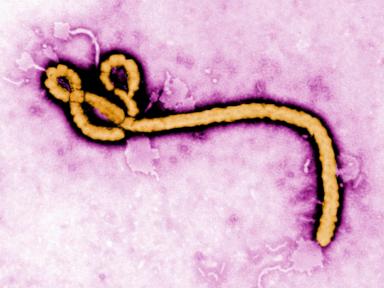
[Image of Ebola virus structure]
The virus itself, Zaire ebolavirus, is actually quite fragile. Outside the human body, it's a wimp. It doesn't drift through the air like measles. It doesn't hide on doorknobs for weeks like norovirus. It requires direct contact with infected bodily fluids. In a world with functional sanitation and basic personal protective equipment (PPE), Ebola wouldn't make it past the first triage room.
The 1976 Myth: We Learned the Wrong Lessons
The "discovery" of Ebola in 1976—simultaneously in Zaire (now DRC) and Sudan—is often cited as the dawn of our understanding. In reality, it was the dawn of our complacency.
The initial response in Yambuku was a masterclass in what happens when colonial-era medical practices meet a high-consequence pathogen. The mission hospital there was reportedly using five syringes for hundreds of patients a day. They weren't "fighting" a mystery disease; they were inadvertently manufacturing an epidemic.
When we look back at 1976, we shouldn't marvel at the discovery of a new filovirus. We should be horrified that the primary vector for the first major outbreak was the medical equipment itself. Fast forward to the 2014-2016 West Africa outbreak, and what do we see? The exact same thing. Desperately underfunded hospitals became the primary engines of transmission.
We keep blaming the "bushmeat trade" because it's easier than admitting that the global community has spent fifty years "monitoring" Ebola instead of building the oxygen plants and clean water systems that would make Ebola a footnote.
Poverty is the Real Vector
Stop looking at the virus under a microscope and start looking at the GINI coefficient. Ebola is a disease of poverty and broken trust.
In 2014, the world acted shocked when people in Guinea, Liberia, and Sierra Leone hid their sick or resisted burial teams. The "lazy consensus" was that these people were "uneducated" or "superstitious." That is an arrogant, Western-centric view that ignores reality. If you live in a region where the government has historically been predatory and the "hospital" is a place where people go to die alone in plastic tents, hiding your loved ones isn't "superstition." It’s a rational response to a perceived threat.
I’ve seen how these interventions work on the ground. You can't show up in a moon suit, take away someone’s grandmother, and expect them to thank you for your "evidence-based intervention."
Trust is a biological necessity in an epidemic. Without it, the R-naught (reproduction number) of the virus is irrelevant because the R-naught of the misinformation will always be higher.
$$R_0 = \tau \cdot c \cdot d$$
In the standard epidemiological formula above, $\tau$ is the transmissibility, $c$ is the contact rate, and $d$ is the duration of infectiousness. We spend all our money trying to lower $\tau$ with vaccines, but we do almost nothing to lower $c$ by providing the economic security that allows people to stay home or the high-quality care that makes isolation palatable.
The Vaccine Trap
The development of the rVSV-ZEBOV vaccine is a genuine scientific triumph. It works. It’s effective. But it has also become a crutch for lazy policy.
There is a dangerous sentiment among donors that because we have a vaccine, we no longer need to worry about the "boring" parts of medicine. Why build a permanent infectious disease ward when you can just stockpile doses in Geneva?
This "techno-fix" mentality is a trap. Vaccines are reactive. They require cold chains, complex logistics, and—most importantly—public buy-in. If you have the vaccine but the community thinks you're using it to experiment on them because you haven't been there for the last decade to treat their malaria or their maternal mortality, the vaccine is useless.
We saw this in the 2018-2020 Kivu outbreak. We had the tools. We had the medicine. Yet it became the second-largest outbreak in history. Why? Because it happened in a conflict zone where the "international response" was viewed as just another invading force. You cannot vaccinate your way out of a war or a collapse of social trust.
Stop Studying Spillover, Start Funding Basics
We are currently obsessed with "One Health" and "Spillover Prevention." There are millions of dollars flowing into researchers catching bats and sampling their saliva to find the next "Ebola-like" virus.
This is a waste of resources.
Even if we identify every virus in every bat on the planet, we cannot stop them from jumping to humans as long as humans are forced by economic necessity to encroach on those habitats. Spillover is inevitable. The epidemic is not.
If a hunter in the Congo Basin gets a virus and goes to a local clinic that has running water, electricity, a trained nurse, and basic PPE, the virus dies with that one patient. The "outbreak" never happens.
We don't need more "Global Health Security" papers. We need more nurses who are paid a living wage. We don't need more high-containment labs in Maryland. We need more basic diagnostic capacity in Goma.
The "Controversial Truth" is that we actually like the Ebola narrative the way it is. It’s exciting. It’s cinematic. It allows for "heroic" interventions that make for great donor reports. Fixing the structural issues that allow Ebola to spread is slow, expensive, and deeply un-sexy. It involves fixing trade policies, canceling debt, and investing in civil infrastructure that has nothing to do with "biosecurity."
The Final Deception
The most dangerous misconception is that Ebola is a "threat to us all."
When an outbreak happens, the media in London and New York goes into a frenzy about the "threat to the homeland." This is used to justify the spending. But Ebola is almost zero threat to a wealthy nation with a functioning healthcare system. A few cases might travel, as they did in 2014, but they are quickly snuffed out.
By framing Ebola as a global security threat rather than a localized human rights failure, we ensure that the response will always be militarized, top-down, and temporary. We treat the symptoms of the problem—the virus—and ignore the disease: the calculated underdevelopment of the regions where it thrives.
Stop waiting for the next "first identification" of a virus. It’s already here. It’s been here since 1976. It’s called systemic neglect.
Burn the script. Stop the bat-hunting. Build the hospitals.
Anything else is just theatre.